The Battle Between Innovation and Bullying Tactics: TAV 7

Aug.12.2022
The Battle Between Innovation and Bullying Tactics: TAV 7
The 7th episode of TAV 7 focuses on the battle between innovation and bullying tactics in reducing tobacco harm.

The seventh episode of "The Advocates' Voice" (TAV 7) is titled "The Battle between Innovation and Bullying Tactics," and is organized by the Coalition of Asia Pacific Tobacco Harm Reduction Advocates (CAPHRA).


The group is composed of public relations experts and medical publishing observer Jena Fetalino, who emphasized that the abuse suffered by advocates of tobacco harm reduction (THR) and the industry reflects only one thing. According to Ms. Fetalino, "This shows that anti-smoking groups no longer have a reason to defend their case and resort to defamation to demonize the smoking industry, nicotine consumers, THR advocates, and the entire THR.


She urged THR advocates around the world not to remain silent but to confront "fake news" head-on. "Their response should be direct, straightforward, and simple so that people can understand the issue, no matter how complicated it may be. Even if attackers choose to focus on areas below the seat belt, we should remain calm, state the facts to provide information, not insults... We should have enough patience to clarify the issue by stating our position, denying inaccurate information, and correcting mistakes." We should have the facts and evidence at our fingertips. In the end, readers will discover what is true," she said.


A new form of attack.


The director of the Pakistan Association of Smoking Alternatives (ASAP) has stated that the reduction of tobacco harm is now facing new attacks. "Once opponents of THR can no longer attack the science, they will turn their focus towards advocates and consumers. These attacks must be based on facts, to expose any flaws in their narrative and to show that you are not an easy target.


The Director of the Thailand Tobacco Control Board (ECST), Asa Saligupta, has stated that the positive results achieved by reducing the harm caused by tobacco are worth the effort. Saligupta said: "If everyone thinks 'why bother doing this, it's too hard,' then nothing will happen... I myself have re-evaluated my own health after quitting smoking and going back to it. I look at my friends, especially my son, who quit smoking with the help of tobacco control efforts... without reducing tobacco harm, it would not be possible. They have prospered because of it.


Finally, Fasalinos emphasized the importance of patience and perseverance when concluding the discussion. He stated that it is necessary to maintain patience while adhering to our principles and moral standards and not yield to blackmail. This is the message he wished to convey.


Statement:


This article is compiled from third-party information and is only intended for industry exchange and learning purposes.


This article does not represent the views of 2FIRSTS, and 2FIRSTS cannot confirm the authenticity or accuracy of the article's content. The translation of this article is only intended for industry-related discussion and research purposes.


Due to limitations in our ability to translate accurately, the translated version of the article may not fully reflect the original text. Please refer to the original article for accuracy.


2FIRSTS maintains complete alignment with the Chinese government on all domestic, Hong Kong, Macau, Taiwan, and foreign related statements and positions.


The copyright of the compiled information belongs to the original media and author. If there is any infringement, please contact us for removal.


Disclaimer

This article is provided solely for professional research, industry discussion, and informational purposes. Any references to brands, companies, products, technologies, or policies are made for factual reporting and analytical purposes only, and do not constitute endorsement, recommendation, promotion, or advertising by 2Firsts.

Nicotine-containing products, including but not limited to cigarettes, e-cigarettes, heated tobacco products, and nicotine pouches, carry significant health risks. Readers are responsible for complying with all applicable laws and regulations in their respective jurisdictions, including age restrictions and access limitations.

The information contained in this article should not be regarded as investment, legal, medical, regulatory, or commercial advice. While 2Firsts strives to ensure the accuracy and reliability of its content, it does not assume liability for any direct or indirect loss arising from errors, omissions, inaccuracies, or reliance on the information contained herein.

This article is not intended for individuals below the legal age for accessing tobacco or nicotine-related information in their jurisdiction.


Copyright Notice

This article is either original content produced by 2Firsts or content reproduced, translated, summarized, or adapted from third-party sources with attribution where applicable. The intellectual property rights of the original content remain with 2Firsts or the respective original rights holders.

No individual or organization may copy, reproduce, distribute, republish, modify, translate, or otherwise use this content without prior authorization. Any unauthorized use may result in legal action.

For copyright-related inquiries, corrections, or removal requests, please contact: info@2firsts.com.


AI-Assisted Translation and Editing Notice

Portions of this article may have been translated, edited, or reviewed with the assistance of artificial intelligence tools to improve efficiency and readability. Due to the limitations of AI-assisted translation and editing, discrepancies, omissions, or inaccuracies may exist when compared with the original source.

Where applicable, readers are advised to refer to the original source for the most complete and accurate information. If you identify any errors or believe that any content infringes upon your rights, please contact us at info@2firsts.com, and we will review and address the matter promptly.


Imperial Brands' NGP Revenue Rises 11.4% in FY2026 but Business Still Posts £63 Million Loss; Zone Reaches 114,000 US Stores as Smokeless Reporting Takes Shape
Imperial Brands reported an 11.4% increase in next-generation product (NGP) net revenue to £419 million in fiscal 2026, while its adjusted NGP operating loss narrowed to £63 million. European NGP revenue rose 16.8%, while the Americas recorded a 17.1% decline. Global modern oral nicotine volumes increased 27.8%, with US nicotine pouch brand Zone expanding to approximately 114,000 stores. The company also acquired Black Buffalo in the US and Helwit in Sweden, broadening its oral nicotine portfolio. From FY2027, Imperial Brands will adopt a new Smokeless reporting category combining NGP with traditional oral tobacco. On the new basis, FY2026 Smokeless net revenue was £554 million, with adjusted operating profit of £14 million.
company
Nov.18
Philippines Mandates Safety Certification for Nicotine Pouches, Gives Industry 12 Months to Comply
The Philippines Department of Trade and Industry has placed nicotine pouches under mandatory product certification through Department Administrative Order No. 26-07, Series of 2026. Nicotine pouches must obtain a Philippine Standard, or PS, license before they can be manufactured, imported, packed, distributed or sold in the country. The regime requires testing for nicotine content, pH and water activity, while packaging must disclose nicotine strength, ingredients, allergens, batch information, the PS certification mark and prescribed health warnings. Existing market participants have a 12-month transition period to comply.
Regulations
Oct.12
Russia's State Duma Passes Tobacco and Nicotine Ingredient Disclosure Bill, Targeting 2027 End to Trade-Secret Protection for Certain Harmful Ingredient Data
Russia's State Duma passed a government-sponsored amendment on November 11, 2026, by 414 votes to none, seeking to prevent businesses from classifying information on the presence and number of types of certain harmful ingredients in tobacco and nicotine-containing products as trade secrets. The measure covers ingredients capable of increasing nicotine dependence or exhibiting toxic, carcinogenic, mutagenic or reproductive toxicity, including substances that acquire such properties during heating or smoldering. Bill No. 1286415-8 would amend Article 5 of Federal Law No. 98-FZ on Commercial Secrets and is scheduled to take effect on January 1, 2027. The bill has cleared all three readings in the State Duma but has not completed the remaining legislative procedures.
Regulations
Nov.12 by 2Firsts Perspectives
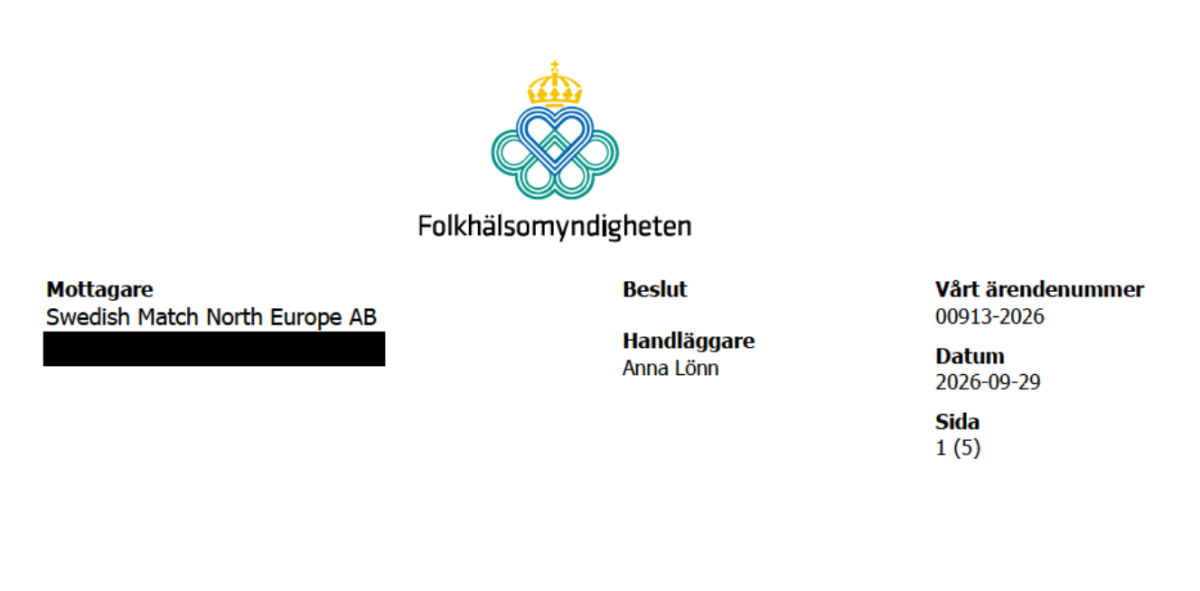
Swedish Match Faces Broader Labeling Order After ZYN Inspection, Documents Obtained by 2Firsts Show
Documents obtained by 2Firsts show that Sweden's Public Health Agency ordered Swedish Match to revise ingredient labels beyond the five ZYN products inspected. The dispute centers on whether flavoring ingredients must be individually disclosed, with Swedish Match citing trade-secret protection and the regulator insisting on full ingredient disclosure. The company faces a conditional penalty of SEK 2 million per month for noncompliance. As of October 22, the agency had received no appeal, despite the company's stated intention to challenge the decision.
Oct.22
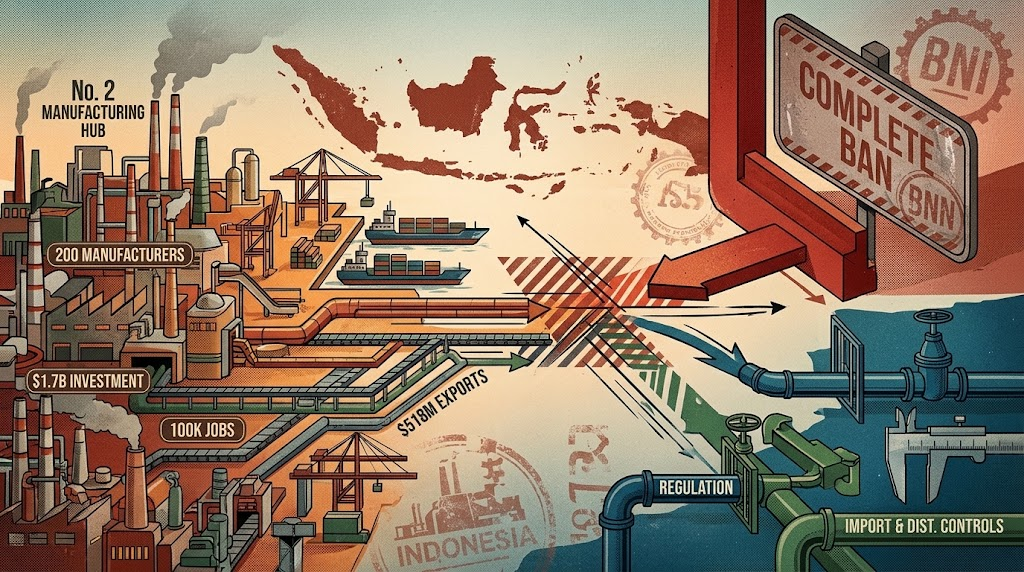
Special report|Indonesia's Vape Industry Has 200 Manufacturers and $1.7 Billion in Investment. Could a Regulatory Divide Derail Its Rise as the World's No. 2 Manufacturing Hub After Shenzhen?
Indonesia's Ministry of Industry said at a November 3, 2026, policy forum that the country has about 200 electronic cigarette companies, Rp31 trillion (approximately $1.71 billion) in cumulative industry investment and around 100,000 jobs across the supply chain. The National Narcotics Agency is seeking a comprehensive ban on vape use and circulation, while the industry ministry favors tighter import, product-standard and distribution controls. Indonesia exported approximately $518 million in vaping products in 2025, and Chinese manufacturers including Smoore, GEEKVAPE and Jinjia Group have established local operations. An international logistics specialist interviewed by 2Firsts said more Chinese vape companies began production in Indonesia from the second half of 2025, accompanied by increased shipments of manufacturing equipment and investment in logistics facilities. The regulatory debate comes as Indonesia expands its role in international vaping manufacturing.
Special Report
Nov.05
Special Report|CrossBar's High-Puff Vapes Draw Attention on Pennsylvania's 163-Product Directory as Link Between Earlier 1.3mL PMTA Filings and New 13mL Products Remains Unclear
Pennsylvania began enforcing its electronic nicotine delivery system directory restrictions on October 19, 2026. Among 163 product listings recorded before enforcement, four CrossBar 20K disposables stood out with 13mL capacity, advertised puff counts of up to 20,000 and a flattened design distinct from conventional pod systems and compact disposables. Historical records identify earlier 1.3mL CrossBar products associated with Romo LLC, while newer 13mL products appeared in several state directories beginning in 2025 under entities including Blue Nine LLC. PMTA compliance expert Mr. K identified amendments and application ownership transfers as possible regulatory mechanisms, although neither has been confirmed in this case. Separately, Reynolds' $7.5 million acquisition of 16 PACHA products and related assets illustrates the commercial value of products linked to historic PMTA submissions.
Special Report
Oct.22