
Chinese E-cigarette Exports to Malaysia - October 2023

Market by Mincy
Dec.01.2023
Chinese E-cigarette Exports to Malaysia - October 2023
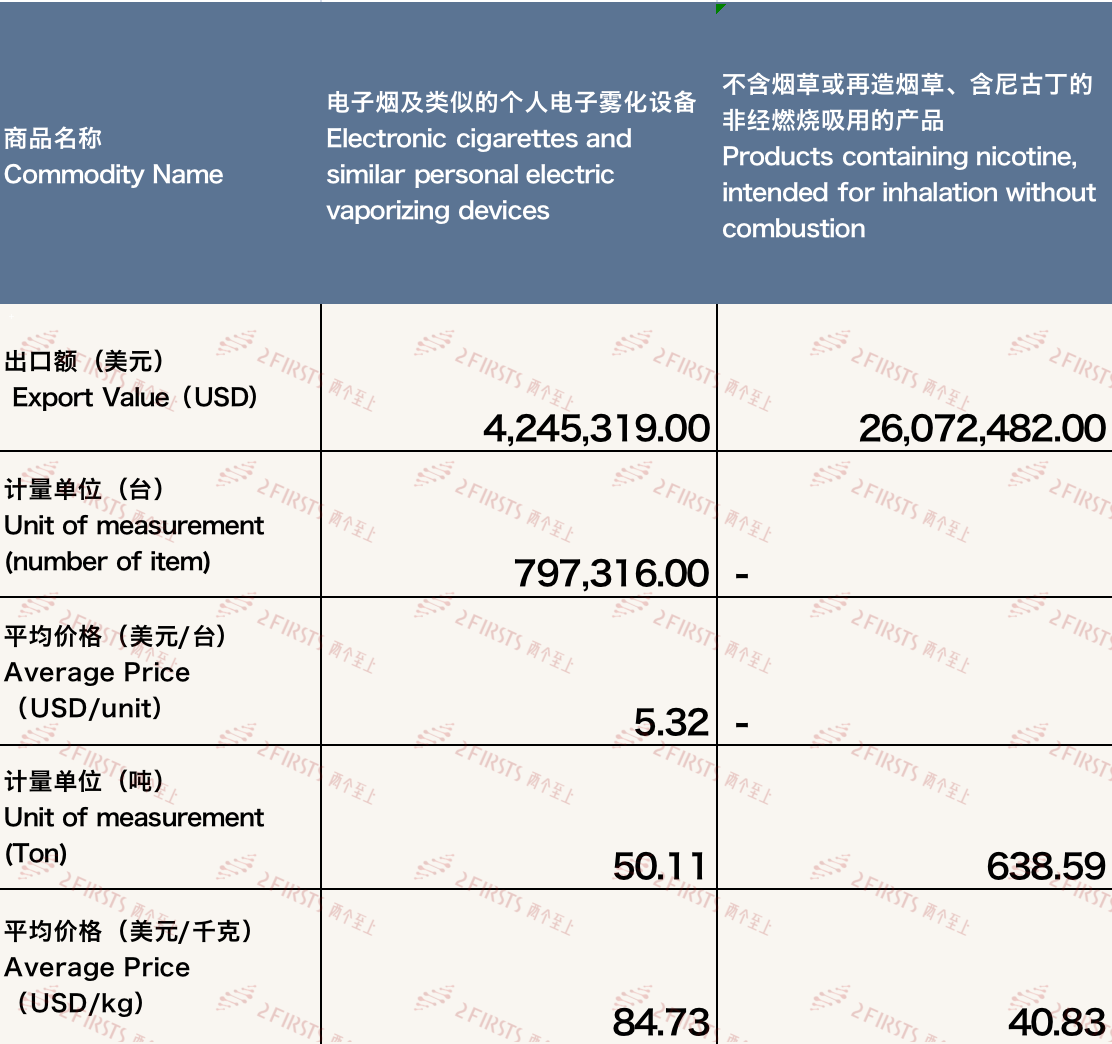
China's e-cigarette exports to Malaysia in October 2023 totaled $30.32 million, down 1.67% MoM and 27.77% YoY.

According to the latest trade data from the General Administration of Customs of the People's Republic of China, 2FIRSTS has analyzed the e-cigarette export figures to Malaysia in October 2023. The details are as follows:
Chinese E-cigarette Exports to Malaysia - October 2023
Image source: 2FIRSTS (Mincy graphics)


Export volume amounted to approximately $30.32 million, marking a month-on-month decrease of 1.67% and a year-on-year decrease of 27.77%.

Chinese E-cigarette Exports to Malaysia - October 2023
Image source: 2FIRSTS (Mincy graphic)


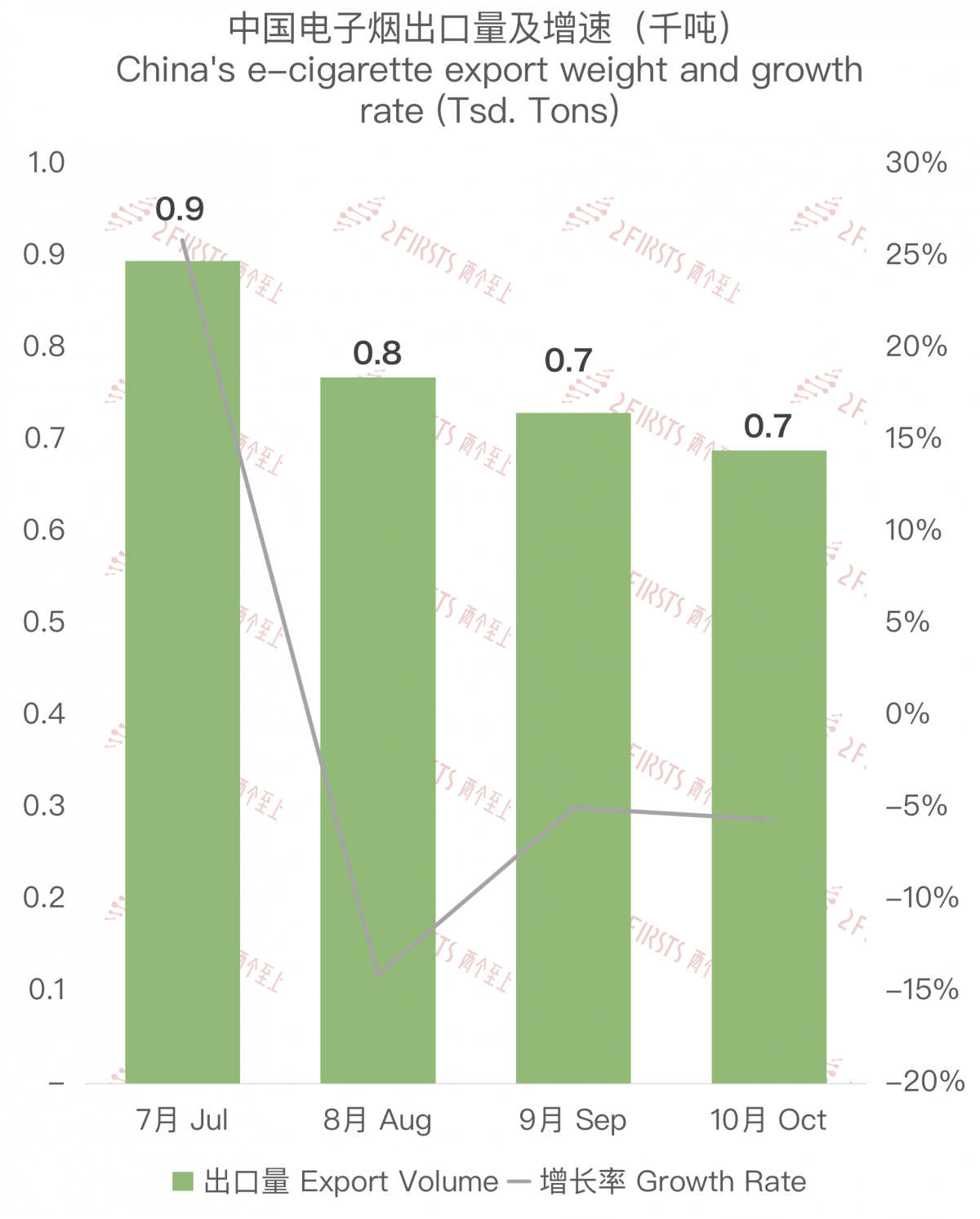
The export volume is approximately 689 tons, which decreased by 5.65% compared to the previous period and decreased by 13.37% compared to the same period last year.
Chinese E-cigarette Exports to Malaysia - October 2023
Source of the picture: 2FIRSTS (created by Mincy)


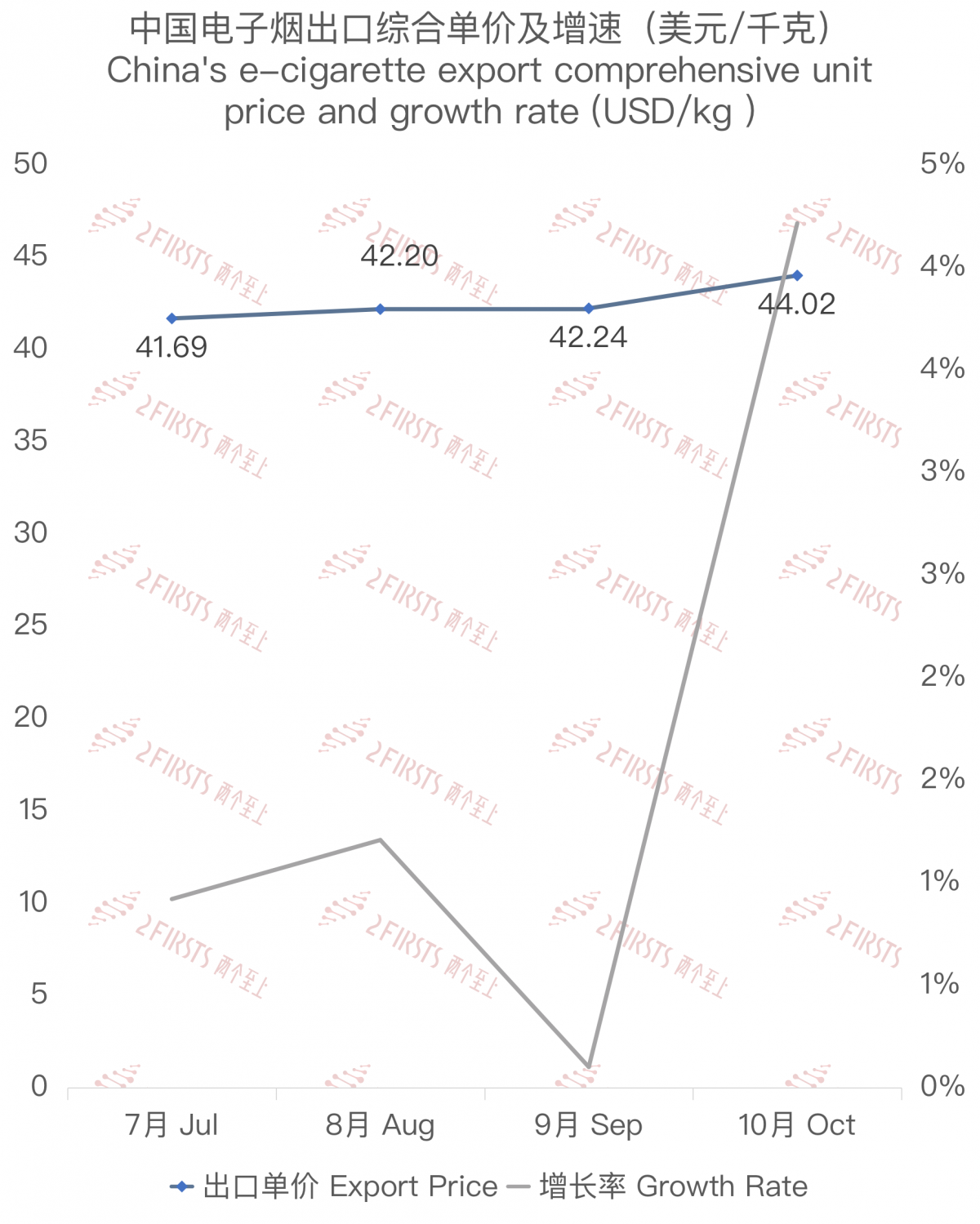
The export unit price for 44.02 US dollars per kilogram recorded a sequential growth of 4.22% but experienced a year-on-year decline of 16.62%. The average price for "e-cigarettes and similar personal electronic vapor devices" stands at 5.32 US dollars per unit.
Chinese E-cigarette Exports to Malaysia - October 2023
Image source: 2FIRSTS (created by Mincy)


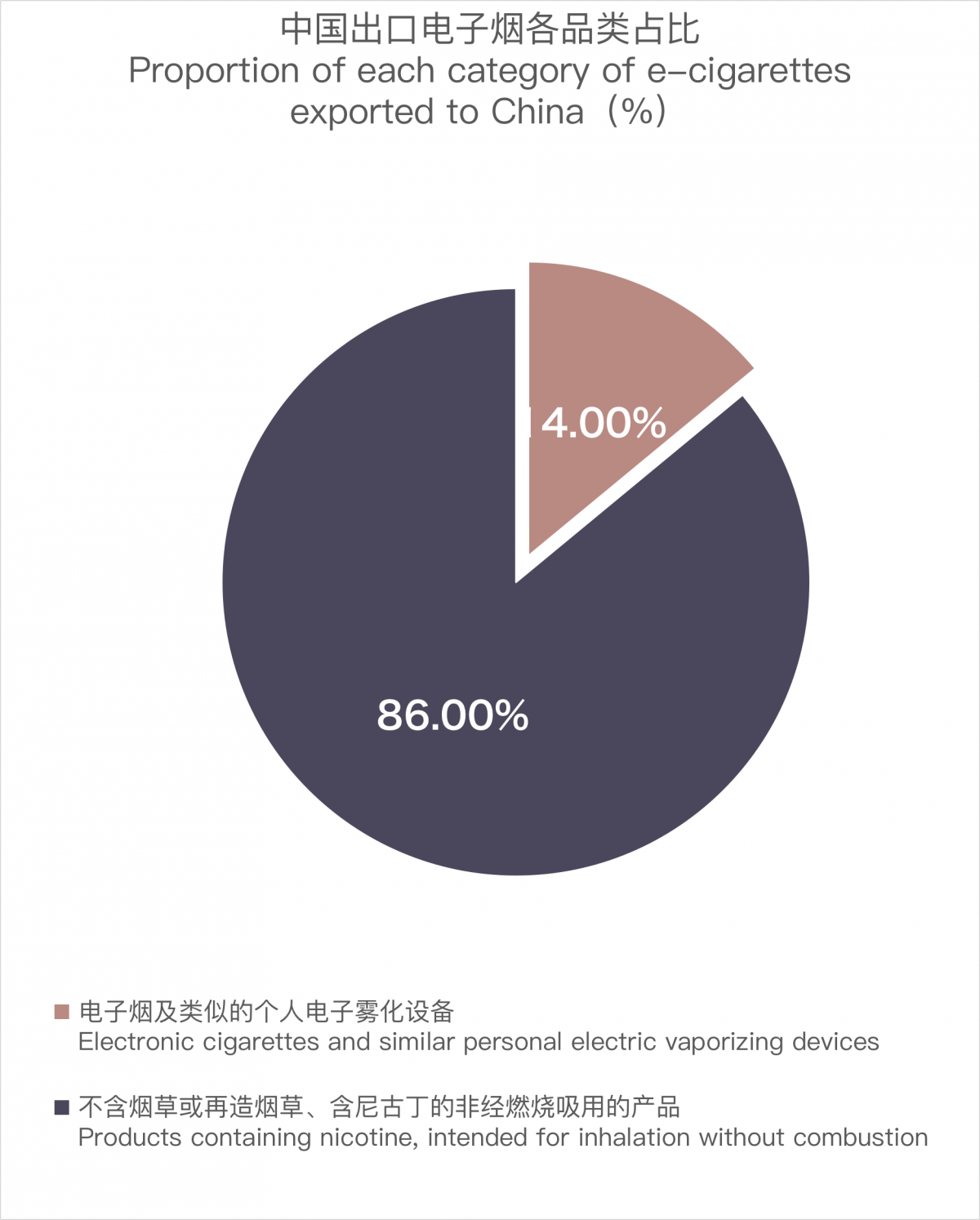
Among them, "e-cigarettes and similar personal electronic vaporization devices" account for 14% of the export product categories, while "non-combustible products without tobacco or reconstituted tobacco, containing nicotine for non-smoking consumption" account for 86%.
Chinese E-cigarette Exports to Malaysia - October 2023
Image source: 2FIRSTS (created by Mincy)


We welcome news tips, article submissions, interview requests, or comments on this piece.

Please contact us at info@2firsts.com, or reach out to Alan Zhao, CEO of 2Firsts, on LinkedIn


Notice

1.  This article is intended solely for professional research purposes related to industry, technology, and policy. Any references to brands or products are made purely for objective description and do not constitute any form of endorsement, recommendation, or promotion by 2Firsts.

2.  The use of nicotine-containing products — including, but not limited to, cigarettes, e-cigarettes, nicotine pouchand heated tobacco products — carries significant health risks. Users are responsible for complying with all applicable laws and regulations in their respective jurisdictions.

3.  This article is not intended to serve as the basis for any investment decisions or financial advice. 2Firsts assumes no direct or indirect liability for any inaccuracies or errors in the content.

4.  Access to this article is strictly prohibited for individuals below the legal age in their jurisdiction.


Copyright


This article is either an original work created by 2Firsts or a reproduction from third-party sources with proper attribution. All copyrights and usage rights belong to 2Firsts or the original content provider. Unauthorized reproduction, distribution, or any other form of unauthorized use by any individual or organization is strictly prohibited. Violators will be held legally accountable.

For copyright-related inquiries, please contact: info@2firsts.com


AI Assistance Disclaimer


This article may have been enhanced using AI tools to improve translation and editorial efficiency. However, due to technical limitations, inaccuracies may occur. Readers are encouraged to refer to the cited sources for the most accurate information.

We welcome any corrections or feedback. Please contact us at: info@2firsts.com

AP Questions FDA Rationale as Glas Fruit-Flavored Vapes Won Authorization Without Added Cessation Benefit
The U.S. Food and Drug Administration (FDA) recently authorized two fruit-flavored vaping products from Glas, but a newly released agency memo shows the products did not demonstrate greater smoking-cessation benefits than tobacco-flavored e-cigarettes. The Associated Press said the findings are likely to raise further questions about the FDA’s regulatory rationale and standards for flavored vaping products.
Jun.12
 Product | ASDF Chroma extends retro cassette visual language with lighting-focused pod design
Product | ASDF Chroma extends retro cassette visual language with lighting-focused pod design
2Firsts noted that ASDF has displayed Chroma on its official website. Public information shows that Chroma is a closed-pod device equipped with an 800mAh battery, switchable RGB lights, haptic feedback and Normal/Boost power modes. It uses a 2ml OSTRO cartridge with 2% nicotine strength. Public information also shows that ASDF has a Malaysian brand background and has previously drawn industry attention for the “retro cassette” visual language used in its Vapetape series.
May.26
Canada Faces Growing Debate as Youth Nicotine Pouch Use Reaches 34.8%
New Canadian research shows that 34.8% of people aged 17 to 27 have tried nicotine pouches, up more than fourfold from 7.6% in 2022. The findings come as Conservative politicians, Alberta’s government and the tobacco industry push Ottawa to relax current restrictions on pouch sales.
Jun.12
 BAT Bangladesh Cigarette Sales Fall 14%, Q1 Profit Drops 34%
BAT Bangladesh Cigarette Sales Fall 14%, Q1 Profit Drops 34%
British American Tobacco Bangladesh reported a 14% year-on-year decline in cigarette sales volume and a 34% drop in first-quarter profit, highlighting mounting pressure from inflation, taxation, and weakening consumer spending in Bangladesh.
News
May.18
The new regulations on nicotine in Argentina are creating caution, expectations, and doubts about the market, according to a local reference in harm reduction for smoking.
The new Argentine framework for tobacco and nicotine marks a shift from prohibition towards registration, traceability, and health surveillance. Juan Facundo Teme told 2Firsts that adult consumers and some of the commercial sector are cautiously optimistic, although concerns remain about flavors, registration costs, and market access.
May.11
Global Tobacco Control Faces Regional Adaptation Test as Nicotine Markets Evolve, Asian Specialist Says
As e-cigarettes, heated tobacco products and nicotine pouches expand across global markets, a central question is gaining urgency: can tobacco control rely on a universal policy model? In an interview with 2Firsts, Asian public health and addiction medicine specialist Dr. Rashidi Mohamed bin Pakri Mohamed says Western experience remains relevant, but policies must be adapted to local culture, healthcare systems, enforcement capacity, illicit markets and clinical evidence.
Jul.08