Turkish Police Seize 86 Smuggled E-Cigarettes and 96kg Waterpipe Tobacco

Regulations by 2FIRSTS.ai
Jan.10.2024
Turkish Police Seize 86 Smuggled E-Cigarettes and 96kg Waterpipe Tobacco
Turkish police seize 86 smuggled e-cigarettes and 96kg of water pipe tobacco in raid, arresting suspect involved.

According to Turkey's Anadolu Agency (IHA) on January 10, 2024, the Mersin police in Turkey seized 86 smuggled e-cigarettes and 96 kilograms of waterpipe tobacco during a search operation.


According to reports, during a crackdown on smuggling operations carried out by the local law enforcement police force, investigators discovered suspects believed to be involved in illicit tobacco trading in the Mezitli district. During a search of the suspects' residence, authorities seized 86 illicit e-cigarettes and 96 kilograms of water tobacco rolls.


The suspect has been arrested and taken to the police for questioning.


We welcome news tips, article submissions, interview requests, or comments on this piece.

Please contact us at info@2firsts.com, or reach out to Alan Zhao, CEO of 2Firsts, on LinkedIn


Notice

1.  This article is intended solely for professional research purposes related to industry, technology, and policy. Any references to brands or products are made purely for objective description and do not constitute any form of endorsement, recommendation, or promotion by 2Firsts.

2.  The use of nicotine-containing products — including, but not limited to, cigarettes, e-cigarettes, nicotine pouchand heated tobacco products — carries significant health risks. Users are responsible for complying with all applicable laws and regulations in their respective jurisdictions.

3.  This article is not intended to serve as the basis for any investment decisions or financial advice. 2Firsts assumes no direct or indirect liability for any inaccuracies or errors in the content.

4.  Access to this article is strictly prohibited for individuals below the legal age in their jurisdiction.


Copyright


This article is either an original work created by 2Firsts or a reproduction from third-party sources with proper attribution. All copyrights and usage rights belong to 2Firsts or the original content provider. Unauthorized reproduction, distribution, or any other form of unauthorized use by any individual or organization is strictly prohibited. Violators will be held legally accountable.

For copyright-related inquiries, please contact: info@2firsts.com


AI Assistance Disclaimer


This article may have been enhanced using AI tools to improve translation and editorial efficiency. However, due to technical limitations, inaccuracies may occur. Readers are encouraged to refer to the cited sources for the most accurate information.

We welcome any corrections or feedback. Please contact us at: info@2firsts.com

Japan Survey Finds 49.5% Would Cut Tobacco Use if Prices Rise, 64.6% Show Interest in Nicotine-Free Alternatives
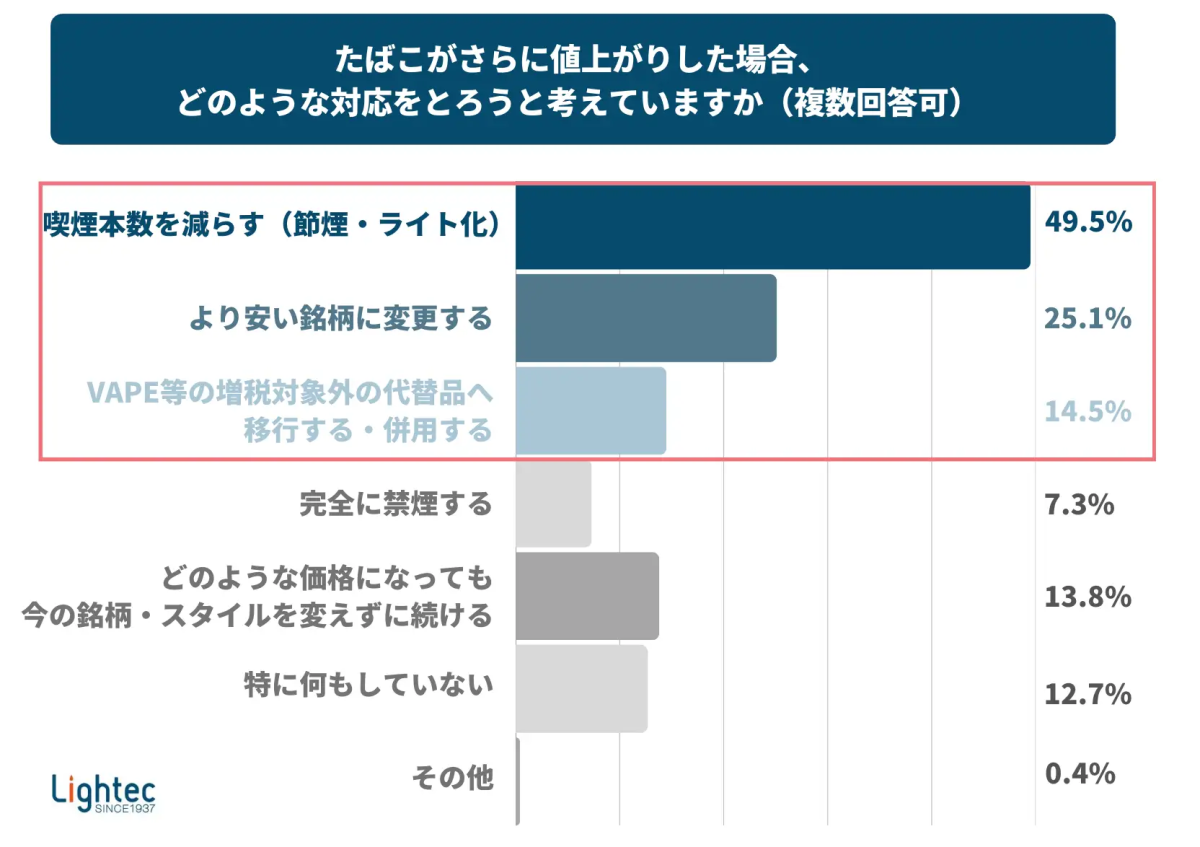
A September online survey commissioned by Japanese smoking-accessories company Lightec found that 49.5% of respondents would consider reducing tobacco use if prices rose further, while 25.1% would consider switching to cheaper brands and 14.5% would consider using or combining alternatives such as vapes and nicotine-free herbal sticks. Another 64.6% expressed some level of interest in such alternatives. The survey covered 1,088 respondents aged 20 to 70 and was conducted by a company that sells NICOLESS nicotine-free vaping and herbal-stick products, meaning its findings should not be treated as representative of Japan's smoking population.
DATA
Oct.12
South Korea's Tobacco Plan Excludes 6-Methyl Nicotine as Customs Tightens Import Controls and Analog Liquid Imports Fall 83%
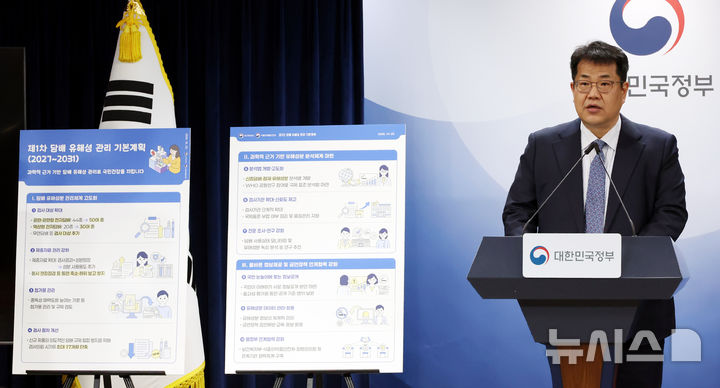
South Korea's government unveiled its first Tobacco Harm Management Basic Plan for 2027–2031 on October 29, 2026, proposing broader testing of vaping and heated tobacco products while excluding nicotine analogs such as 6-methyl nicotine. Synthetic nicotine came under tobacco regulation on April 24, and a June investigation found 6-methyl nicotine in 12 liquid inhalation products marketed as nicotine-free. Customs data released in September showed that imports of nicotine analog solutions fell 83.3%, from 12 metric tons in January–April to 2 metric tons in May–August. By September 20, imports had reached approximately 15 metric tons for the year, with 99.99% originating from China. Customs authorities have tightened pre-clearance testing and supply-chain documentation requirements, while the MFDS expects to complete its assessment of nicotine analog hazards by the end of 2026.
Regulations
Nov.04
Product | BAT Launches VELO WRKS Nicotine Pouches in Sweden, Introducing Dual-Compartment Cans With Two Flavours
British American Tobacco (BAT)'s VELO brand launched the VELO WRKS nicotine pouch range in Sweden on November 2, 2026. The initial release features three Dual Can variants, each containing two separate flavours in a dual-compartment container. Each can holds 20 slim pouches with 8mg of nicotine per pouch and retails for SEK 52.99. According to VELO, the first release, Drop 1, is limited to 75,000 cans and will remain available until February 2027 or while stocks last. VELO positions WRKS as a platform for testing new product concepts and has introduced an online consumer feedback survey. EU trademark records show BAT applied to register VELO WRKS in March 2026 under Class 34, covering nicotine pouches, e-cigarettes, heated tobacco products and other tobacco-related goods.
product
Nov.03
Product | JT Refreshes Ploom CUBE Design and Expands Japan Retail Distribution, Targeting Younger Men and Female Users
Japan Tobacco (JT) launched a refreshed Ploom CUBE design in Japan on September 8, 2026, with broader convenience-store and tobacco-retail distribution planned from October 13. The updated device retains the existing Rounded Cube form and heating platform while replacing four previous body colors with Pebble White and Cobalt Black. JT is also introducing new Front Panels and Fabric Back Covers, although the new accessories are not compatible with the previous Ploom CUBE design. The company says the update is intended to broaden appeal among younger male and female users.
Sep.09
Special Report | Russia Places Four JTI Businesses Under Temporary Management, a First for Tobacco Majors
Russia has placed shares in four Japan Tobacco International businesses under temporary management, the first such move involving a major global tobacco manufacturer, according to Interfax. JTI held 35.8% of Russia's tobacco market by volume in the first nine months of 2026. While British American Tobacco and Imperial Brands have exited Russia, Philip Morris International continues operating there. As the market changes and diplomatic efforts continue, could international tobacco companies that left Russia eventually return?
Nov.06
Latest UK ONS Data: Vaping Rate Edges Down to 9.9% in 2025, a Year After Overtaking Cigarette Smoking
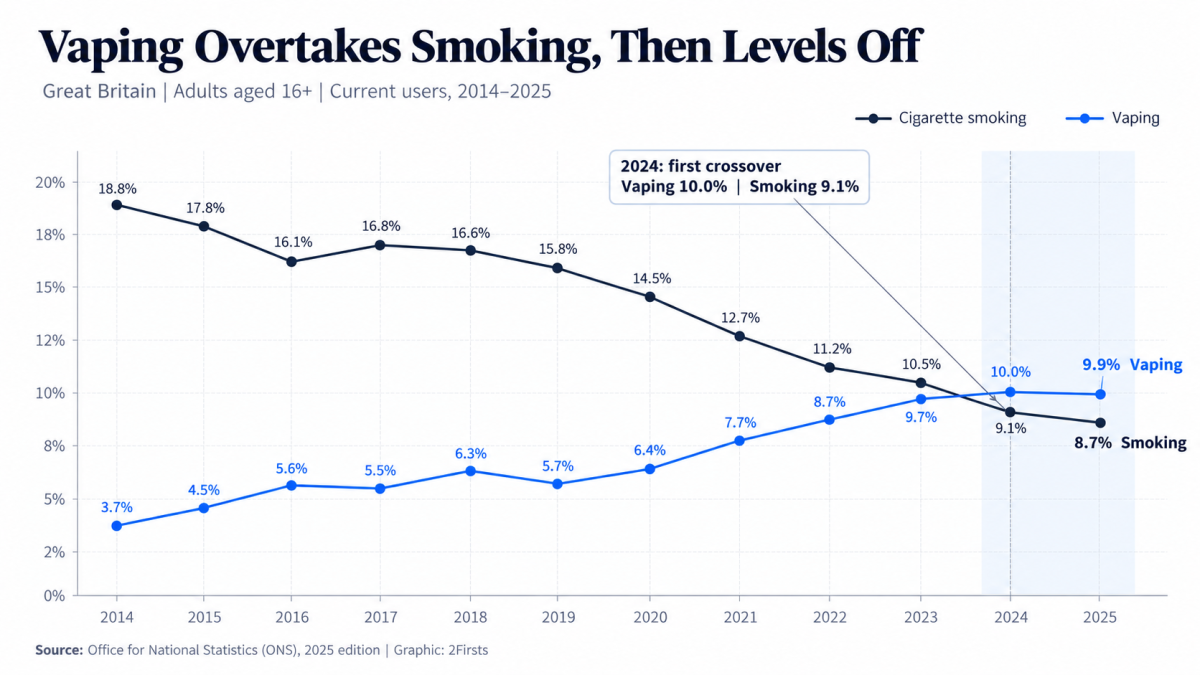
Vaping prevalence in Great Britain edged down to 9.9% in 2025 from 10.0% in 2024, with the number of adult users holding at approximately 5.4 million for a second consecutive year, according to the Office for National Statistics (ONS). E-cigarette use had risen from 6.4% in 2020 to 10.0% in 2024, when it exceeded cigarette smoking prevalence for the first time. Cigarette smoking continued to decline to 8.7% in 2025, widening the gap to 1.2 percentage points. Daily vaping declined slightly, while usage among adults aged 25–34 increased despite falling rates in other age groups.
DATA
Oct.14