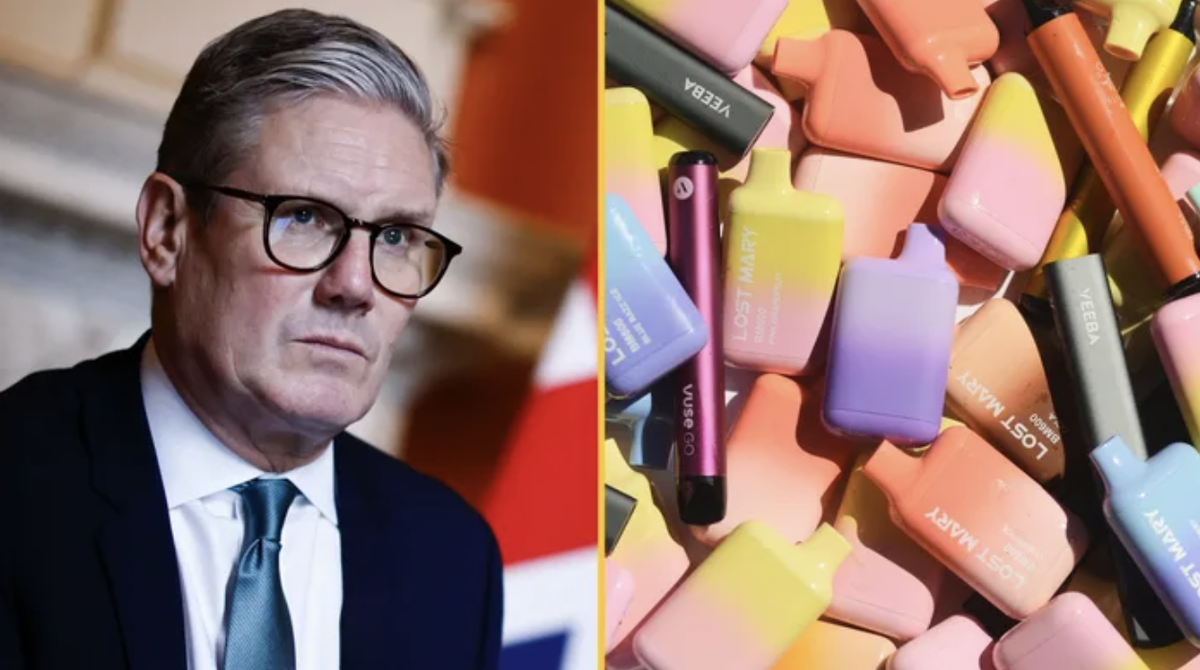
According to a report by JOE on September 2nd, the British government is considering banning disposable e-cigarettes. The new plan aims to reduce the number of young people using e-cigarettes.
To curb the purchase of e-cigarettes and other nicotine-containing products by young people, the UK government is currently developing a series of measures that may include restrictions on brands, flavors, and packaging. Reports suggest that the Labour Party may further propose a complete ban on disposable e-cigarettes. Many believe that these disposable e-cigarettes often come in various sweet flavors and colorful packaging, making them appealing to teenagers.
According to data, approximately 7.2% of teenagers aged 11 to 17 regularly use e-cigarettes, a significant increase from 4.1% in 2020. Additionally, around 18% of teenagers in this age group admit to having tried an e-cigarette at least once.
Former Prime Minister Rishi Sunak also previously introduced a similar plan to ban disposable e-cigarettes. During his tenure in the opposition party, new UK Labour Party Prime Minister Sir Keir Starmer expressed support for measures to curb young people from using e-cigarettes.
Lucy Powell, leader of the Labour Party in the House of Commons, stated on September 1st that the party vows to "address the issue of the spread of e-cigarettes." Despite medical institutions generally recognizing that e-cigarettes are less harmful to health than traditional cigarettes and play a significant role in helping people quit smoking, public concerns about the impact of e-cigarettes on physical health are increasing, especially among young people.
The UK government has recently announced a series of new plans regarding tobacco products as part of the Tobacco and E-Cigarette Act. This includes progressive smoking bans, which will prohibit individuals born in 2009 and later from ever legally purchasing cigarettes. Additionally, the government is planning to ban smoking in beer gardens, nightclubs, and football stadiums.
We welcome news tips, article submissions, interview requests, or comments on this piece.
Please contact us at info@2firsts.com, or reach out to Alan Zhao, CEO of 2Firsts, on LinkedIn
Notice
1. This article is intended solely for professional research purposes related to industry, technology, and policy. Any references to brands or products are made purely for objective description and do not constitute any form of endorsement, recommendation, or promotion by 2Firsts.
2. The use of nicotine-containing products — including, but not limited to, cigarettes, e-cigarettes, nicotine pouchand heated tobacco products — carries significant health risks. Users are responsible for complying with all applicable laws and regulations in their respective jurisdictions.
3. This article is not intended to serve as the basis for any investment decisions or financial advice. 2Firsts assumes no direct or indirect liability for any inaccuracies or errors in the content.
4. Access to this article is strictly prohibited for individuals below the legal age in their jurisdiction.
Copyright
This article is either an original work created by 2Firsts or a reproduction from third-party sources with proper attribution. All copyrights and usage rights belong to 2Firsts or the original content provider. Unauthorized reproduction, distribution, or any other form of unauthorized use by any individual or organization is strictly prohibited. Violators will be held legally accountable.
For copyright-related inquiries, please contact: info@2firsts.com
AI Assistance Disclaimer
This article may have been enhanced using AI tools to improve translation and editorial efficiency. However, due to technical limitations, inaccuracies may occur. Readers are encouraged to refer to the cited sources for the most accurate information.
We welcome any corrections or feedback. Please contact us at: info@2firsts.com