UK Nicotine Pouch Market Soars 95%, Emerging as a New Option for Vapers

Jun.24.2025
UK Nicotine Pouch Market Soars 95%, Emerging as a New Option for Vapers
The UK nicotine pouch market grew by 95% in 2024, with 32% of users transitioning from e-cigarettes. Surveys show its main advantages are discretion, health perception, and social acceptance (78%), with most users aged 33 and above.

Key Points:


·Market Growth: Doubled in Size by 2024; 32% of Users Were Former E-Cigarette Users.


·User profile: Average age of first use is 33 years old; 57% use for smoking cessation, 27% use as a substitute for other nicotine products.


·Policy Impact: Ban on disposable e-cigarettes accelerates market transformation; could become an important alternative under smoke-free policies.


According to a report by Talking Retail on June 23rd, the popularity of nicotine pouches (sometimes also referred to as snus) is rapidly increasing in the UK, with the disposable e-cigarette ban accelerating this growth.


According to research by Haypp, the nicotine pouch market in the UK is expected to nearly double by 2024, with a growth rate of at least 95%.


57% of British nicotine pouch users said they started using nicotine pouches to quit smoking. Another 27% of people said they used nicotine pouches to transition from other nicotine products, mainly e-cigarettes, to nicotine pouches.


Currently, nearly one third (32%) of Haypp nicotine pouch users were former e-cigarette users, which is higher than the 28% reported in 2023. It is anticipated that this shift will increase after the implementation of the disposable e-cigarette ban.


According to survey respondents, the main advantages of nicotine pouches compared to other nicotine products are their discretion (68%), perceived healthiness (64%), and not affecting others (54%).


Interestingly, compared to other nicotine products, the social acceptance of nicotine pouches seems to be a driving factor in market growth. Among surveyed users of nicotine pouches, 78% believe that nicotine pouches are socially acceptable, while only 30% believe that e-cigarettes are socially acceptable.


According to the survey results, the average age of first-time users of nicotine pouches is typically 33 years old. Only 3% of respondents reported starting to use nicotine pouches before the age of 18.


The cautious nature and social acceptance of nicotine pouches may have made them a popular choice among middle-aged and elderly populations.


Haypp CEO Markus Lindblad stated:


"These findings suggest that although the nicotine pouch market is growing rapidly, users are typically older and value the cautiousness of the product. It is worth noting that many people have started using nicotine pouches to quit e-cigarettes. This could be an important trend for the UK as it moves towards a smoke-free policy and potentially tighter regulations on e-cigarettes."


We welcome news tips, article submissions, interview requests, or comments on this piece.

Please contact us at info@2firsts.com, or reach out to Alan Zhao, CEO of 2Firsts, on LinkedIn


Notice

1.  This article is intended solely for professional research purposes related to industry, technology, and policy. Any references to brands or products are made purely for objective description and do not constitute any form of endorsement, recommendation, or promotion by 2Firsts.

2.  The use of nicotine-containing products — including, but not limited to, cigarettes, e-cigarettes, nicotine pouchand heated tobacco products — carries significant health risks. Users are responsible for complying with all applicable laws and regulations in their respective jurisdictions.

3.  This article is not intended to serve as the basis for any investment decisions or financial advice. 2Firsts assumes no direct or indirect liability for any inaccuracies or errors in the content.

4.  Access to this article is strictly prohibited for individuals below the legal age in their jurisdiction.


Copyright


This article is either an original work created by 2Firsts or a reproduction from third-party sources with proper attribution. All copyrights and usage rights belong to 2Firsts or the original content provider. Unauthorized reproduction, distribution, or any other form of unauthorized use by any individual or organization is strictly prohibited. Violators will be held legally accountable.

For copyright-related inquiries, please contact: info@2firsts.com


AI Assistance Disclaimer


This article may have been enhanced using AI tools to improve translation and editorial efficiency. However, due to technical limitations, inaccuracies may occur. Readers are encouraged to refer to the cited sources for the most accurate information.

We welcome any corrections or feedback. Please contact us at: info@2firsts.com

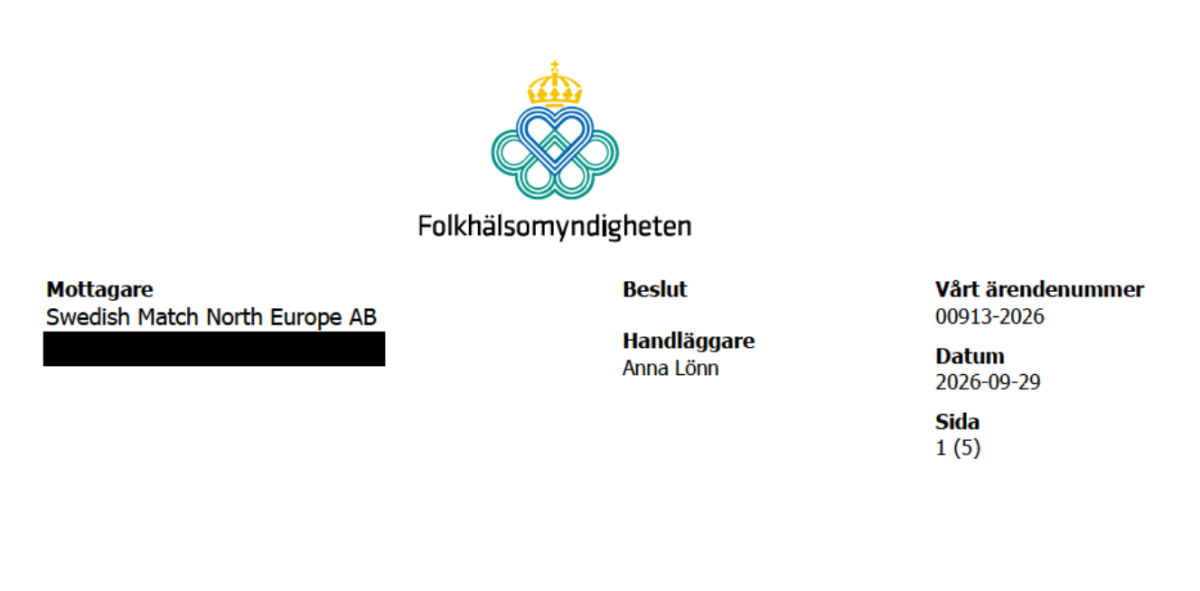
Swedish Match Faces Broader Labeling Order After ZYN Inspection, Documents Obtained by 2Firsts Show
Documents obtained by 2Firsts show that Sweden's Public Health Agency ordered Swedish Match to revise ingredient labels beyond the five ZYN products inspected. The dispute centers on whether flavoring ingredients must be individually disclosed, with Swedish Match citing trade-secret protection and the regulator insisting on full ingredient disclosure. The company faces a conditional penalty of SEK 2 million per month for noncompliance. As of October 22, the agency had received no appeal, despite the company's stated intention to challenge the decision.
Oct.22
Why Does JPMorgan Favor BAT Over Philip Morris Despite Forecasting Slower Growth of 3.9% Versus 6.2%?
JPMorgan resumed equity research coverage of British American Tobacco (BAT), Philip Morris International (PMI) and Imperial Brands in November 2026, assigning BAT an Overweight rating and the other two companies Neutral ratings. The bank forecasts like-for-like sales growth of 3.9% for BAT and 6.2% for PMI in 2027, but estimates the two companies will trade at approximately 11 times and 21 times 2027 earnings, respectively. JPMorgan cited BAT's improving position in US nicotine pouches and vaping products as a driver of its investment outlook. BAT reported a 220% constant-currency increase in US modern oral nicotine revenue in the first half of 2026, while PMI's ZYN US shipments returned to growth in the third quarter. Imperial expects NGPs to represent 4% to 5% of sales and has expanded its oral portfolio through acquisitions.
Capital Markets
Nov.12
AIR Q3 Sales Rise 11%, but New Products Generate Just $2.1 Million in Nine Months as U.S. Vape Push Awaits FDA Review
AIR Global PLC (NASDAQ: AIIR), a producer of flavored shisha tobacco and next-generation nicotine products, reported an 11.1% increase in third-quarter 2026 revenue to $99.8 million and a 7.7% rise in adjusted EBITDA to $30.9 million. Revenue for the first nine months increased 6.0% to $306.7 million, but the company posted a $74.2 million net loss, affected by listing-related expenses and other costs. Its New Growth Categories (NGC) business generated $2.1 million in nine-month revenue and an adjusted EBITDA loss of $10.8 million. AIR maintained its 2026 revenue growth guidance of 4%–6%, while lowering its capital expenditure outlook and raising its year-end leverage forecast from approximately 2.1 times to 2.5 times. The company has submitted a U.S. PMTA for its Crown Switch pod vape, with future contributions from new products dependent on regulatory progress and commercialization.
Capital Markets
Nov.13
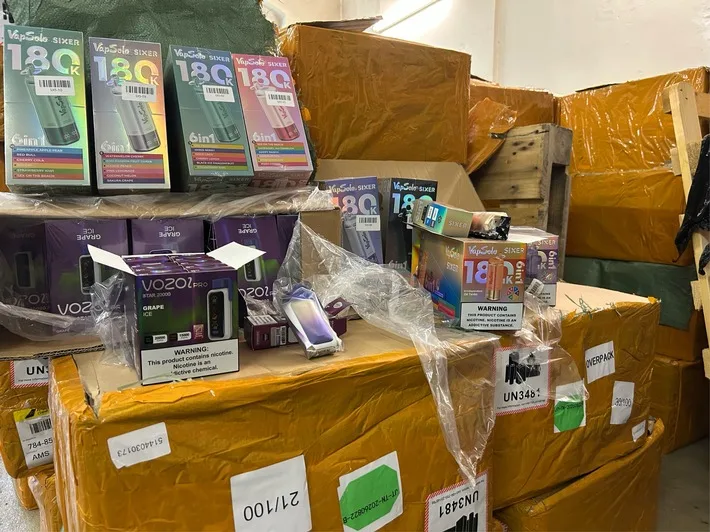
German Customs Seize 115,800 Vapes in €1.4 Million Tax Case
Germany's Magdeburg Main Customs Office seized 115,800 untaxed e-cigarettes containing a combined 4.366 million mL of e-liquid during four truck inspections between August 10 and September 4, 2026. The seizures prevented an estimated €1.397 million in tax losses and set a record for the customs office's jurisdiction. Criminal proceedings have been initiated against four truck drivers. The case follows a separate German investigation involving more than 7.6 million illicit vapes and an estimated €33.3 million in excise-tax losses.
Enforcement
Oct.13
Special Report | Altria's NACS Booth Raises Questions Over U.S. Tobacco Advertising Warnings
During its coverage of Altria's booth at NACS Show 2026, 2Firsts documented product displays that prompted questions about U.S. tobacco advertising warning requirements. Following public comments from a former FDA official, 2Firsts sought responses from Altria and independently consulted U.S. regulatory lawyer Azim Chowdhury. Altria maintained that its B2B communications complied with applicable laws, while Chowdhury explained that federal warning rules provide no general trade-show exemption for e-cigarettes and nicotine pouches. The special report examines the broader regulatory implications.
Nov.04
NATO Executive Director David Spross Sees U.S. Vape Regulation Improving, Calls for More PMTA Authorizations and Warns of 2027 State Tax Pressure
The National Association of Tobacco Outlets is calling for more FDA marketing authorizations, greater transparency in the PMTA process and continued enforcement against unauthorized e-cigarettes, even as its executive director, David Spross, points to recent regulatory developments as signs of progress. At the state level, excise taxes, flavor restrictions and vapor product directories remain major issues for tobacco retailers. By August 2026, 17 states had enacted laws establishing state-managed e-cigarette directories or similar systems.
Innovation
Sep.29 by 2Firsts Perspectives