United States Senators Urge DOJ and FDA for E-cigarette Enforcement

Regulations by 2FIRSTS.ai
Jul.09.2024
United States Senators Urge DOJ and FDA for E-cigarette Enforcement
Senators Demand More Information on Crackdown on Unauthorized E-Cigarette Sales by Multi-Agency Task Force, Expressing Concerns Over Inconsistencies in Statements.

According to a report from the Sierra Sun Times on July 8th, last week, US Senator Susan Collins and her bipartisan colleagues wrote to senior officials at the Department of Justice (DOJ) Consumer Protection Division and the US Food and Drug Administration (FDA) Center for Tobacco Products, requesting more information about the recently announced interagency task force to combat unauthorized e-cigarette sales and distribution.


The letter also reiterated the importance of restoring the pre-market review process required by federal law. The letter was co-signed by Senators Dick Durbin (D-IL), Mitt Romney (R-UT), Richard Blumenthal (D-CT), Jeff Merkley (D-OR), Thom Tillis (R-NC), Mazie Hirono (D-HI), and Ron Wyden (D-OR).


The senators wrote,


We appreciate the recent announcement of the establishment of a federal task force to enhance enforcement of these illegal and dangerous products through the collaboration of the FDA, Department of Justice, Bureau of Alcohol, Tobacco, Firearms and Explosives, U.S. Marshals Service, U.S. Postal Inspection Service, and Federal Trade Commission. However, we remain deeply concerned about the inconsistency between the public statements of the FDA and DOJ, which claim that only 27 e-cigarette products have been authorized by the FDA, while in fact, thousands of unauthorized e-cigarettes with child-friendly flavors such as blueberry ice, strawberry watermelon bubblegum, and Red Bull strawberry are still readily available.


Clearly, the top priority of the working group should be to restore the pre-market review system for e-cigarettes and enforce the removal of all unauthorized e-cigarettes.


On June 10, 2024, the United States Department of Justice and the Food and Drug Administration announced the establishment of a federal multi-agency task force to combat the illegal distribution and sale of e-cigarettes. In addition to the FDA and the DOJ, this task force will also bring together multiple law enforcement agencies, utilizing all criminal and civil measures to crack down on illegal e-cigarette distribution and sale.


This letter also calls on the FDA to complete long-term reviews of premarket tobacco product applications submitted by e-cigarette manufacturers. Since the FDA missed the final deadline set by the court on September 9, 2021, over 2.1 million children may have already started using e-cigarettes. The FDA also missed another deadline to complete reviews of certain products by June 30, 2024. According to the Tobacco Control Act (TCA), e-cigarette companies must obtain FDA authorization before entering the market, a requirement that the FDA has failed to enforce.


We welcome news tips, article submissions, interview requests, or comments on this piece.

Please contact us at info@2firsts.com, or reach out to Alan Zhao, CEO of 2Firsts, on LinkedIn


Notice

1.  This article is intended solely for professional research purposes related to industry, technology, and policy. Any references to brands or products are made purely for objective description and do not constitute any form of endorsement, recommendation, or promotion by 2Firsts.

2.  The use of nicotine-containing products — including, but not limited to, cigarettes, e-cigarettes, nicotine pouchand heated tobacco products — carries significant health risks. Users are responsible for complying with all applicable laws and regulations in their respective jurisdictions.

3.  This article is not intended to serve as the basis for any investment decisions or financial advice. 2Firsts assumes no direct or indirect liability for any inaccuracies or errors in the content.

4.  Access to this article is strictly prohibited for individuals below the legal age in their jurisdiction.


Copyright


This article is either an original work created by 2Firsts or a reproduction from third-party sources with proper attribution. All copyrights and usage rights belong to 2Firsts or the original content provider. Unauthorized reproduction, distribution, or any other form of unauthorized use by any individual or organization is strictly prohibited. Violators will be held legally accountable.

For copyright-related inquiries, please contact: info@2firsts.com


AI Assistance Disclaimer


This article may have been enhanced using AI tools to improve translation and editorial efficiency. However, due to technical limitations, inaccuracies may occur. Readers are encouraged to refer to the cited sources for the most accurate information.

We welcome any corrections or feedback. Please contact us at: info@2firsts.com

South Korea's Synthetic Nicotine Tax Take Estimated at Just 1.3% of Forecast as Imports Plunge Nearly 97%
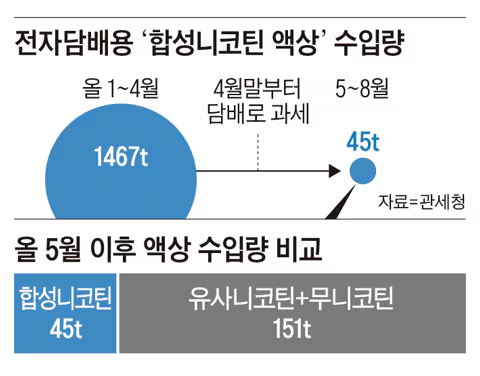
After synthetic nicotine was placed under tobacco regulation on April 24, 2026, South Korea’s tax collections from synthetic-nicotine vaping products fell far short of government projections. The Chosun Ilbo reported on November 18 that Ministry of Health and Welfare data showed national health promotion charges on synthetic-nicotine liquid e-cigarettes totaled 765 million won from April 24 through September. Using statutory rates, the newspaper estimated combined major taxes and charges at about 2.622 billion won—on a monthly basis roughly 1.3% of an earlier forecast after temporary tax reductions. Customs data showed synthetic-nicotine imports dropped from about 1,467 metric tons in January–April to 45 metric tons in May–August, a nearly 97% decline. Imports of nicotine-analog and nicotine-free liquids totaled 151 metric tons in May–August, exceeding synthetic-nicotine imports in the same period, though both categories were also below January–April volumes.
Regulations
Nov.19
Sweden Finds ZYN Ingredient Labels Noncompliant Over Generic Flavoring Disclosure, Swedish Match Faces SEK 2 Million Monthly Penalty
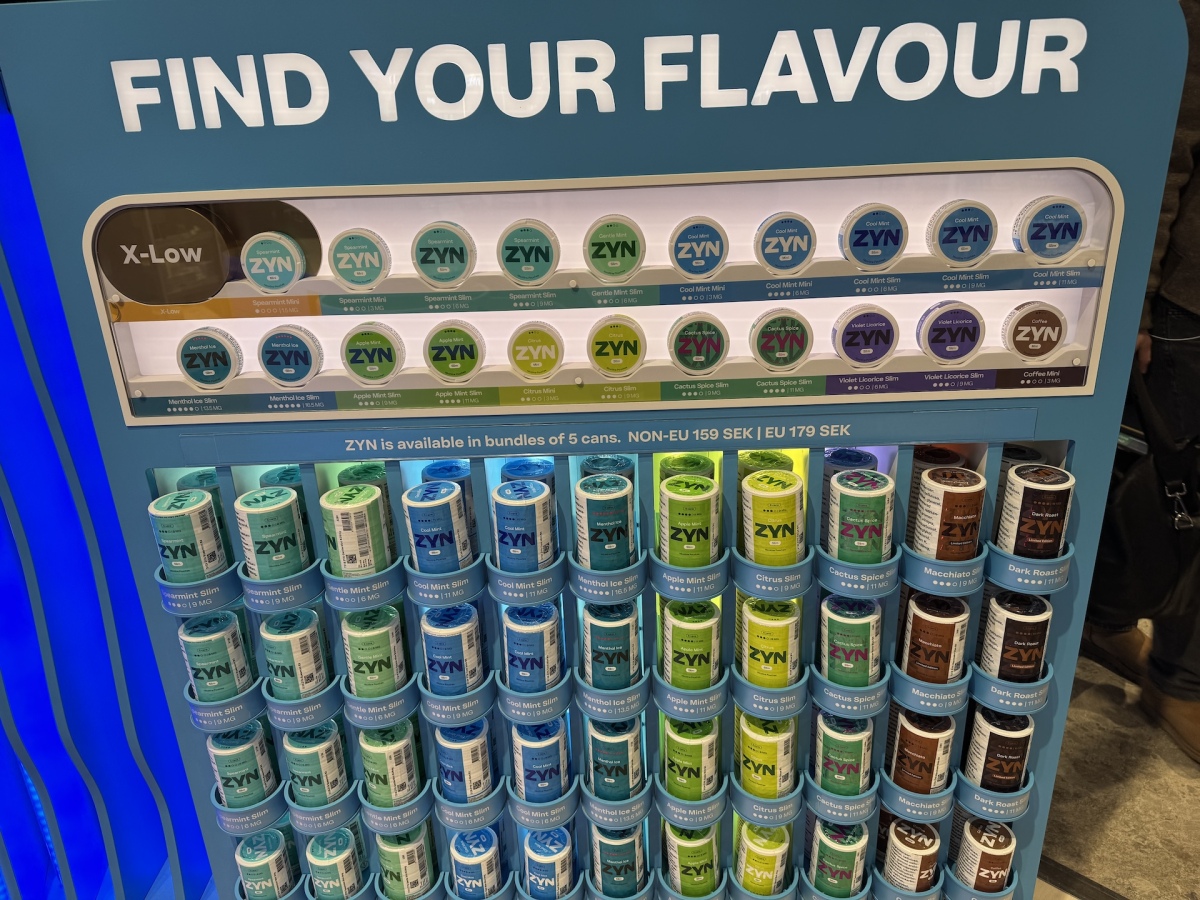
Sweden's Public Health Agency has found ingredient labels on ZYN nicotine pouches sold by Philip Morris International subsidiary Swedish Match to be noncompliant, according to Dagens industri. The products' packaging listed 10 to 13 ingredients, compared with 11 to 42 in regulatory submissions, with multiple flavoring ingredients grouped under the generic term "aromer." The agency ordered corrective action, warning of a conditional penalty of SEK 2 million per month for noncompliance. The order applies only to products manufactured after the decision becomes legally effective and does not require recalls. Swedish Match disputes the agency's interpretation and plans to appeal.
PMI
Oct.22
Wisconsin Vape Directory One Year On: Retailer Reports Four Store Closures and 70% Staff Cuts
Wisconsin's electronic vaping device directory has been fully enforced for more than a year, and local vape retailers say the reduced range of eligible products has contributed to declining sales, store closures and layoffs. Johnny Vapes owner Ben Hall said he has closed four of seven locations and cut about 70% of his staff. State law bars the sale of vaping devices not listed on the Wisconsin Department of Revenue directory and allows penalties of $1,000 per day for each unlisted device sold or offered for sale. In April 2026, the U.S. Court of Appeals for the Seventh Circuit allowed enforcement of the law to continue.
Regulations
Oct.10
Imperial Brands Sees Double-Digit NGP Growth as Sixth Year of Tobacco Revenue Gains Backs £1.5 Billion Buyback
Imperial Brands reaffirmed its FY26 guidance in its October 8 pre-close trading update, forecasting double-digit net revenue growth in next-generation products and share gains across heated tobacco, vape and modern oral. Tobacco net revenue is expected to grow at a low-single-digit rate, marking a sixth consecutive year of growth. The company has completed its £1.45 billion FY26 share repurchase and announced a £1.5 billion buyback for FY27. Group adjusted operating profit is expected to increase 3% to 5%, while free cash flow is forecast to exceed £2.2 billion.
Oct.09
Product | KIWI Launches Spark 2 and Spark 2 Pro in Germany, Two Hardware Tiers Share Backward-Compatible 2ml Pods
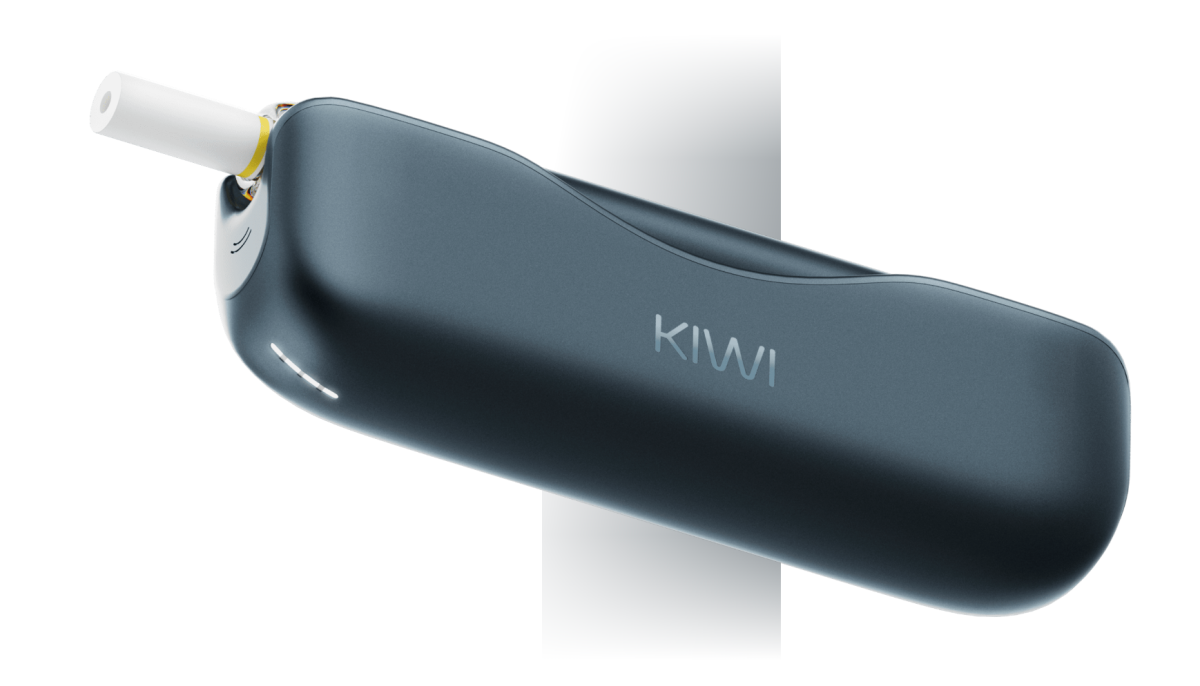
KIWI has launched the Spark 2 and Spark 2 Pro refillable pod systems in Germany at official prices of €18 and €29, respectively. Spark 2 uses an 800mAh removable lithium-ion battery in a pen-style body, while Spark 2 Pro features a 1,400mAh removable battery, a box-shaped design and vibration feedback every 20 puffs. Both devices use the same 2ml Spark V2 pods in 0.8Ω and 1.2Ω versions, with AirSync airflow adjustment and a choice between Cotton Tips and conventional Drip Tips. The new pods also remain compatible with the original KIWI Spark.
News
Sep.29 by 2Firsts Perspectives
U.S. Judge Stays Helix, NJOY Challenge to FDA PMTA Rule Pending New Rulemaking Court Stays Altria's Helix, NJOY Challenge to PMTA Rule as FDA Prepares New Rulemaking
A federal judge in Texas on Oct. 8 granted a joint request by the FDA and plaintiffs including Altria subsidiaries Helix Innovations and NJOY to stay litigation challenging the agency's 2021 PMTA rule. The court cited FDA's anticipated rulemaking concerning the regulation at issue. FDA announced on Sept. 28 that it intends to reassess the PMTA framework and could initiate new rulemaking to replace it. The parties must file a joint status report within 45 days and every 45 days thereafter. A motion by three Reynolds American companies to intervene remains pending.
Regulations
Oct.10