Vuse Go: Japan's First Nicotine-Free E-Cigarette Launches

Apr.13.2023
Vuse Go: Japan's First Nicotine-Free E-Cigarette Launches
Vuse Go, a nicotine-free disposable e-cigarette, will debut in Japan on April 17th with limited quantities available on Amazon.

According to a report from Japanese media outlet PRTIMES, the electronic cigarette brand Vuse, owned by BAT, will release its product "Vuse Go" in Japan on April 17th. The product will be sold exclusively on Amazon, with a limited quantity of around 10,000 units available for 980 Japanese yen (approximately 51 yuan) each.


Vuse Go is a non-nicotine disposable e-cigarette product that offers 500 puffs and comes in four flavors: Classic, Mint Ice, Blueberry Ice, and Watermelon Berry.


According to PRTIMES, as non-nicotine electronic cigarette products continue to penetrate the Japanese market, the market size for non-nicotine e-cigarettes is expected to be about 60 billion yen (approximately 3.1 billion yuan).


References:


The top vaping brand in the United States, Vuse, has made its debut in Japan on Monday, April 17th. Vuse Go, a nicotine-free product, will be test-released on Amazon with a limited quantity of approximately 10,000 units.


Disclaimer

This article is provided solely for professional research, industry discussion, and informational purposes. Any references to brands, companies, products, technologies, or policies are made for factual reporting and analytical purposes only, and do not constitute endorsement, recommendation, promotion, or advertising by 2Firsts.

Nicotine-containing products, including but not limited to cigarettes, e-cigarettes, heated tobacco products, and nicotine pouches, carry significant health risks. Readers are responsible for complying with all applicable laws and regulations in their respective jurisdictions, including age restrictions and access limitations.

The information contained in this article should not be regarded as investment, legal, medical, regulatory, or commercial advice. While 2Firsts strives to ensure the accuracy and reliability of its content, it does not assume liability for any direct or indirect loss arising from errors, omissions, inaccuracies, or reliance on the information contained herein.

This article is not intended for individuals below the legal age for accessing tobacco or nicotine-related information in their jurisdiction.


Copyright Notice

This article is either original content produced by 2Firsts or content reproduced, translated, summarized, or adapted from third-party sources with attribution where applicable. The intellectual property rights of the original content remain with 2Firsts or the respective original rights holders.

No individual or organization may copy, reproduce, distribute, republish, modify, translate, or otherwise use this content without prior authorization. Any unauthorized use may result in legal action.

For copyright-related inquiries, corrections, or removal requests, please contact: info@2firsts.com.


AI-Assisted Translation and Editing Notice

Portions of this article may have been translated, edited, or reviewed with the assistance of artificial intelligence tools to improve efficiency and readability. Due to the limitations of AI-assisted translation and editing, discrepancies, omissions, or inaccuracies may exist when compared with the original source.

Where applicable, readers are advised to refer to the original source for the most complete and accurate information. If you identify any errors or believe that any content infringes upon your rights, please contact us at info@2firsts.com, and we will review and address the matter promptly.

Ohio Supreme Court Weighs Whether State Consumer Law Can Restrict Flavored Vape Sales
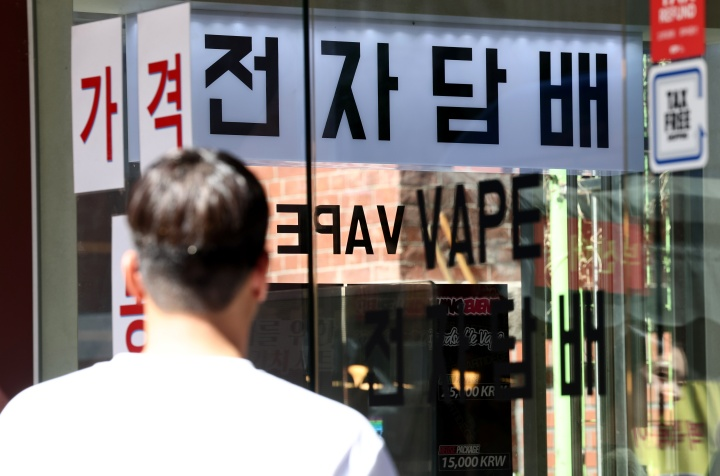
The Ohio Supreme Court is hearing a case involving flavored vape sales and whether state authorities can use consumer protection laws to take action against retailers selling unauthorized vape products. Ohio officials argue that selling unauthorized flavored vapes may constitute consumer deception, while retailers argue that tobacco product regulation falls under federal Food and Drug Administration (FDA) authority and that states cannot impose additional restrictions through consumer laws. The case could affect the scope of state-level vape regulation across the United States.
Aug.06
Special Report | Russia, Ukraine and Belarus Launch Fresh Push to Rein in Vaping
Russia, Ukraine and Belarus are tightening vape regulation through different tools, from Ukraine’s stronger enforcement push and Belarus’s proposed advertising restrictions to Russia’s new GOST standard and regional sales-ban mechanism. As black-market concerns persist, some Russian experts argue that China’s tightly controlled but legalised model — built around licensing, traceability and taxation — may offer a more effective alternative to blanket prohibition.
Jul.15
2Firsts Interview | InterTabac 2026 Adapts to a More Complex Tobacco and Nicotine Market
As InterTabac 2026 approaches, Sabine Loos, Managing Director of Westfalenhallen Unternehmensgruppe, tells 2Firsts that global tobacco trade fairs are evolving beyond product display. With new nicotine categories, shifting regulation and more complex supply chains reshaping the industry, InterTabac is positioning itself as a platform for market insight, regulatory discussion and global business connection.
Special Report
Jul.02
2FIRSTS EXCLUSIVE|China Breaks Up $6.8 Million Illegal Hookah Tobacco Operation as Market Expands
Chinese authorities have dismantled an illegal hookah tobacco operation worth more than 46 million yuan ($6.8 million), detaining five foreign suspects and seizing over 500,000 boxes of tobacco paste. The case comes as hookah expands across China’s nightlife sector and attracts overseas operators, including former vaping entrepreneurs. It also raises a central regulatory question: whether waterpipe tobacco will follow China’s private-sector e-cigarette licensing model or be reserved for the state tobacco system, as with nicotine pouches, in the years ahead.
Jul.31
Indiana’s Foreign-Made Vape Ban Takes Effect, Forcing Brands and Retailers to Adjust Supply Chains
A new Indiana law restricting the sale of foreign-made vape products has taken effect, requiring retailers to adjust inventory and sourcing practices. According to The Sun, WDRB and other reports, some local vape shops are reviewing product origins and supplier information to comply with the new requirements. The measure represents a broader shift in U.S. vape regulation, with oversight expanding beyond product authorization and sales rules toward manufacturing origin and supply-chain management.
Jul.24
South Korea Brings Synthetic-Nicotine E-Cigarettes Under Tobacco Rules From June 24, Targeting Online Sales and Evasion
South Korea began full enforcement of tobacco-style rules for synthetic-nicotine e-cigarettes on June 24, 2026, with fines of up to 100,000 won for use in non-smoking areas and enforcement focus on online sales, raw nicotine liquids and products falsely marketed as nicotine-free.
MarketNews
Jun.25 by 2Firsts Perspectives