Welsh government to ban disposable e-cigarettes from June 2025

Oct.23.2024
Welsh government to ban disposable e-cigarettes from June 2025
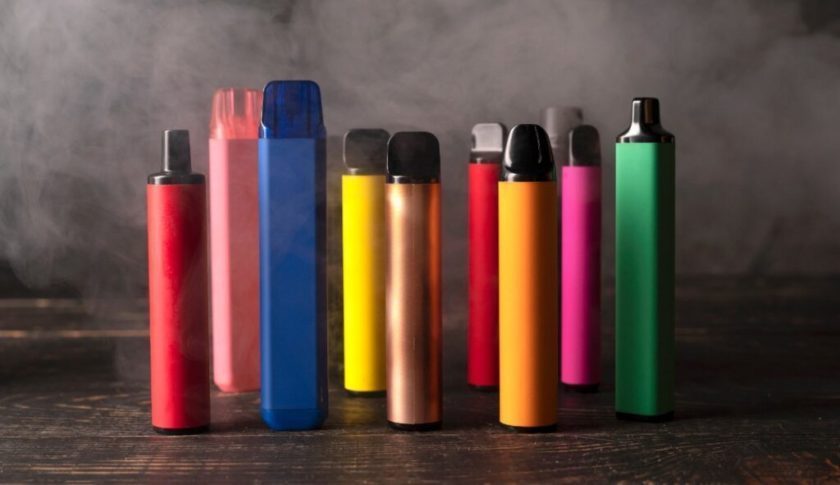
Welsh government to ban disposable e-cigarettes in 2025 to tackle plastic pollution and environmental damage.

The Welsh government announced plans to ban disposable e-cigarettes from June 2025 on its official website on 22 October. The move is aimed at tackling plastic pollution and reducing environmental damage.
 

Welsh Deputy Minister for Climate Change and Rural Affairs and Cabinet Secretary Huw Irranca-Davies said in a written statement that the new regulation, which confirms the Environmental Protection (Disposable Electronic Cigarettes) (Wales) Regulations 2024, will come into force next year.


"The introduction of these regulations will be another important step in tackling the problems of waste and plastic pollution," the official said.


The Order was first proposed in April 2024 and has been subject to consultation and amendment following feedback from stakeholders. The Welsh Government is working closely with the UK Government and local authorities in Scotland and Northern Ireland to ensure that the ban is implemented in a consistent and coherent way across the UK to promote high levels of compliance.


The Deputy Minister has confirmed that the ban will officially come into force on 1 June 2025. By setting a single implementation date across the country, the government aims to ensure a smooth roll-out of the ban and address the environmental challenges posed by single-use e-cigarettes in a consistent way.


One of the Welsh Government's key priorities is to address the environmental and social impacts of disposable e-cigarettes. We will continue to work with other UK nations to address these challenges.


We welcome news tips, article submissions, interview requests, or comments on this piece.

Please contact us at info@2firsts.com, or reach out to Alan Zhao, CEO of 2Firsts, on LinkedIn


Notice

1.  This article is intended solely for professional research purposes related to industry, technology, and policy. Any references to brands or products are made purely for objective description and do not constitute any form of endorsement, recommendation, or promotion by 2Firsts.

2.  The use of nicotine-containing products — including, but not limited to, cigarettes, e-cigarettes, nicotine pouchand heated tobacco products — carries significant health risks. Users are responsible for complying with all applicable laws and regulations in their respective jurisdictions.

3.  This article is not intended to serve as the basis for any investment decisions or financial advice. 2Firsts assumes no direct or indirect liability for any inaccuracies or errors in the content.

4.  Access to this article is strictly prohibited for individuals below the legal age in their jurisdiction.


Copyright


This article is either an original work created by 2Firsts or a reproduction from third-party sources with proper attribution. All copyrights and usage rights belong to 2Firsts or the original content provider. Unauthorized reproduction, distribution, or any other form of unauthorized use by any individual or organization is strictly prohibited. Violators will be held legally accountable.

For copyright-related inquiries, please contact: info@2firsts.com


AI Assistance Disclaimer


This article may have been enhanced using AI tools to improve translation and editorial efficiency. However, due to technical limitations, inaccuracies may occur. Readers are encouraged to refer to the cited sources for the most accurate information.

We welcome any corrections or feedback. Please contact us at: info@2firsts.com

FTC Scrutinizes Fifty Bar’s “Made in America” Claims as Vape Marketing Faces New Compliance Risk
The Federal Trade Commission sent a warning letter to Lucky Bar Holdings LLC over “Made in the USA” claims tied to Fifty Bar vape products, saying staff had reason to believe the products may be imported in whole or in significant part despite unqualified U.S.-origin marketing claims.
Jul.20
BAT's VELO Partners With McLaren F1 Team for Global Fan Campaign to Expand Nicotine Pouch Brand Reach
BAT-owned nicotine pouch brand VELO and the McLaren Mastercard Formula 1 Team have launched a global fan engagement campaign offering motorsport enthusiasts opportunities to win exclusive team-related experiences. The initiative aims to connect racing culture, fan interaction and VELO’s brand experience across global markets. The partnership reflects BAT’s broader strategy of expanding modern nicotine product brands beyond traditional tobacco categories through lifestyle and cultural marketing.
Jul.23
From Border-Logistics Insiders to Retail Service Stations, Australia Mounts a Sweeping Crackdown on the Illicit Nicotine Trade as iGET Vapes Surface in A$80 Million Crime Networks
Australian authorities have disclosed two major enforcement actions that go beyond product seizures and retail closures to examine how illicit tobacco and vape networks operate. On Aug. 14, the Multi Agency Strike Team said seven people had been charged and two criminal networks were valued by authorities at a combined A$80 million, or about US$56.8 million. Investigators allege the groups used bonded warehouses, freight businesses and “trusted insiders” in legitimate industries to circumvent border controls. In a separate operation on Aug. 11, more than 100 service stations were targeted as authorities sought information on illicit tobacco importation, distribution networks and the movement of sales proceeds.
Aug.17
Nicotine Pouches Gain Ground in U.S. Convenience Stores as Vape Unit Sales Fall 14%
According to convenience retail publication CStore Decisions, U.S. convenience store tobacco categories are undergoing a structural shift. Based on Circana OmniMarket Total U.S. Convenience data for the 52 weeks ending June 14, 2026, cigarettes remained the largest category with $50.8 billion in sales, but unit sales declined 5.3%. Electronic smoking devices and vaping products also declined, while modern oral nicotine products continued to grow, with nicotine pouch sales rising 29% in dollars and 17% in units. Retailers said changing consumer preferences are reshaping tobacco product assortments at convenience stores.
Regulations
Aug.07
From Nicotine Salts to Cocrystals: China’s Shenzhen Huabao institute explores a more stable form for sustained nicotine release
China-based Shenzhen Huabao Collaborative Innovation Technology Research Institute Co., Ltd. has filed a patent application for a nicotine-ascorbic acid cocrystal, exploring a new solid-state form of nicotine. The patent proposes applications across e-liquids, heated tobacco sticks, oral tobacco, chewing tobacco and snuff. In nicotine pouch tests disclosed in the filing, cocrystal formulations showed less than a 6% decline in nicotine content after three months of accelerated storage and a release profile combining early-stage release with sustained delivery over 60 minutes. The filing reflects exploration of nicotine forms beyond conventional nicotine base and nicotine salts.
Aug.13
South Korea’s New Vape Rules Raise Bar for E-Liquid Makers and China-Linked Supply Chains, Expert Says
South Korea’s new vape regulations are reshaping the e-liquid market, raising compliance requirements for manufacturers, retailers and overseas suppliers. In an interview with 2Firsts, Korean nicotine products specialist Sam Kim discusses licensing barriers, inventory impacts, China-linked supply chains, and emerging regulatory challenges around nicotine analogues, nicotine-free products and DIY mixing. The Korean case may offer broader insights as governments worldwide adapt to rapidly evolving nicotine products.
Jul.16