Key Takeaways
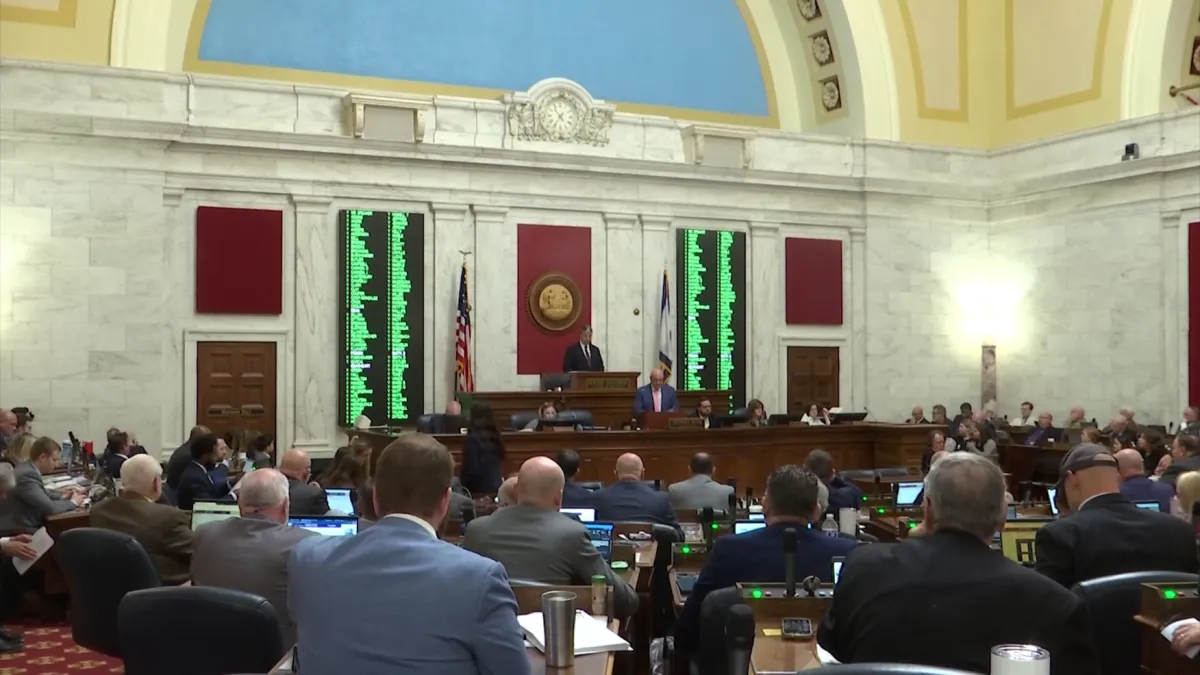
- The West Virginia House spent more than an hour debating amendments to an income tax reduction bill with one day left in the session.
- The bill came from Governor Patrick Morrisey’s initial proposal for a USD 250 million, 10% income tax cut.
- The Senate agreed to a 5% income tax reduction worth USD 125 million and proposed a vape tax increase as an offset.
- The House rejected the Senate’s vape tax amendment.
- The House passed the 5% income tax cut, but the Senate must still concur with the House’s changes.
2Firsts, March 16, 2026
According to the original report, with one day left in the legislative session, delegates in the West Virginia House chamber spent more than an hour trying to amend an income tax reduction bill.
The bill is the version of Governor Patrick Morrisey’s initial proposal for a USD 250 million, 10% income tax reduction.
At the State of the State address, Patrick Morrisey said he wanted a 5% to 10% income tax reduction. On the first day of the session, however, lawmakers learned that he had only calculated for 5% and was expecting them to calculate the rest.
When the Senate made its budget, it agreed to the 5% income tax reduction for USD 125 million but also proposed an offset in the form of a tax increase on vape products.
When the income tax reduction bill came to the House floor, delegates expressed dissatisfaction with what the Senate had sent over.
Delegate Marty Gearheart said the Senate thought it could do whatever it wanted to the House. He also said the proposal was a tax increase and that increasing taxes was something most House members had said they would not do.
Although the Senate’s vape tax amendment was struck down by the House, the chamber still passed the 5% income tax reduction, but not before expressing reservations.
Delegate Sean Hornbuckle said the tax cut amounted to roughly USD 68 a year for the average median household in West Virginia and questioned how many potholes could be filled with USD 125 million instead.
House Finance Chair Vernon Criss said the tax cut appeared to be ahead of the state’s economy and expressed hope that there would not be a revenue “hiccup” in the coming year.
The Senate will still need to concur with the House’s rejection of its vape tax proposal.
The legislative session adjourns at midnight on Saturday.
Image source: Wowk TV
We welcome news tips, article submissions, interview requests, or comments on this piece.
Please contact us at info@2firsts.com, or reach out to Alan Zhao, CEO of 2Firsts, on LinkedIn
Notice
1. This article is intended solely for professional research purposes related to industry, technology, and policy. Any references to brands or products are made purely for objective description and do not constitute any form of endorsement, recommendation, or promotion by 2Firsts.
2. The use of nicotine-containing products — including, but not limited to, cigarettes, e-cigarettes, nicotine pouchand heated tobacco products — carries significant health risks. Users are responsible for complying with all applicable laws and regulations in their respective jurisdictions.
3. This article is not intended to serve as the basis for any investment decisions or financial advice. 2Firsts assumes no direct or indirect liability for any inaccuracies or errors in the content.
4. Access to this article is strictly prohibited for individuals below the legal age in their jurisdiction.
Copyright
This article is either an original work created by 2Firsts or a reproduction from third-party sources with proper attribution. All copyrights and usage rights belong to 2Firsts or the original content provider. Unauthorized reproduction, distribution, or any other form of unauthorized use by any individual or organization is strictly prohibited. Violators will be held legally accountable.
For copyright-related inquiries, please contact: info@2firsts.com
AI Assistance Disclaimer
This article may have been enhanced using AI tools to improve translation and editorial efficiency. However, due to technical limitations, inaccuracies may occur. Readers are encouraged to refer to the cited sources for the most accurate information.
We welcome any corrections or feedback. Please contact us at: info@2firsts.com