2023 November China Export Data: E-Cigarettes to Russia

Industry Insight by Mincy
Dec.26.2023
2023 November China Export Data: E-Cigarettes to Russia
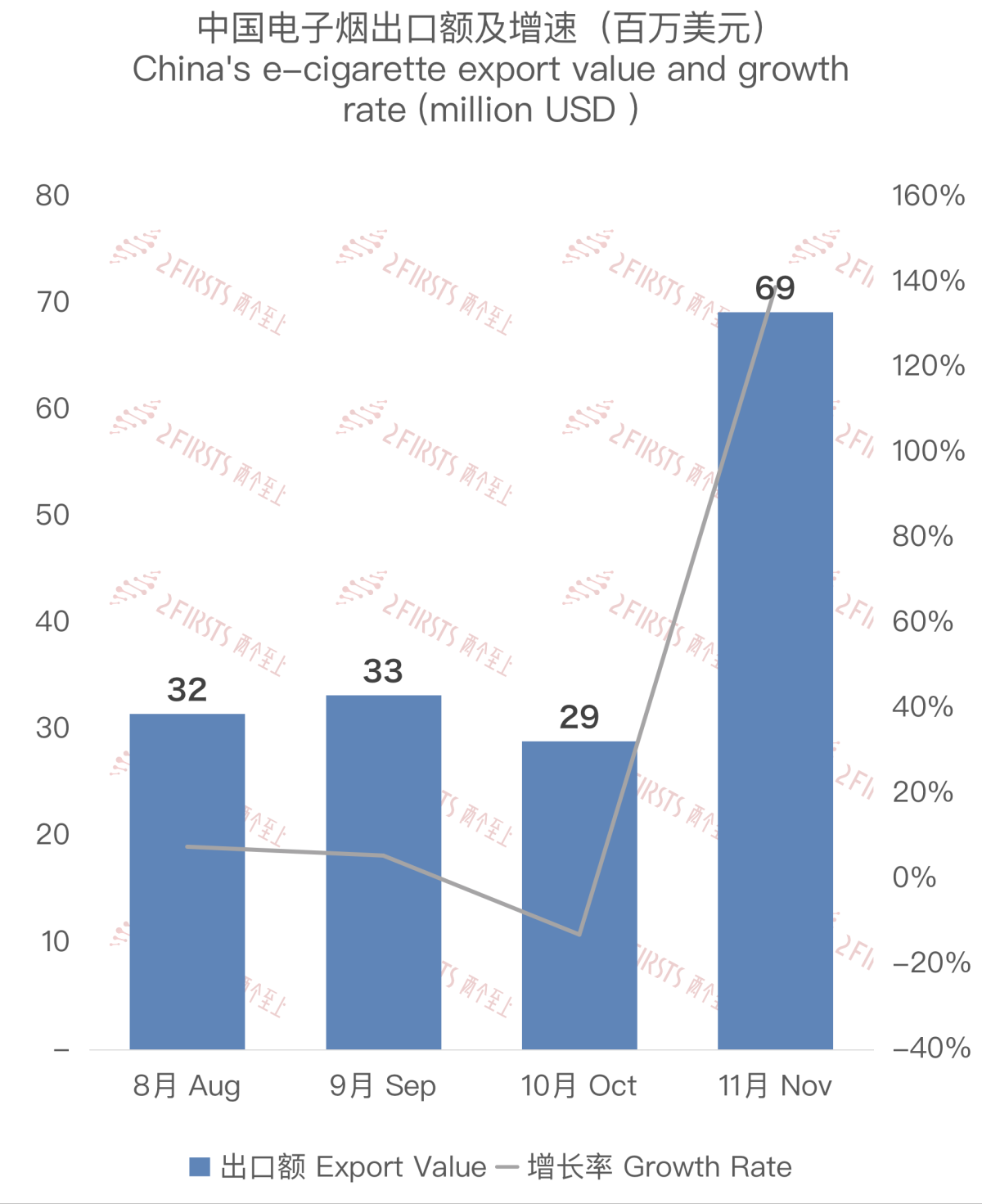
China's e-cigarette exports to Russia in November 2023 reached $69.24 million, with a MoM growth of 138.90% and YoY decline of 4.75%.

According to the updated trade data from the General Administration of Customs of the People's Republic of China, 2FIRSTS has compiled the e-cigarette export statistics to Russia in November 2023. The details are as follows:
2023 November China Export Data: E-Cigarettes to Russia
Image source: 2FIRSTS (Created by Mincy)


Exports reached approximately $69.24 million, marking a month-on-month increase of 138.90%, although a year-on-year decline of 4.75%.
2023 November China Export Data: E-Cigarettes to Russia
Image Source: 2FIRSTS (Graphics by Mincy)


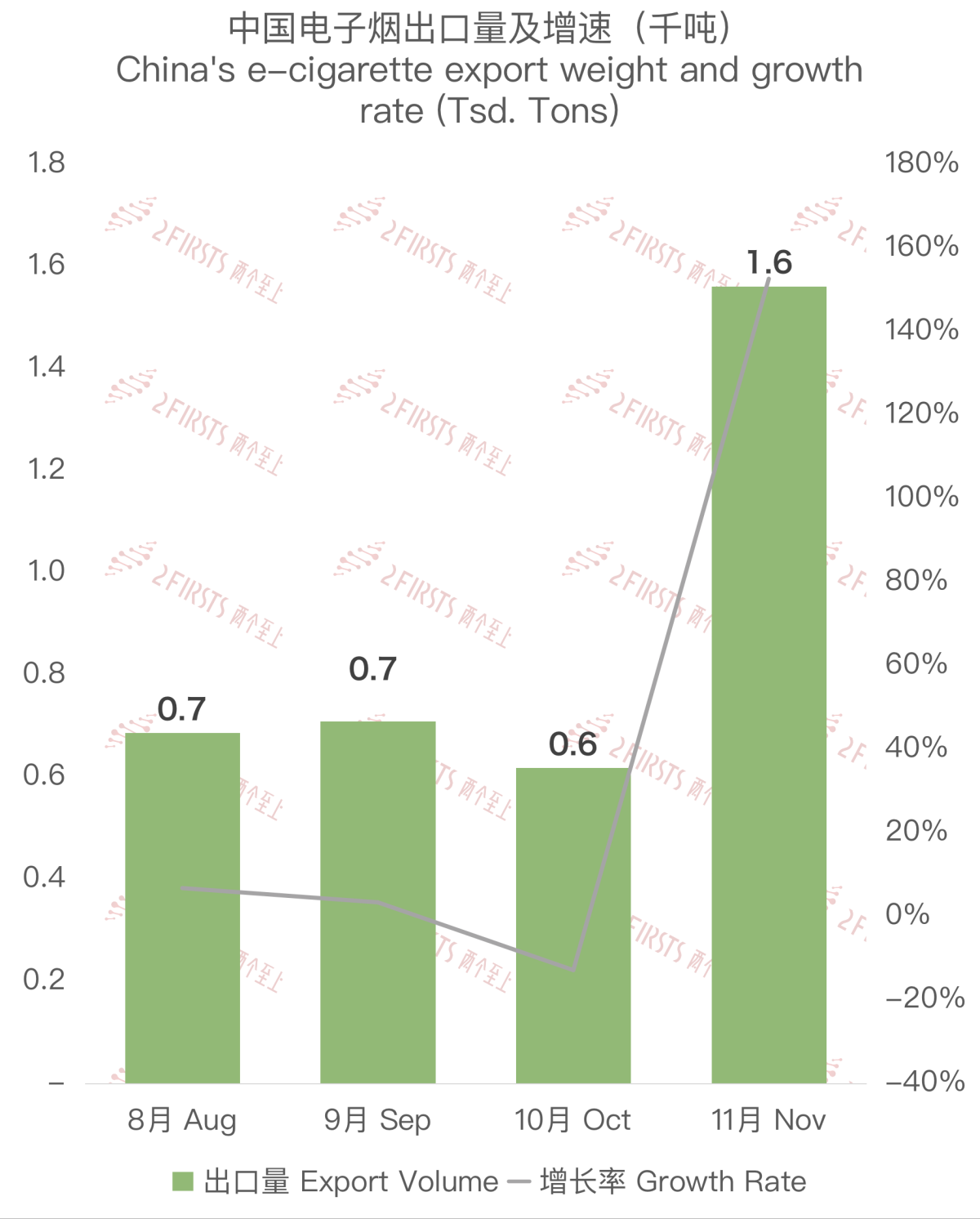
The export volume reached approximately 1,561 tons, marking a 152.58% increase compared to the previous period and a 16.03% increase compared to the same period last year.
2023 November China Export Data: E-Cigarettes to Russia
Image source: 2FIRSTS (Mincy Design)


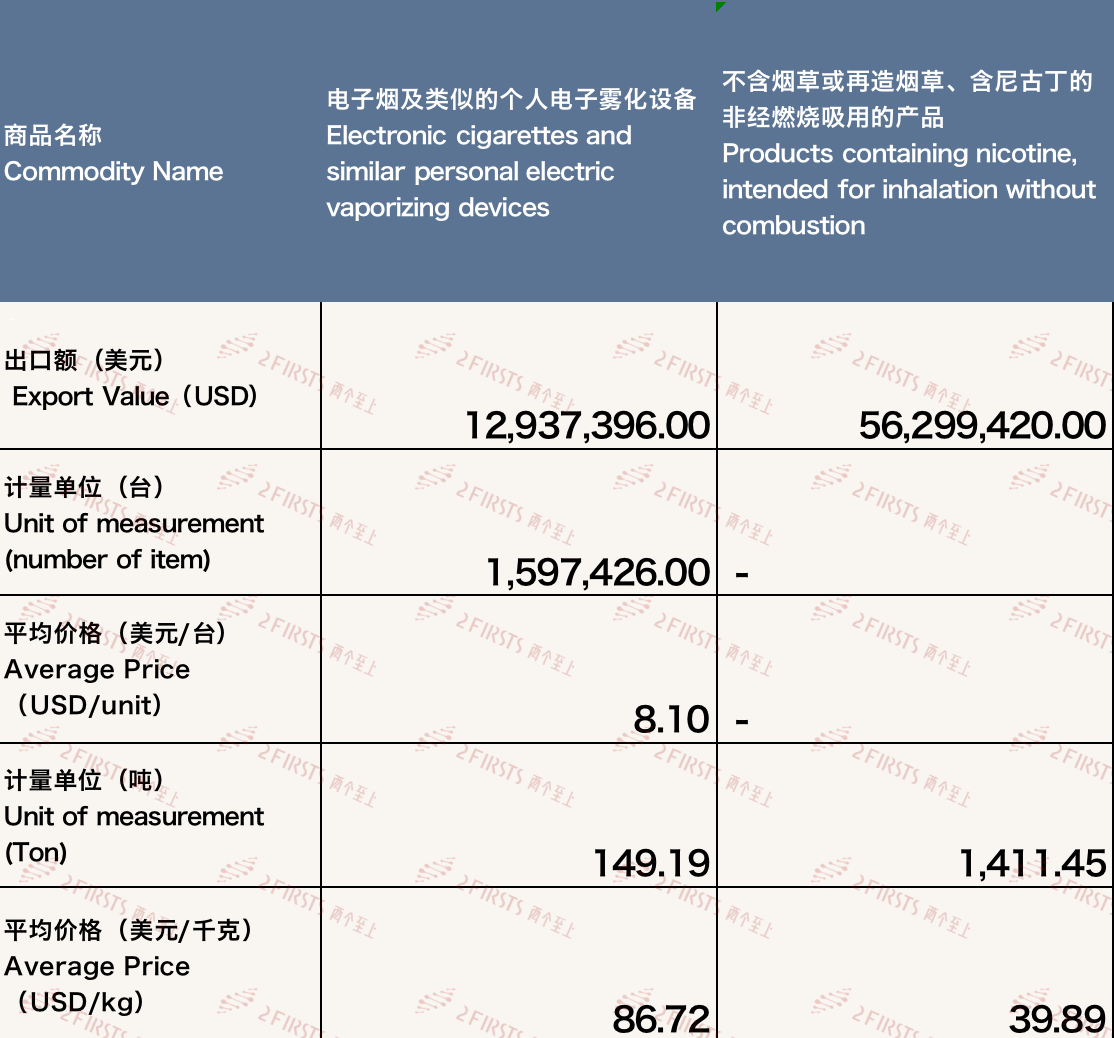
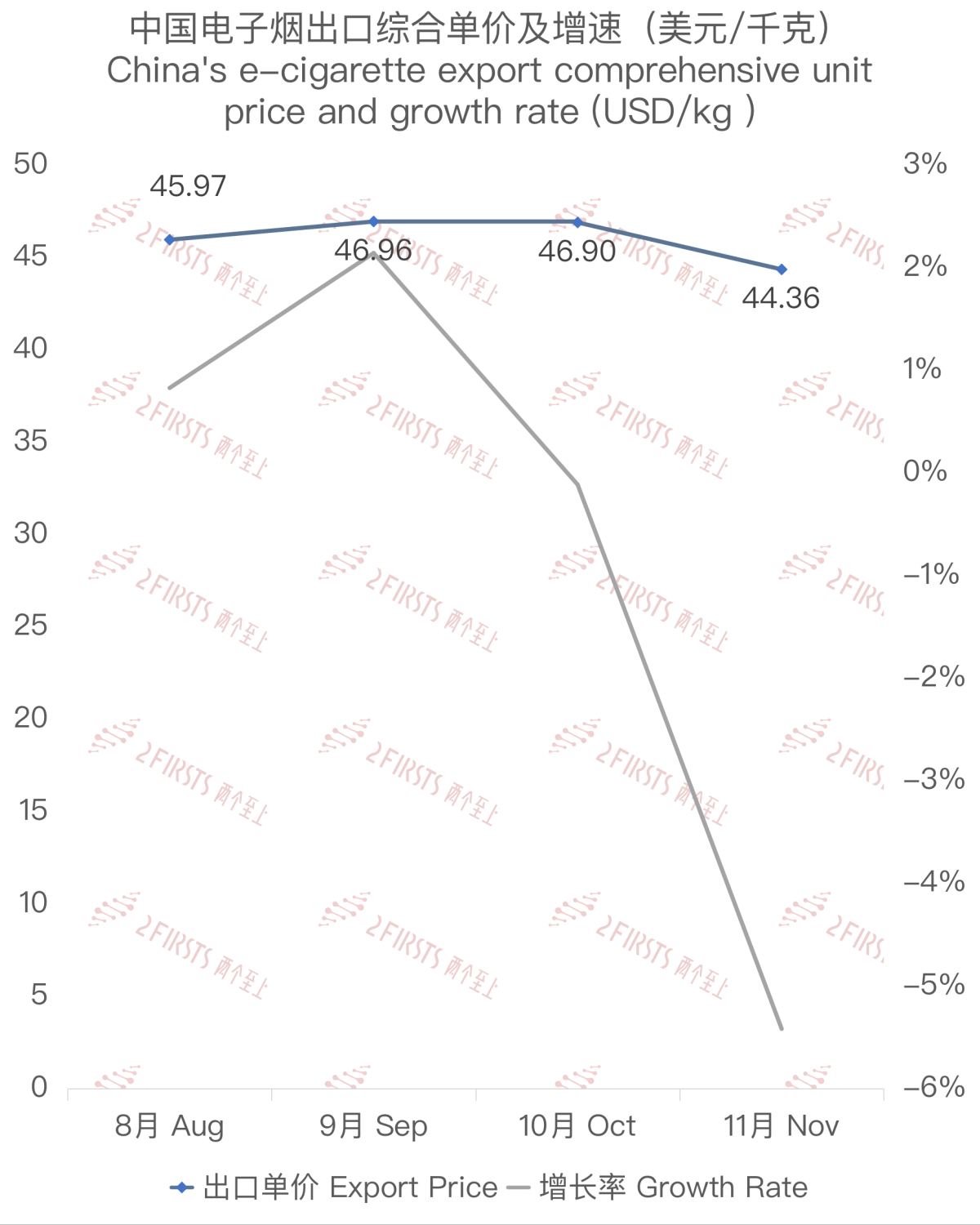
The export unit price dropped by 5.42% compared to the previous period and decreased by 17.91% compared to the same period last year, amounting to $44.36 per kilogram. The average price of "e-cigarettes and similar personal electronic vaporizers" was $8.10 per unit.
2023 November China Export Data: E-Cigarettes to Russia
Image source: 2FIRSTS (Mincy graphic)


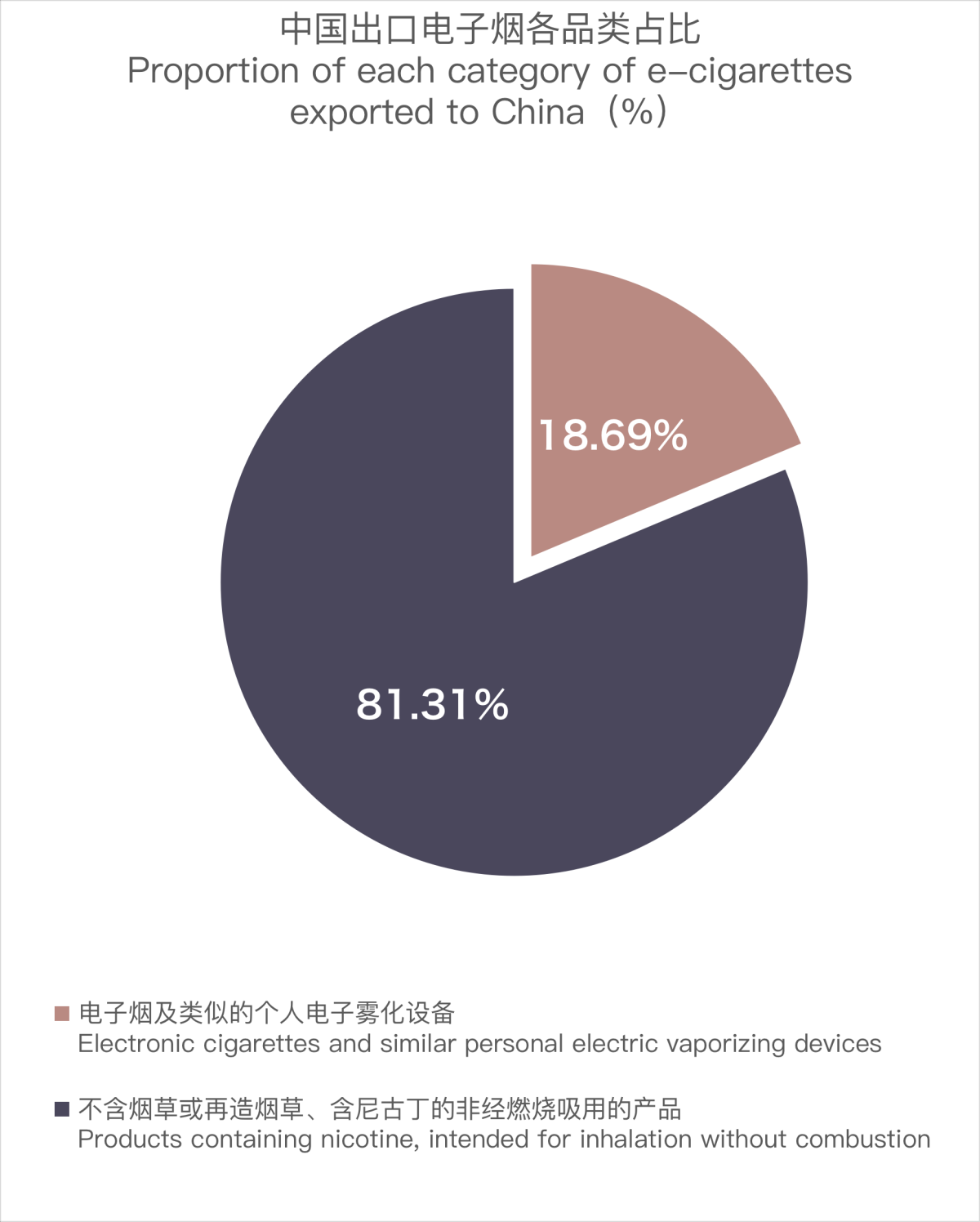
Among them, "e-cigarettes and similar personal electronic vaporization devices" account for 18.69% of the export category, while "products that do not contain tobacco or reconstituted tobacco but contain nicotine and are non-combustible for inhalation" account for 81.31%.
2023 November China Export Data: E-Cigarettes to Russia
Source of the image: 2FIRSTS (Mincy graph)


We welcome news tips, article submissions, interview requests, or comments on this piece.

Please contact us at info@2firsts.com, or reach out to Alan Zhao, CEO of 2Firsts, on LinkedIn


Notice

1.  This article is intended solely for professional research purposes related to industry, technology, and policy. Any references to brands or products are made purely for objective description and do not constitute any form of endorsement, recommendation, or promotion by 2Firsts.

2.  The use of nicotine-containing products — including, but not limited to, cigarettes, e-cigarettes, nicotine pouchand heated tobacco products — carries significant health risks. Users are responsible for complying with all applicable laws and regulations in their respective jurisdictions.

3.  This article is not intended to serve as the basis for any investment decisions or financial advice. 2Firsts assumes no direct or indirect liability for any inaccuracies or errors in the content.

4.  Access to this article is strictly prohibited for individuals below the legal age in their jurisdiction.


Copyright


This article is either an original work created by 2Firsts or a reproduction from third-party sources with proper attribution. All copyrights and usage rights belong to 2Firsts or the original content provider. Unauthorized reproduction, distribution, or any other form of unauthorized use by any individual or organization is strictly prohibited. Violators will be held legally accountable.

For copyright-related inquiries, please contact: info@2firsts.com


AI Assistance Disclaimer


This article may have been enhanced using AI tools to improve translation and editorial efficiency. However, due to technical limitations, inaccuracies may occur. Readers are encouraged to refer to the cited sources for the most accurate information.

We welcome any corrections or feedback. Please contact us at: info@2firsts.com

South Korea’s New Vape Rules Raise Bar for E-Liquid Makers and China-Linked Supply Chains, Expert Says
South Korea’s new vape regulations are reshaping the e-liquid market, raising compliance requirements for manufacturers, retailers and overseas suppliers. In an interview with 2Firsts, Korean nicotine products specialist Sam Kim discusses licensing barriers, inventory impacts, China-linked supply chains, and emerging regulatory challenges around nicotine analogues, nicotine-free products and DIY mixing. The Korean case may offer broader insights as governments worldwide adapt to rapidly evolving nicotine products.
Jul.16
JTI Makes Third Bet on South Korea as Ploom AURA Enters a Market Dominated by lil and IQOS
Japan Tobacco International is stepping up its heated tobacco push in South Korea with Ploom AURA. Since its official launch in April 2026, the device's limited First Edition and Glacier White version have sold out, while distribution has expanded across Seoul, Incheon, Gyeonggi Province and airport duty-free channels. The rollout marks JTI's third major attempt to build a stronger heated tobacco position in South Korea, following Ploom TECH in 2019 and Ploom X Advanced in 2024. At the group level, JT plans to invest about ¥800 billion, approximately $5 billion, in reduced-risk products from 2026 through 2028, with heated products and Ploom identified as its primary investment priority.
Aug.14
From Nicotine Salts to Cocrystals: China’s Shenzhen Huabao institute explores a more stable form for sustained nicotine release
China-based Shenzhen Huabao Collaborative Innovation Technology Research Institute Co., Ltd. has filed a patent application for a nicotine-ascorbic acid cocrystal, exploring a new solid-state form of nicotine. The patent proposes applications across e-liquids, heated tobacco sticks, oral tobacco, chewing tobacco and snuff. In nicotine pouch tests disclosed in the filing, cocrystal formulations showed less than a 6% decline in nicotine content after three months of accelerated storage and a release profile combining early-stage release with sustained delivery over 60 minutes. The filing reflects exploration of nicotine forms beyond conventional nicotine base and nicotine salts.
Aug.13
SMOORE’s DOJO by VAPORESSO to Launch New Global Brand Identity on September 1
According to recent LinkedIn posts from people at VAPORESSO, SMOORE and a German distribution partner, vape brand DOJO will begin rolling out a new global brand identity on September 1, 2026, led by a redesigned handwritten logo. The new visual system will be gradually applied across product packaging, marketing materials and digital assets over the following months. Fabio Corsaro, Head of Marketing and Purchasing at MG Wesel GmbH, said the rebrand was related to trademark issues, but that explanation has not been publicly confirmed by DOJO, VAPORESSO or SMOORE. DOJO is currently promoting its Blast X product in Germany.
Aug.31
Product | JTI Expands Ploom Ecosystem as LYO Tobacco-Free Nicotine Sticks Roll Out Across Europe
Japan Tobacco International (JTI) is expanding its Ploom heated product ecosystem with LYO tobacco-free nicotine sticks. Designed specifically for Ploom devices, LYO contains nicotine but no tobacco. Public information shows that the product has gradually entered several European markets, including Spain, Portugal and Germany, and was officially introduced in Romania in July 2026. The launch highlights JTI’s efforts to explore broader nicotine consumable formats beyond traditional tobacco-based sticks.
JTI
Jul.21 by 2Firsts Perspectives
Malaysia Police Seize RM12.7 Million in Illegal Vapes and Cigarettes as Probe Points to Sea Shipments From China
Police in Malaysia’s Selangor state seized illegal vape products and contraband cigarettes worth about RM12.7 million (approximately $3 million) in two enforcement operations. According to New Straits Times and The Star, the vape-related operation uncovered 131,036 boxes of vape products, 4,900 bottles of e-liquid and 25,510 vape devices, valued at about RM9.4 million. Police said preliminary investigations indicated that some illegal vape products entered Malaysia through sea shipments from China before moving through storage and distribution networks.
Aug.10