2023 November E-cigarette Export Data from China to US

Industry Insight by Mincy
Dec.21.2023
2023 November E-cigarette Export Data from China to US
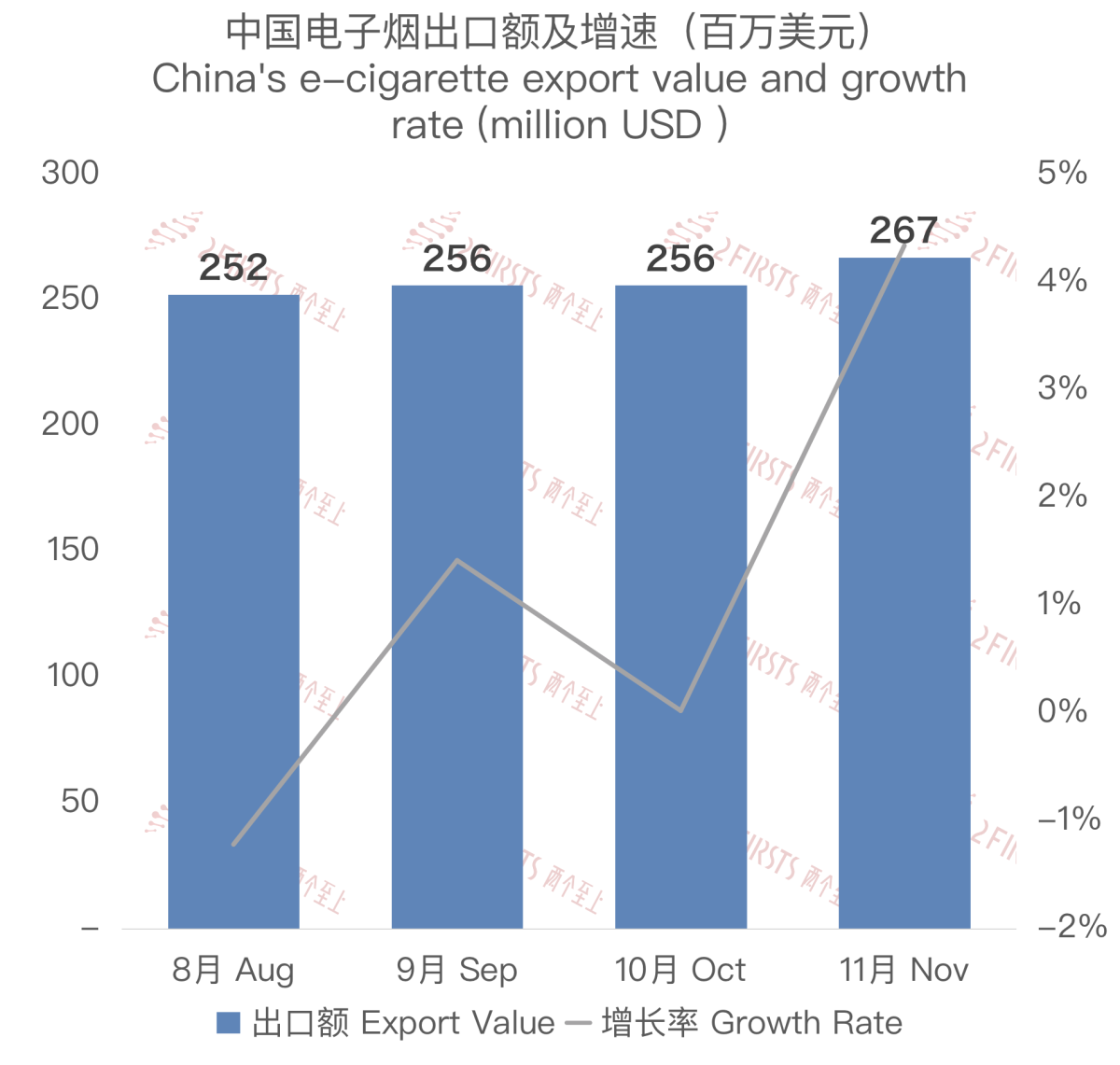
China's e-cigarette exports to the US in November 2023 reached approximately $267 million, with a significant growth rate.

According to the latest trade data from the General Administration of Customs of the People's Republic of China, 2FIRSTS has compiled the e-cigarette export figures from China to the United States in November 2023. The details are as follows:
2023 November E-cigarette Export Data from China to US
Image source: 2FIRSTS (created by Mincy)


The export amount reached approximately 267 million US dollars, with a month-on-month increase of 4.34% and a year-on-year increase of 7.66%.
2023 November E-cigarette Export Data from China to US
Image source: 2FIRSTS (Mincy Mapping)


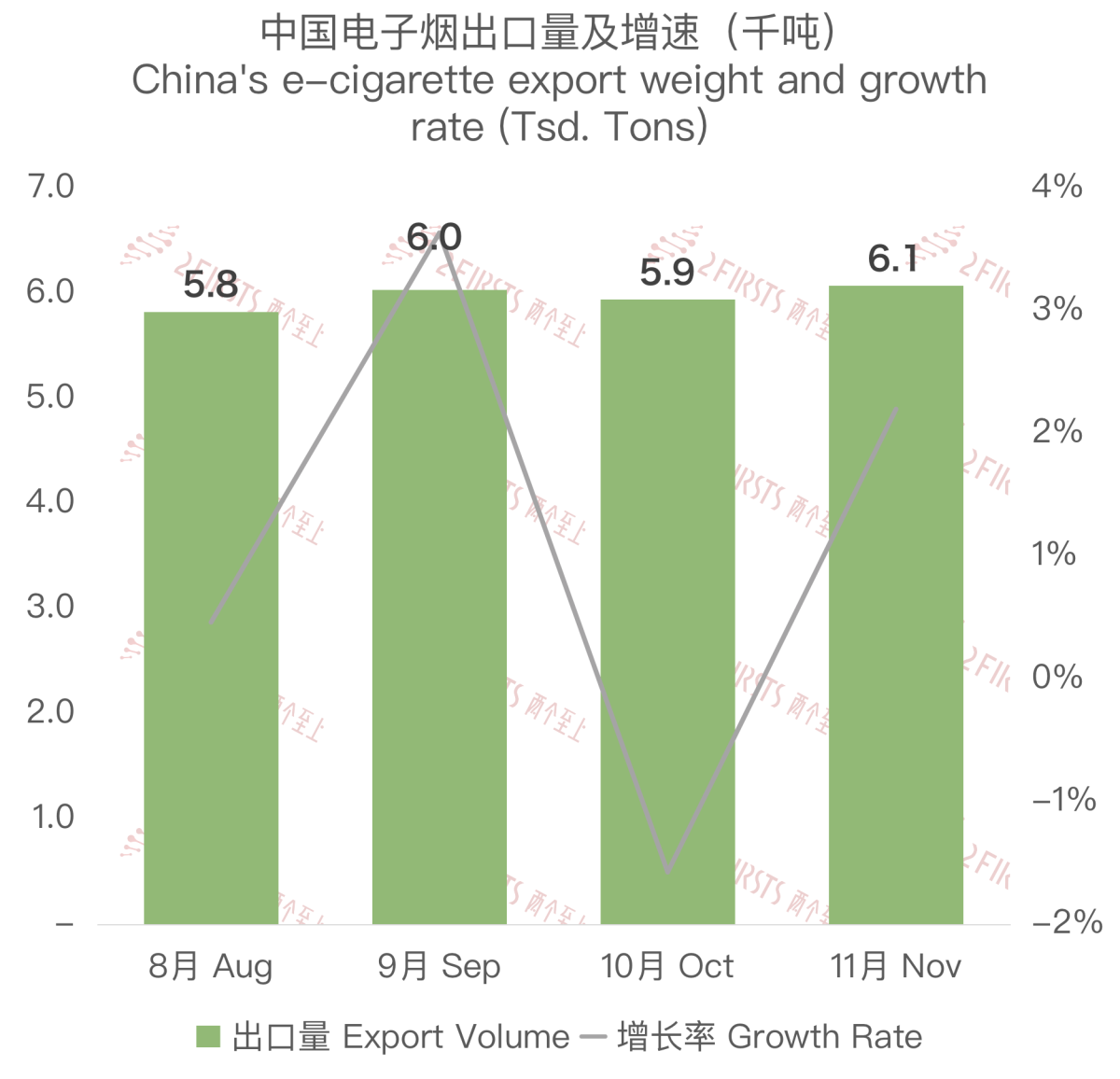
The export volume reached approximately 607 tons, representing a month-on-month growth of 2.20% and a year-on-year growth of 23.30%.
2023 November E-cigarette Export Data from China to US
Image source: 2FIRSTS (Mincy graphics)


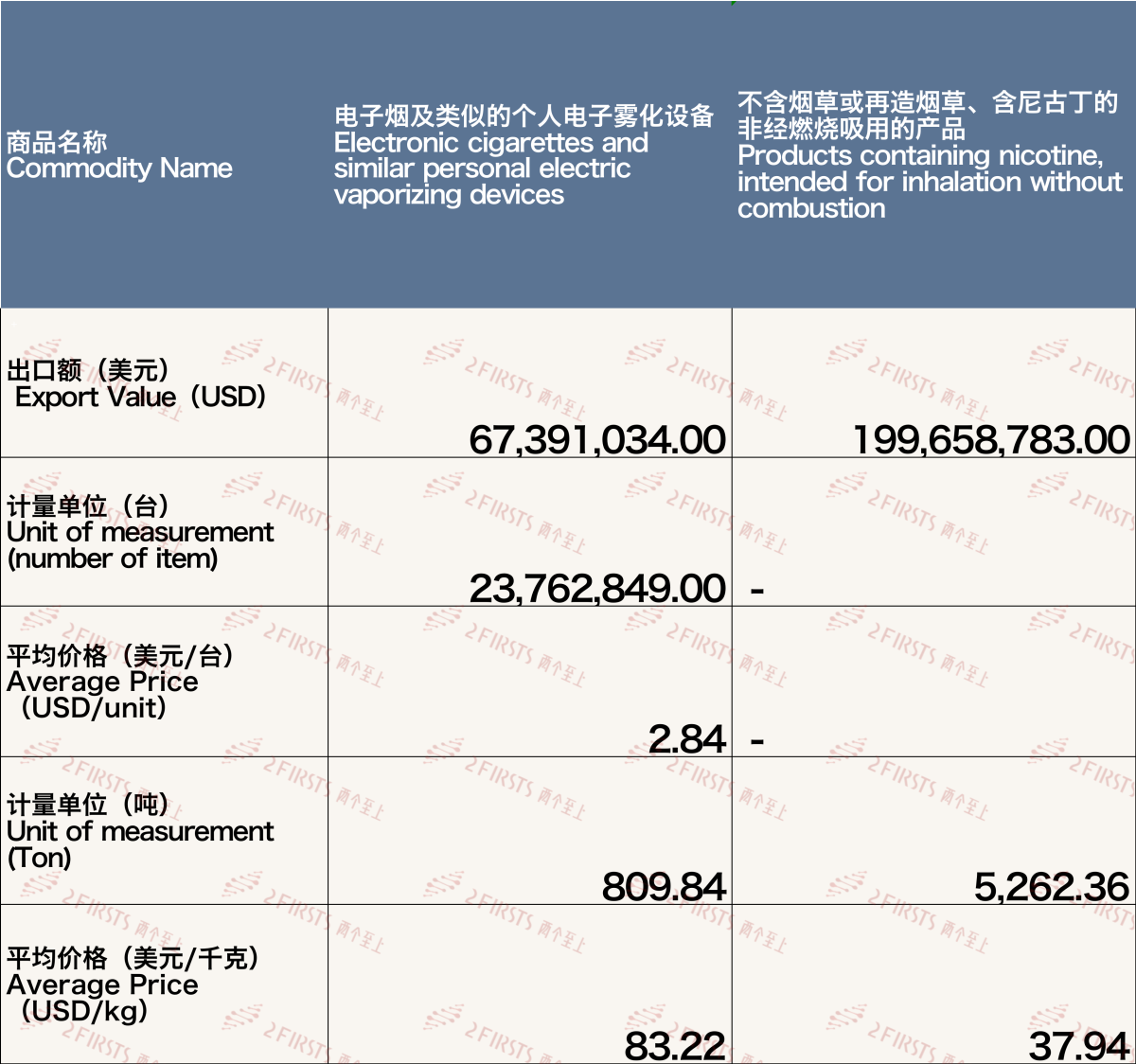
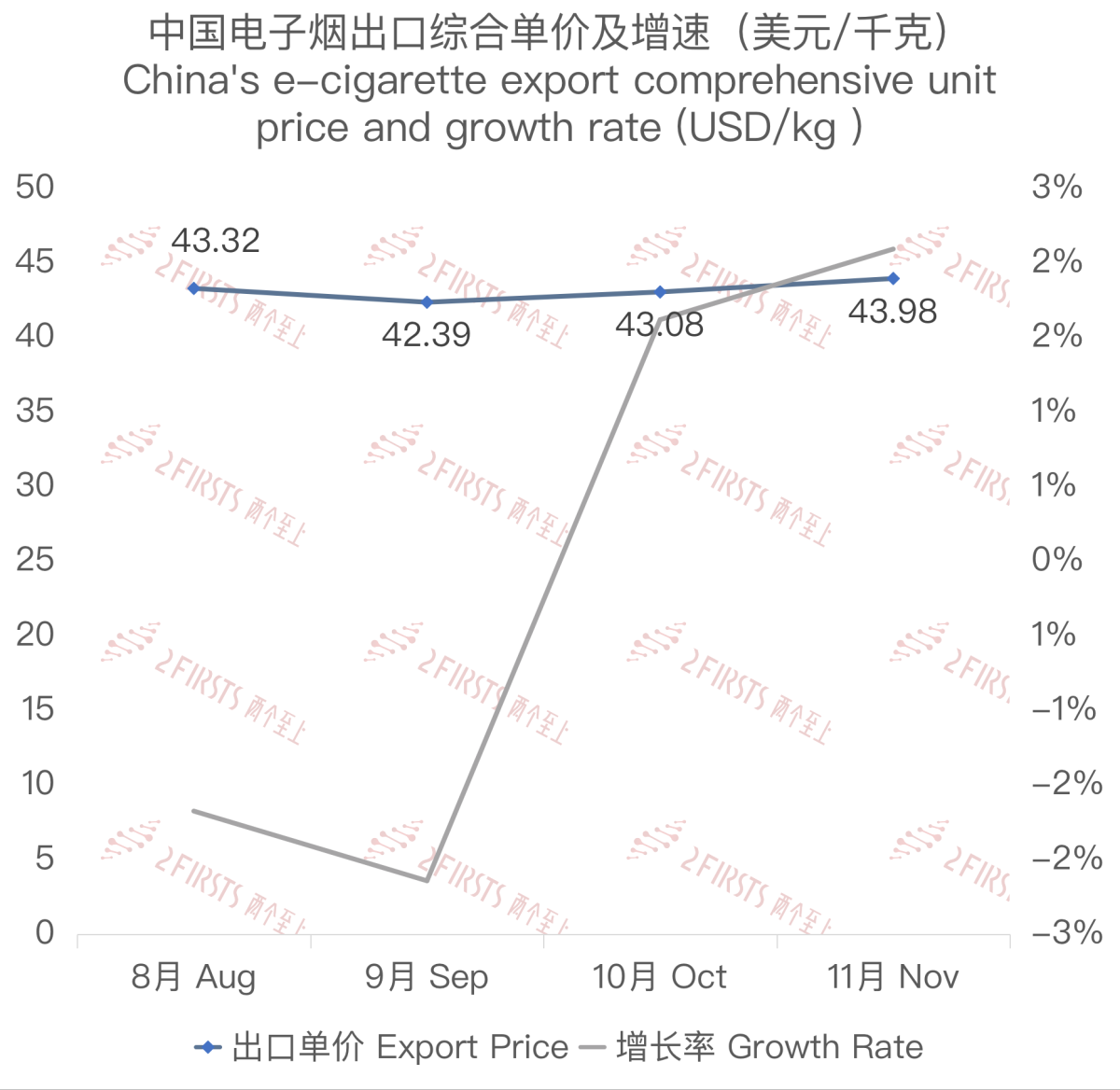
The export unit price is $43.98 per kilogram, showing a 2.10% increase compared to the previous month but a 12.68% decrease year-on-year. The average price of "e-cigarettes and similar personal electronic vaporizers" is $2.84 per unit.
2023 November E-cigarette Export Data from China to US
Image source: 2FIRSTS (graphic by Mincy)


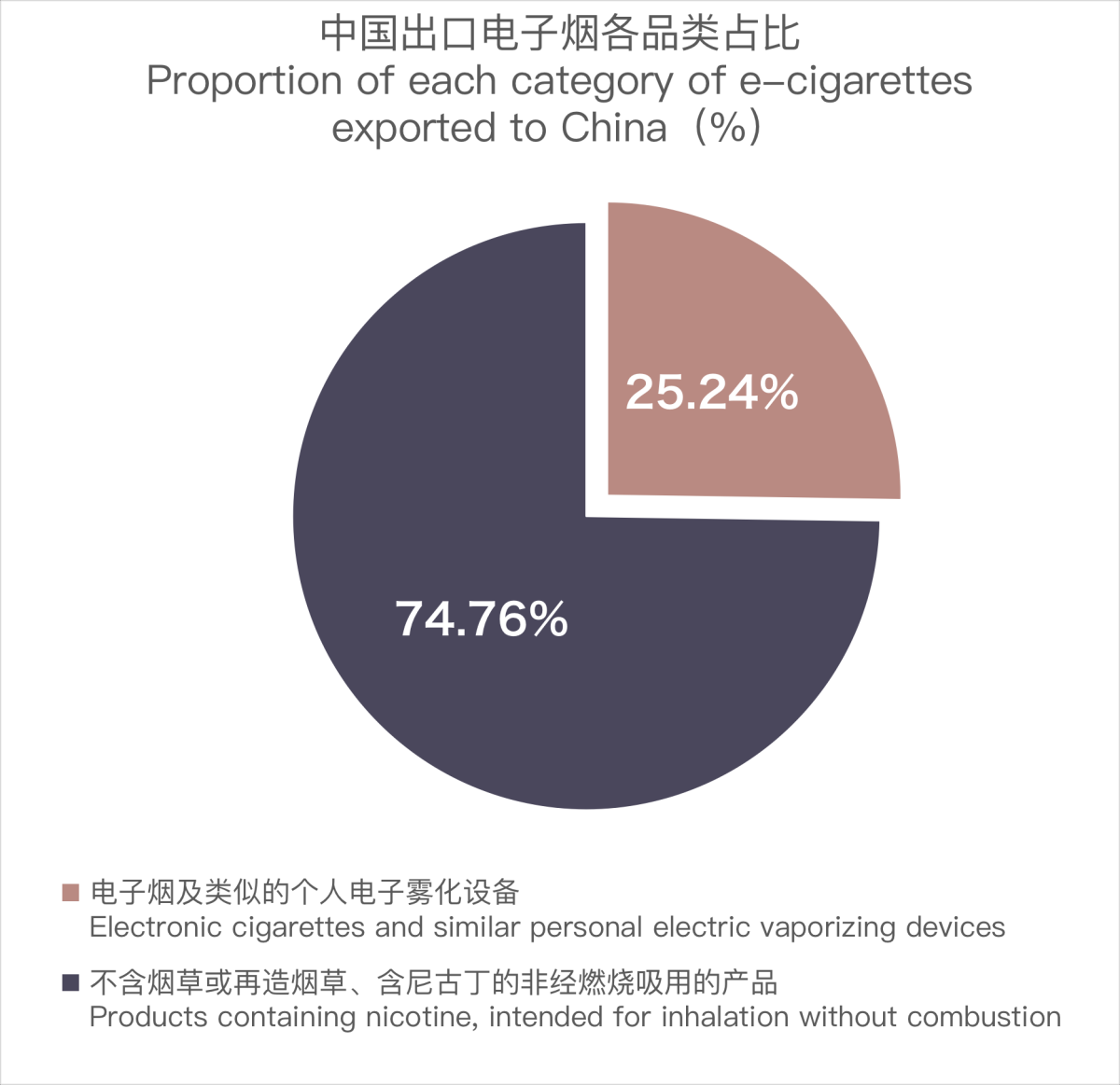
Among them, "e-cigarettes and similar personal electronic vaporizers" accounted for 25.24% of the export category, while "non-combustible nicotine-containing products excluding tobacco or reconstituted tobacco" accounted for 74.76%.
2023 November E-cigarette Export Data from China to US
Image source: 2FIRSTS (Mincy Design)


We welcome news tips, article submissions, interview requests, or comments on this piece.

Please contact us at info@2firsts.com, or reach out to Alan Zhao, CEO of 2Firsts, on LinkedIn


Notice

1.  This article is intended solely for professional research purposes related to industry, technology, and policy. Any references to brands or products are made purely for objective description and do not constitute any form of endorsement, recommendation, or promotion by 2Firsts.

2.  The use of nicotine-containing products — including, but not limited to, cigarettes, e-cigarettes, nicotine pouchand heated tobacco products — carries significant health risks. Users are responsible for complying with all applicable laws and regulations in their respective jurisdictions.

3.  This article is not intended to serve as the basis for any investment decisions or financial advice. 2Firsts assumes no direct or indirect liability for any inaccuracies or errors in the content.

4.  Access to this article is strictly prohibited for individuals below the legal age in their jurisdiction.


Copyright


This article is either an original work created by 2Firsts or a reproduction from third-party sources with proper attribution. All copyrights and usage rights belong to 2Firsts or the original content provider. Unauthorized reproduction, distribution, or any other form of unauthorized use by any individual or organization is strictly prohibited. Violators will be held legally accountable.

For copyright-related inquiries, please contact: info@2firsts.com


AI Assistance Disclaimer


This article may have been enhanced using AI tools to improve translation and editorial efficiency. However, due to technical limitations, inaccuracies may occur. Readers are encouraged to refer to the cited sources for the most accurate information.

We welcome any corrections or feedback. Please contact us at: info@2firsts.com

Bringing Tax and Insurance Into Nicotine Regulation: Insights From a Tobacco Harm-Reduction Report
A smoke-free nicotine policy report argues that tobacco harm reduction should move beyond product bans and health warnings into tax policy, insurance pricing and risk-based regulation. While some projections remain open to debate, the report highlights a wider challenge: nicotine products, technologies and consumer behavior have changed sharply over the past decade, and regulatory systems may need new tools to better align tobacco control with harm-reduction goals.
Jun.08
Putin Signs Russia’s Tobacco and Nicotine Product Licensing Law, Banning Unlicensed Sales From 2027
Russian President Vladimir Putin has signed a law introducing mandatory licensing for wholesale and retail trade in tobacco and nicotine-containing products, with the system taking effect on October 1, 2026, and unlicensed operations banned from March 1, 2027, while vape and e-liquid retail may also face uncertainty from temporary regional sales-ban powers.
Jul.01
Australia’s Daily Smoking Rate Falls to Record Low of 5.8% as Nicotine Use Patterns Shift
According to the Australian Institute of Health and Welfare’s National Drug Strategy Household Survey, daily smoking among Australians aged 18 and over fell to a record low of 5.8% in 2025. Health Minister Mark Butler said Australia now has around 500,000 fewer daily smokers than three years ago and credited the government’s vaping reforms as part of broader progress. Among people aged 14 and over, daily smoking declined from 8.3% in 2022-23 to 5.6% in 2025. Daily vaping rates stabilised at 3.6%, while the government also moved to further restrict access to nicotine pouches through unapproved therapeutic import pathways.
Jul.21
Research | Swedish Study Finds Oral Lesions in 79% of Examined Nicotine Pouch Users, With Distinct Tissue Responses
A new Swedish study found oral mucosal lesions in 79% of examined nicotine pouch users and 89% of tobacco-derived snus users, with different tissue-response patterns between the two categories. For manufacturers and regulators, the findings shift attention toward product formulation, flavouring, pouch materials and local oral exposure, not only whether a product contains tobacco. The study found no higher prevalence of caries or periodontal disease, but it could not establish causality, long-term outcomes or differences between individual products or designs.
Special Report
Jul.27
BAT UK Director Tolga Kilic Says Illicit Nicotine Market Squeezes Legal Retailers Amid Rising Compliance Costs
UK retail publication Grocery Trader has published a viewpoint article from Tolga Kilic, Commercial Director for BAT UK & Ireland, discussing the impact of illicit nicotine products on legitimate retail channels. Kilic said illegal vapes and other illicit nicotine products create competitive pressure for compliant retailers and called for stronger market controls and supply-chain oversight. The comments come as the UK advances policies including the disposable vape ban and Vaping Products Duty, creating a more complex operating environment for legal vape retailers.
Jul.28
France Vape Market 2026: Use Reaches 7.9% Amid Tax, Regulatory and Scientific Debate
France remains one of Europe’s active vape markets in 2026, with adult vaping prevalence rising to 7.9%; at the same time, e-liquid taxation, public-space restrictions, advertising compliance and health-risk debate are pushing the industry into a critical policy period.
Jun.23