![[2Firsts Special Report] Global NGP Patent Battlefront: YTI Challenges PMI Over the “Gathered Sheet” Patent](https://static.2firsts.com/uploads/20250411/ec90e58fd701b291b554f6cad4378274.jpg?x-oss-process=style/origin)
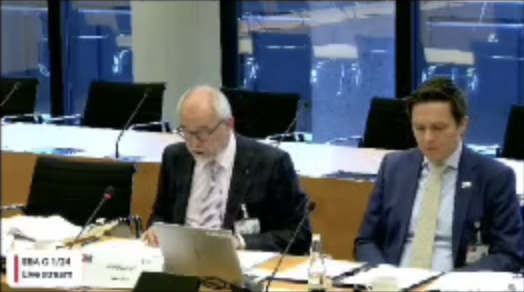
[2Firsts Report]On March 28, 2025, the Board of Appeal of the European Patent Office (EPO) held a high-profile hearing on a case with far-reaching implications for the global patent landscape in next-generation tobacco products. YTI filed a petition to invalidate EP3076804, a patent held by PMI, which covers a core component in HEETS sticks known as the “gathered sheet.” The hearing lasted nearly four hours and was livestreamed to the public, marking the first time a Chinese tobacco company has directly challenged a major international patent within the European patent framework. 2Firsts interviewed Tang Shunliang, partner at Tian Yuan Law Firm, for expert insights into the case.
Case Background: MC Heated Tobacco Product Encounters Barriers Abroad
YTI is a subsidiary of Yunnan Tobacco Industry Co., Ltd. (Yunnan Tobacco), which oversees the company’s international business operations. Yunnan Tobacco is the largest of the 18 tobacco manufacturing companies under the China National Tobacco Corporation.
Around 2021, YTI launched its “MC” heated tobacco product in overseas markets. Shortly thereafter, PMI alleged that the product infringed one of its patents. In response, YTI filed a formal opposition with the EPO, targeting EP3076804 and requesting its revocation to mitigate legal exposure.
The EP3076804 patent protects the aerosol-generating section of PMI’s HNB stick. It involves processing reconstituted tobacco into a “gathered sheet,” then wrapping it with thermally conductive and flame-retardant materials to enhance heating efficiency and prevent ignition.
Since its launch in Japan in 2014, IQOS has become central to PMI’s transformation strategy. Over the past decade, PMI has invested heavily in its technology, user systems, and global retail presence. By 2024, IQOS had expanded to 90+ markets, forming a full product ecosystem—including TEREA and ILUMA—and secured a dominant position in the global HNB sector.
Core Technical Dispute: Structural Design and Interpretive Boundaries of the “Gathered Sheet”
The gathered sheet improves thermal coupling and aerosol uniformity. Its compression and crimping increase density control, while its outer flame-retardant foil forms a dual-function heat spreader and fire barrier—key to the HEETS design.
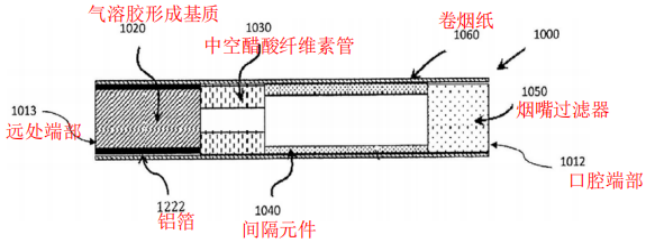
Whether the term is sufficiently clear is central to patent validity. Under European law, terminological clarity affects not only patent grants and oppositions, but also interpretive consistency across legal systems.
The specification defines “gathered sheet” as reconstituted tobacco that’s been folded, crimped, or otherwise processed. YTI argued that an earlier patent—EP2368449A1—had already disclosed such structures, undermining novelty.
The EPO’s preliminary review deemed YTI’s evidence insufficient to undermine novelty. The clarity argument was also dismissed. The Board of Appeal recommended referring the question of using the specification to interpret claims to the Enlarged Board of Appeal.
Tang Shunliang told 2Firsts that YTI’s failure to conduct timely prior art searches and present key evidence was a major reason it ended up in a reactive position.
“They overlooked multiple U.S. patents from the 1990s that fully disclosed the structure of gathered sheets,” he explained. “Had these been properly submitted, they could have directly challenged the novelty of EP3076804.”
“It wasn’t a lack of understanding—it was a lack of compelling evidence,” he added. “Patent invalidation isn’t theoretical; it’s a war of documentation.”
Strategic Contest: Who Gets to Define the Patent Rules?
While the ruling is still pending, Tang noted that this case already marks a turning point in the globalization of HNB. For years, Chinese companies have relied on structural design changes—like removing wrappers or severing links—to circumvent PMI patents. While temporarily effective, such tactics have limited long-term viability.
“If you don’t actively challenge your opponent’s patent logic, you’ll always be playing by their rules,” he said. “This isn’t just about one patent—it’s about who gets to write the rules.”
Tang recommends that Chinese firms competing globally in HNB develop three essential competencies:
• Mastery of core heated tobacco technologies
• Comprehensive patent search, analysis, and interpretation capabilities
• Integration between legal tactics and commercial strategy
Looking Ahead: Toward Standardization or Continued Confrontation?
Whether EP3076804 gets revoked will shape the future of HNB globally. For the industry to go global, standardized patent systems are inevitable.
While combustible cigarettes follow global standards, the fragmented patent landscape in HNB has created barriers for consumers, lawmakers, and competitors alike.
Could the HNB industry adopt a Standard Essential Patent (SEP) pool like in telecommunications? Tang believes it’s worth exploring.
Many tobacco companies still apply for “parameter-type” patents repackaging old ideas to suppress competition. Tang noted this tactic is also common in the U.S. vaping space.
He urges European and global patent authorities to reassess inventiveness standards in novel tobacco technologies to prevent abuse.
“Whatever the outcome, this case is already the most sobering and practical patent lesson for Chinese tobacco firms.”
Tang concluded, “A patent isn’t just a wall; it’s the bottom line of survival. And some are still waiting—for the long night to end, for that patent to finally expire.”
About the Expert:
Tang Shunliang is a partner at Tian Yuan Law Firm with more than a decade of experience in tobacco-related IP, having handled multiple complex and high-impact cases involving both traditional and novel tobacco products. (Provided by Tang)
Further Reading:
A Technical Interpretation of the YTI vs. PMI EP804 Patent Invalidation Case: What Exactly Is a “Gathered Sheet”?