Analysis of China's E-cigarette Export to Belgium in March 2024

Industry Insight by 2FIRSTS
May.15.2024
Analysis of China's E-cigarette Export to Belgium in March 2024
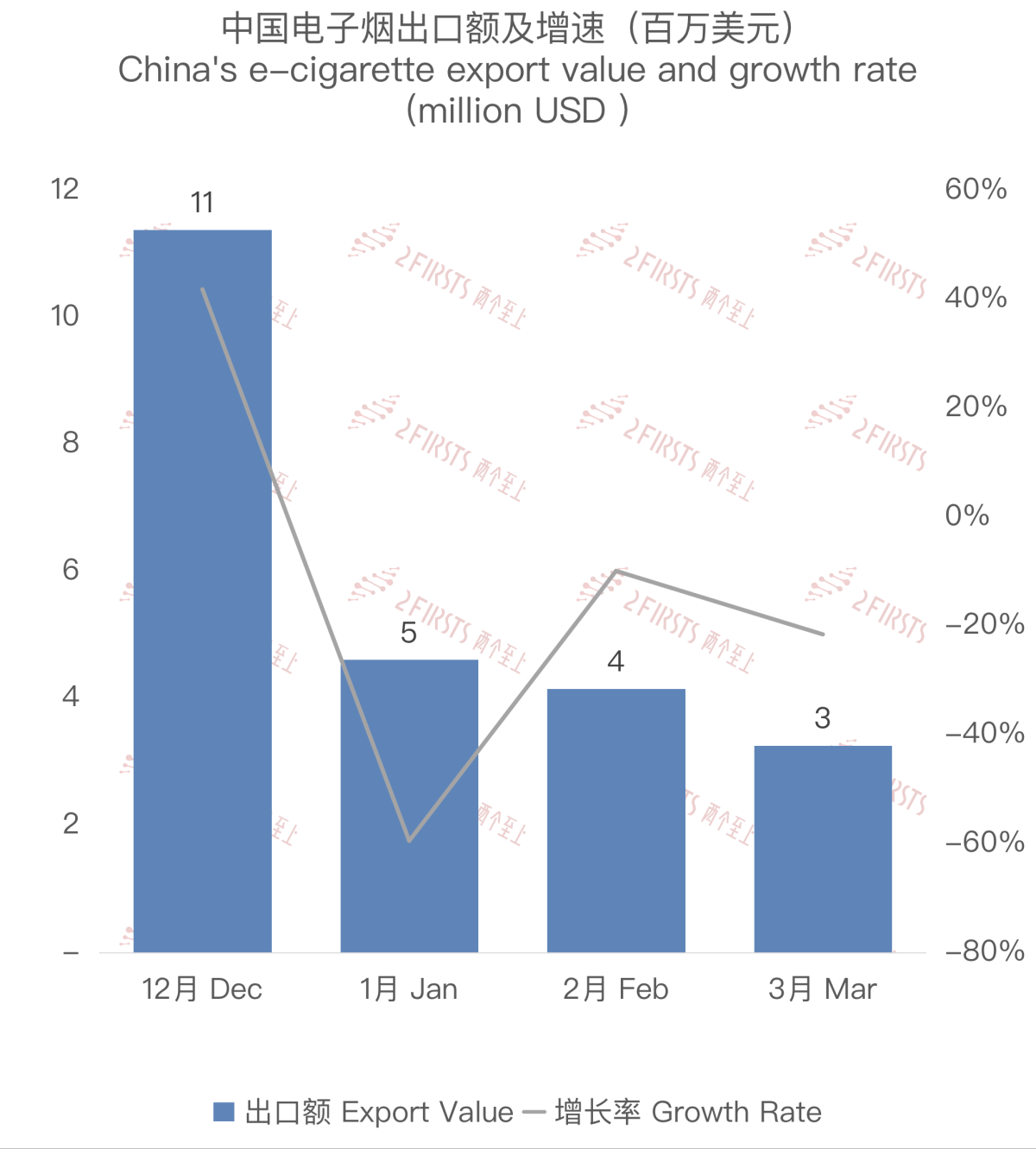
China's e-cigarette exports to Belgium in March 2024 declined in value by 21.54% compared to the previous month.

According to updated trade data from the General Administration of Customs, 2FIRSTS compiled e-cigarette export data from China to Belgium in March 2024.

Analysis of China's E-cigarette Export to Belgium in March 2024
Image source: 2FIRSTS


The details are as follows:

Analysis of China's E-cigarette Export to Belgium in March 2024
Image source: 2FIRSTS


The export volume was about 3.26 million US dollars, a decrease of 21.54% compared to the previous period and a decrease of 58.39% compared to the same period last year.
Analysis of China's E-cigarette Export to Belgium in March 2024
Source of the image: 2FIRSTS


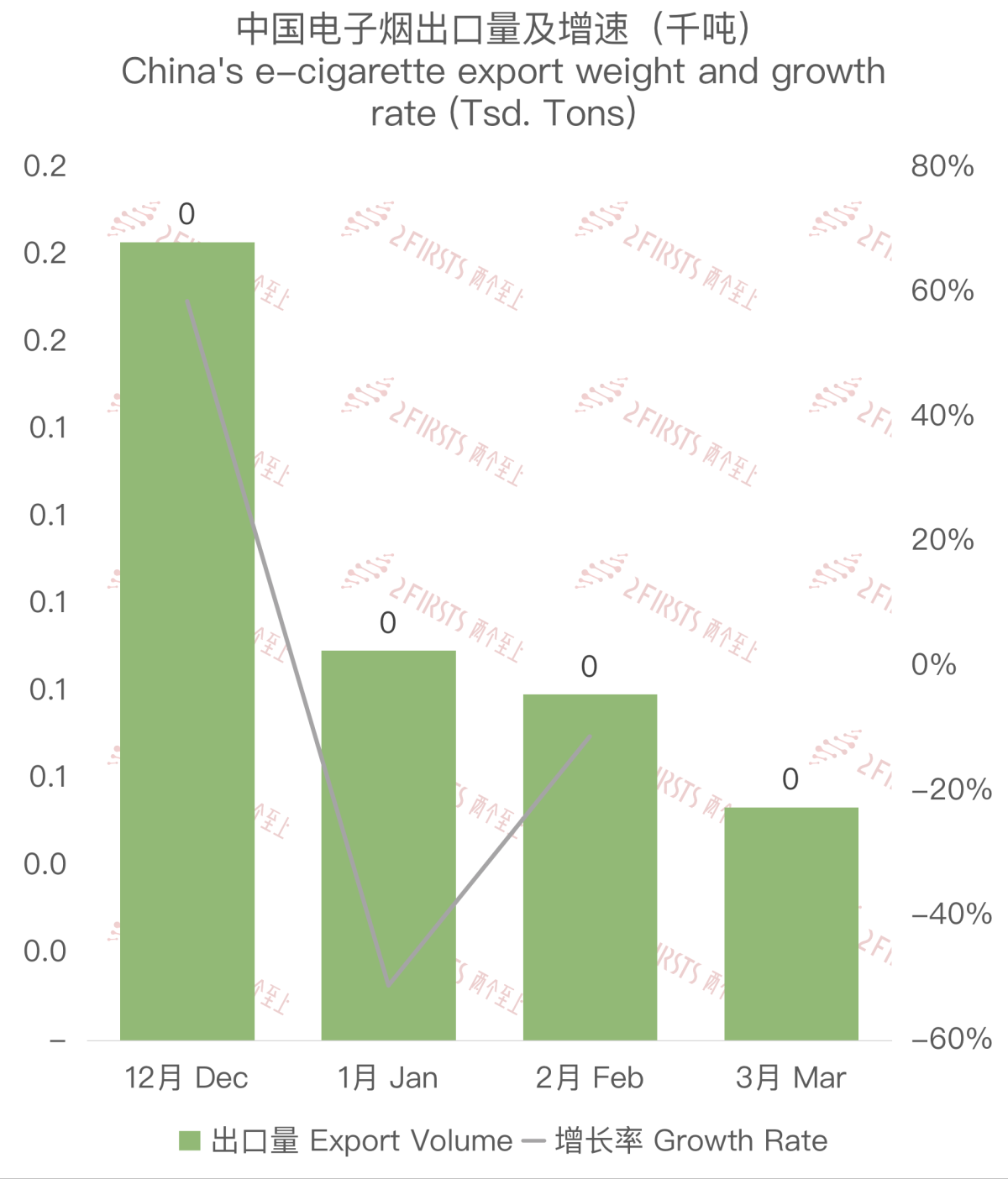
The export volume was approximately 53 tons, which is a decrease of 32.6% compared to the previous period and a decrease of 44.21% compared to the same period last year.
Analysis of China's E-cigarette Export to Belgium in March 2024
Image source: 2FIRSTS


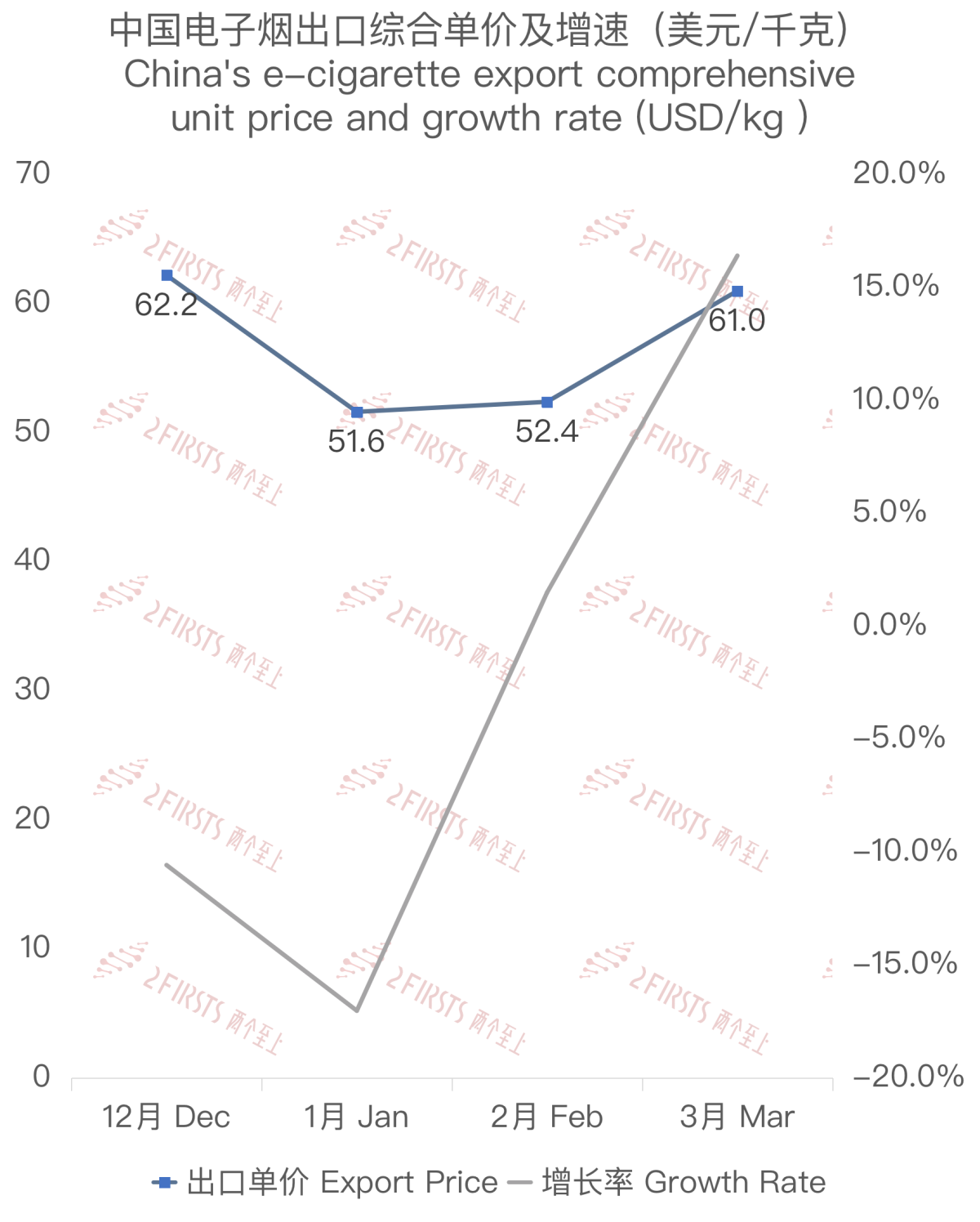
The export unit price is $60.99 per kilogram, with a month-on-month increase of 16.41% and a year-on-year decrease of 25.42%; the average price for "e-cigarettes and similar personal electronic vaporization devices" is $9.93 per unit.

Analysis of China's E-cigarette Export to Belgium in March 2024
Image source: 2FIRSTS


Among them, "e-cigarettes and similar personal electronic vaporizing devices" accounted for 12.44% of the export category, while "nicotine-containing non-combustible products not made from tobacco or reconstituted tobacco" accounted for 87.56%.


We welcome news tips, article submissions, interview requests, or comments on this piece.

Please contact us at info@2firsts.com, or reach out to Alan Zhao, CEO of 2Firsts, on LinkedIn


Notice

1.  This article is intended solely for professional research purposes related to industry, technology, and policy. Any references to brands or products are made purely for objective description and do not constitute any form of endorsement, recommendation, or promotion by 2Firsts.

2.  The use of nicotine-containing products — including, but not limited to, cigarettes, e-cigarettes, nicotine pouchand heated tobacco products — carries significant health risks. Users are responsible for complying with all applicable laws and regulations in their respective jurisdictions.

3.  This article is not intended to serve as the basis for any investment decisions or financial advice. 2Firsts assumes no direct or indirect liability for any inaccuracies or errors in the content.

4.  Access to this article is strictly prohibited for individuals below the legal age in their jurisdiction.


Copyright


This article is either an original work created by 2Firsts or a reproduction from third-party sources with proper attribution. All copyrights and usage rights belong to 2Firsts or the original content provider. Unauthorized reproduction, distribution, or any other form of unauthorized use by any individual or organization is strictly prohibited. Violators will be held legally accountable.

For copyright-related inquiries, please contact: info@2firsts.com


AI Assistance Disclaimer


This article may have been enhanced using AI tools to improve translation and editorial efficiency. However, due to technical limitations, inaccuracies may occur. Readers are encouraged to refer to the cited sources for the most accurate information.

We welcome any corrections or feedback. Please contact us at: info@2firsts.com

WIRED Investigation: Chinese-Made Vapes Turn to 6-Methyl-Nicotine and Other Analogs, Challenging U.S. Regulation
U.S. technology and investigative publication WIRED has examined how nicotine analogs are emerging as a new challenge for the country’s vape regulatory framework. The article argues that after the U.S. expanded federal oversight of nicotine products in 2022, some manufacturers began using nicotine-like compounds such as 6-methyl-nicotine that may fall outside existing definitions. Researchers cited by WIRED said some nicotine analogs could be more potent than traditional nicotine, although human health impacts remain unclear. U.S. policymakers are considering broader definitions of nicotine to bring these compounds under federal oversight.
Jul.27
PMI Partners With Italian Tenor Andrea Bocelli to Launch “Believe. Further” Platform
Philip Morris International (PMI) and Italian tenor Andrea Bocelli have launched “Believe. Further,” a multi-year communications platform targeting cultural, institutional and business audiences in Europe, as PMI says smoke-free products accounted for 43% of its net revenues as of the first quarter of 2026.
Jul.01
Hawaii Restricts Vape Sales to FDA-Authorized Products, Disposable E-Cigarettes to Be Banned
Hawaii has enacted two new e-cigarette laws that significantly tighten market access requirements, requiring products to meet FDA authorization standards and banning disposable e-cigarette sales starting in 2027.
Jul.08
Charlie’s Plans Q3 2026 Pilot of America’s First Age-Gated Flavored Disposable Vape
U.S. vape company Charlie’s Holdings announced plans to pilot its age-gated flavored disposable vape products in hundreds of retail stores during the third quarter of 2026. The company said the products will utilize AI- and blockchain-powered age-verification technology designed to address FDA concerns over youth access and potentially create a new compliance pathway for flavored vape products.
Jun.15
PMI Q2 Call: ZYN Growth, IQOS Pricing and a Diverging Global Tobacco Market
Philip Morris International’s second-quarter earnings call offered new detail on its smoke-free strategy. Management said it would increase U.S. investment behind nicotine pouch brand ZYN, keep IQOS focused on volume before stronger pricing, and use SENTIA, DELIA, LEVIA, VEEV and ZYN to manage tax and regulatory pressure across Japan and Europe. Analysts from Goldman Sachs, Morgan Stanley, UBS and other firms also pressed PMI on profitability, market share, cigarette resilience and the durability of its global transformation over coming quarters.
Jul.24
PMI Q2 Revenue Rises 10.4% as IQOS and VEEV Expand, U.S. ZYN Growth Slows
Philip Morris International’s second-quarter net revenues rose 10.4% to a record $11.19 billion, as heated tobacco and e-vapor expanded across international markets. IQOS remained the main smoke-free growth engine, while VEEV shipments jumped 55.1%. In the United States, however, ZYN shipments increased just 1.8% and consumer offtake was broadly flat to slightly higher. Cigarette volumes also rose, showing that PMI’s transformation is advancing, but growth is becoming increasingly uneven across categories and markets.
PMI
Jul.22