Apology for Exclusion: Public Health Tobacco Control Act 2023

Regulations by 2FIRSTS.ai
Dec.25.2023
Apology for Exclusion: Public Health Tobacco Control Act 2023
Malaysia's Health Minister, Datuk Seri Dr Adham Baba, apologizes for not including the "Gen Excluded from Smoking" policy in the Public Health Tobacco Control Act 2023.

According to a report by the Malaysian media outlet Borneo Post on January 24th, the Minister of Health, Datuk Seri Dr Adham Baba, admitted that he does not have the authority to implement a nationwide smoking ban as he is not the Minister of Religion. However, he emphasized his responsibility as the Minister of Health to ensure that smokers and their actions do not harm non-smokers, as smoking is detrimental to health.


Zulfikar also serves as the Chief Strategist of the Integrity Party. At the Integrity Party's 2023 National Congress, he responded to representatives' proposal, the "2023 Public Health Tobacco Control Bill." He once again apologized to party delegates for not including the "Generation Excluded from Smoking" (GEG) policy in the legislation, which aimed at achieving a smoke-free generation.


On the 30th of last month, the "2023 Public Health Tobacco Product Control Bill" was passed in the lower house of Parliament through a voice vote. However, it is worth noting that this bill has removed the previously set GEG policy, which prohibited the smoking and possession of tobacco products for individuals born after 2007. The policy has now been replaced with a ban on individuals under the age of 18 purchasing tobacco products, tobacco alternatives, and smoking devices.


We welcome news tips, article submissions, interview requests, or comments on this piece.

Please contact us at info@2firsts.com, or reach out to Alan Zhao, CEO of 2Firsts, on LinkedIn


Notice

1.  This article is intended solely for professional research purposes related to industry, technology, and policy. Any references to brands or products are made purely for objective description and do not constitute any form of endorsement, recommendation, or promotion by 2Firsts.

2.  The use of nicotine-containing products — including, but not limited to, cigarettes, e-cigarettes, nicotine pouchand heated tobacco products — carries significant health risks. Users are responsible for complying with all applicable laws and regulations in their respective jurisdictions.

3.  This article is not intended to serve as the basis for any investment decisions or financial advice. 2Firsts assumes no direct or indirect liability for any inaccuracies or errors in the content.

4.  Access to this article is strictly prohibited for individuals below the legal age in their jurisdiction.


Copyright


This article is either an original work created by 2Firsts or a reproduction from third-party sources with proper attribution. All copyrights and usage rights belong to 2Firsts or the original content provider. Unauthorized reproduction, distribution, or any other form of unauthorized use by any individual or organization is strictly prohibited. Violators will be held legally accountable.

For copyright-related inquiries, please contact: info@2firsts.com


AI Assistance Disclaimer


This article may have been enhanced using AI tools to improve translation and editorial efficiency. However, due to technical limitations, inaccuracies may occur. Readers are encouraged to refer to the cited sources for the most accurate information.

We welcome any corrections or feedback. Please contact us at: info@2firsts.com

Switzerland Tightens Vape Checks as Only 3 of 32 Tested Products Meet New Tobacco Rules
According to Swiss media outlet Blick, local authorities are strengthening compliance checks on vape products, nicotine pouches and other tobacco-related products following the implementation of Switzerland’s revised Tobacco Products Act. A Basel laboratory tested 32 disposable vapes and e-liquids, with only three meeting regulatory requirements and 21 products banned from sale. Swiss authorities are also expanding retail inspections, laboratory testing and youth purchase checks to enforce the new tobacco and nicotine product rules.
Aug.12
F1 Faces Renewed Pressure Over Tobacco and Nicotine Sponsorships as 67 Groups Target ZYN and VELO Ahead of Madrid Race
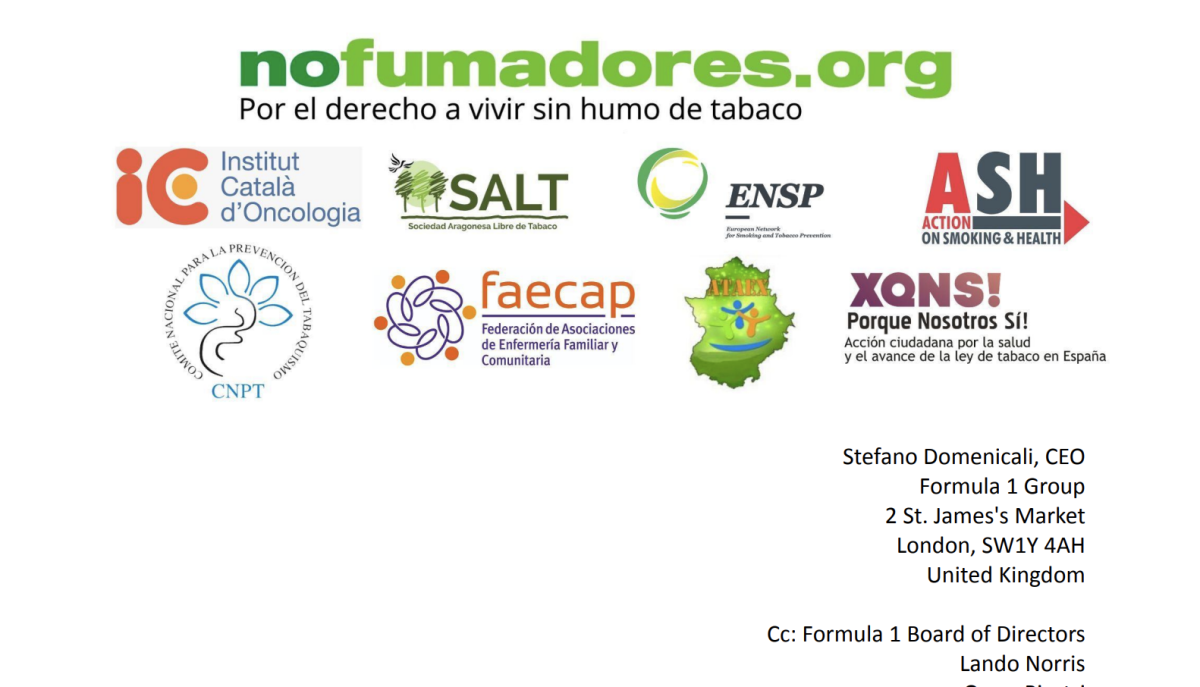
Ahead of the Formula 1 race in Madrid, 67 Spanish and international public-health, medical and consumer organizations have sent an open letter to F1 President and CEO Stefano Domenicali calling for an end to sponsorships linked to the tobacco and nicotine industry, including nicotine pouches, vaping products and heated tobacco. The letter focuses on Philip Morris International’s ZYN partnership with Ferrari and British American Tobacco’s long-running partnership with McLaren and exposure for VELO. The campaign follows a March letter in which more than 160 organizations worldwide made a similar request to Formula 1.
Sep.10
Product | KT&G to Launch lil Tonino Lamborghini in South Korea, Bringing 3-Second Heat-Up to New HTP Platform
KT&G will launch the lil Tonino Lamborghini heated tobacco device in Seoul on September 15, 2026. The product introduces a new heating technology called Flashwave Heating, which uses microwaves to heat tobacco sticks internally and delivers a manufacturer-rated heat-up time of about three seconds. The device features an all-metal aluminum body, a color display and a dedicated GUI, and launches alongside a new line of NAU tobacco sticks that are incompatible with existing lil consumables. Korean media describe the product as KT&G's first new heated tobacco platform since lil AIBLE was introduced in 2022.
Aug.31
Retail Case Study | Wisconsin Vape Market One Year After New Regulations: Johnny Vapes Reports 80% Sales Decline as Consumers Shift Online and Across State Lines
According to WNCY on August 24, 2026, some independent vape retailers in Wisconsin say they have faced significant business pressure one year after new vape regulations took effect. Johnny Vapes, a retailer operating in northeast Wisconsin, said its store count fell from seven locations to four, sales declined by about 80%, and roughly 90% of its inventory was affected. Retailers said some consumers have shifted to online purchases or traveled to neighboring Michigan to buy vape products. The case highlights how local regulations can reshape retail operations, inventory management and consumer purchasing patterns.
Aug.28
PMI Q2 Revenue Rises 10.4% as IQOS and VEEV Expand, U.S. ZYN Growth Slows
Philip Morris International’s second-quarter net revenues rose 10.4% to a record $11.19 billion, as heated tobacco and e-vapor expanded across international markets. IQOS remained the main smoke-free growth engine, while VEEV shipments jumped 55.1%. In the United States, however, ZYN shipments increased just 1.8% and consumer offtake was broadly flat to slightly higher. Cigarette volumes also rose, showing that PMI’s transformation is advancing, but growth is becoming increasingly uneven across categories and markets.
PMI
Jul.22
Japan’s Heated Tobacco Tax Changes Reshape Consumer Choices, Survey Reveals Impact of Price and Income
A consumer survey by Japanese heated tobacco information platform RELAZO found that rising tobacco prices and planned heated tobacco tax changes may influence smoking decisions among Japanese consumers. The survey covered 49,879 men and women aged 20 to 69 nationwide. It found that around 40% of respondents cumulatively indicated they may consider quitting when a pack reaches ¥600 (approximately US$4.1), while nearly 90% expressed potential quitting intentions at a ¥1,000 (approximately US$6.8) price level. The survey also found significant differences by income level, with lower-income respondents showing greater sensitivity to price increases.
Jul.24