Aspire's Marketing Manager: Pioneering G-Mesh Coil to Enhance User Experience

Events by 2FIRSTS
Sep.07.2024
Aspire's Marketing Manager: Pioneering G-Mesh Coil to Enhance User Experience
At the e-cigarette exhibition in Malaysia on September 6th, Aspire, a leading company, showcased their latest G-Mesh technology.

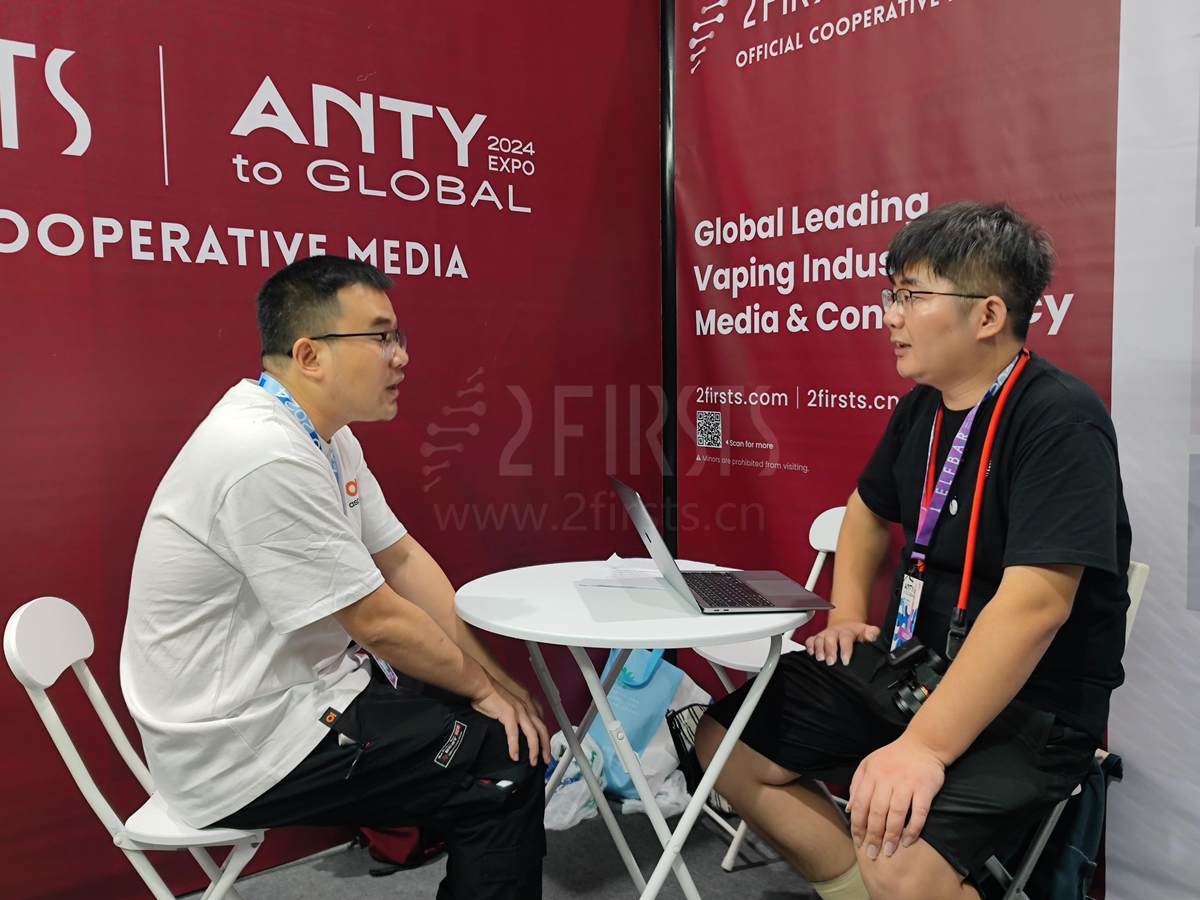
On September 6th, at the e-cigarette expo in Malaysia, the well-established e-cigarette company Aspire once again became the center of attention. During the exhibition, Aspire's marketing manager Richard Wong was interviewed by 2Firsts, providing in-depth analysis of the current landscape of the e-cigarette market and the company's future strategic deployment.


Richard Wong first reviewed the company's development history: "In 2010, Yijia Tech was established, and we entered the e-cigarette industry as an OEM factory. By 2013, the Aspire brand was officially born," he pointed out, that even in the early days of the e-cigarette "big smoke" era, the company has repeatedly led the industry with its atomization coil technology.


However, when the e-cigarette market gradually shifted towards disposable products, Yijiate initially failed to keep up with this emerging market trend. In response, Richard Wong admitted, "We did indeed miss the initial opportunity of the disposable e-cigarette explosion, but fortunately we have now gradually caught up and bridged that gap.


During the interview, Richard Wong introduced the technology "superconductive glass coil" (G-Mesh) that the company will launch in 2024. "The glass coil overcomes many limitations of traditional cotton coils and ceramic coils. Currently, we are the first to innovate this technology globally, and we are the only ones applying this technology.


He explained in detail the advantages of this technology, with G-Mesh having a particle size of only 324 nanometers and achieving a thickness of 1 millimeter, 67% thinner than ceramic coils. This breakthrough can enhance the flavor reproduction of e-cigarettes. "The application of this technology will improve users' experience, bringing a more delicate taste and more stable performance," he said, adding that the company will gradually apply this technology to new products in the future.


We welcome news tips, article submissions, interview requests, or comments on this piece.

Please contact us at info@2firsts.com, or reach out to Alan Zhao, CEO of 2Firsts, on LinkedIn


Notice

1.  This article is intended solely for professional research purposes related to industry, technology, and policy. Any references to brands or products are made purely for objective description and do not constitute any form of endorsement, recommendation, or promotion by 2Firsts.

2.  The use of nicotine-containing products — including, but not limited to, cigarettes, e-cigarettes, nicotine pouchand heated tobacco products — carries significant health risks. Users are responsible for complying with all applicable laws and regulations in their respective jurisdictions.

3.  This article is not intended to serve as the basis for any investment decisions or financial advice. 2Firsts assumes no direct or indirect liability for any inaccuracies or errors in the content.

4.  Access to this article is strictly prohibited for individuals below the legal age in their jurisdiction.


Copyright


This article is either an original work created by 2Firsts or a reproduction from third-party sources with proper attribution. All copyrights and usage rights belong to 2Firsts or the original content provider. Unauthorized reproduction, distribution, or any other form of unauthorized use by any individual or organization is strictly prohibited. Violators will be held legally accountable.

For copyright-related inquiries, please contact: info@2firsts.com


AI Assistance Disclaimer


This article may have been enhanced using AI tools to improve translation and editorial efficiency. However, due to technical limitations, inaccuracies may occur. Readers are encouraged to refer to the cited sources for the most accurate information.

We welcome any corrections or feedback. Please contact us at: info@2firsts.com

Germany Expands Take-Back Rules for Disposable Vapes From July 1
Germany has expanded take-back obligations for disposable vapes from July 1, 2026, requiring consumers to be able to return used devices at stores that sell such products, including kiosks, petrol stations and vape shops, as e-cigarette regulation extends from sales to waste management and lithium-battery safety.
Market
Jul.06 by 2Firsts Perspectives
China Tobacco International HK Warns First-Half Revenue May Fall 25%-30%, Tobacco Leaf and Duty-Free Exposure Highlight Reliance on Traditional Tobacco
CTIHK expects first-half 2026 revenue to fall 25%-30%, mainly due to lower tobacco leaf imports and delayed cigarette shipments to China’s domestic duty-free market. Its 2025 revenue mix—nearly 90% from tobacco leaf-related businesses and less than 1% from new tobacco products—shows continued exposure to traditional supply chains and trade variables.
Jun.18
Malaysia Police Seize RM12.7 Million in Illegal Vapes and Cigarettes as Probe Points to Sea Shipments From China
Police in Malaysia’s Selangor state seized illegal vape products and contraband cigarettes worth about RM12.7 million (approximately $3 million) in two enforcement operations. According to New Straits Times and The Star, the vape-related operation uncovered 131,036 boxes of vape products, 4,900 bottles of e-liquid and 25,510 vape devices, valued at about RM9.4 million. Police said preliminary investigations indicated that some illegal vape products entered Malaysia through sea shipments from China before moving through storage and distribution networks.
Aug.10
How AI Is Rewriting the Talent Playbook for the Nicotine Industry: JTI’s Case
AI is moving from a back-office tool to a core organizational capability in the nicotine industry. Based on JTI’s responses, this 2Firsts feature examines how AI is reshaping talent strategy, internal mobility, decision-making and human accountability as global tobacco companies compete in the shift toward new nicotine categories.
Jun.17
China’s Shanghai Tobacco Group Launches CNY 10.98 Million (Approximately US$1.53 Million) Procurement for Heated Tobacco Production Utility Equipment
Shanghai Tobacco Group Co., Ltd., a tobacco manufacturing company under China National Tobacco Corporation (CNTC), has launched a public tender for heated tobacco products (HTPs) production utility equipment at its Shanghai Cigarette Factory. The project is valued at CNY 10.98 million and covers six combined air-conditioning units, electrical cabinets and control systems for production facilities. The procurement includes equipment design, supply, installation, commissioning and related training services.
Aug.07
Russian Strikes Destroy JTI and Imperial Brands Ukraine Warehouses, With Losses Reaching Tens of Millions of Hryvnias
According to Ukrainska Pravda, Russian strikes on the Kyiv region during the night of Aug. 4-5, 2026, damaged warehouses storing products of Japan Tobacco International (JTI) and Imperial Brands Ukraine. JTI said a finished goods warehouse in Kyiv Oblast was destroyed, with no employees injured, and that it did not expect disruptions to retail supplies. Imperial Brands Ukraine said products stored at warehouses of distributors and retail partners were affected and estimated losses from the strikes at “tens of millions of Ukrainian hryvnias” (roughly hundreds of thousands of U.S. dollars).
JTI
Aug.07