BAT Japan Glo Pro Slim and Slim Stick to Cease Sales at End of June, Recommending Glo HYPER as Alternative

BAT by 2FIRSTS.ai
Jun.24.2024
BAT Japan Glo Pro Slim and Slim Stick to Cease Sales at End of June, Recommending Glo HYPER as Alternative
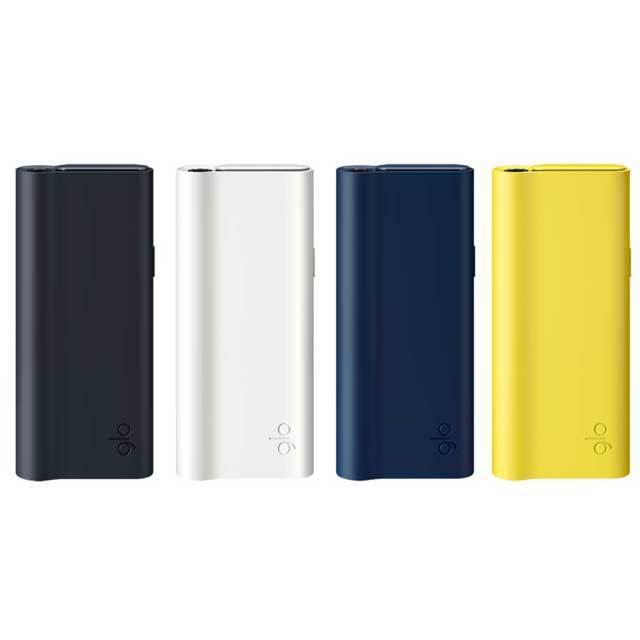
British American Tobacco Japan plans to cease sales of "glo pro slim" heated tobacco devices by the end of June.

According to a report by Kakaku on June 24, British American Tobacco Japan Co. plans to stop selling the heated tobacco device "glo pro slim" at the end of June.


At the same time, all devices in the "glo pro series" will also cease sales. In addition, all seven models of "slim stick pods" currently on sale will gradually be phased out.


According to the information released, the "glo pro series" devices and "slim stick" product have been on sale since 2016. In 2020, the follow-up products of this series, the "glo HYPER series" devices and "glo HYPER" pods, officially entered the Japanese market.


The company recommends users to use "glo HYPER air" and "glo HYPER pro" as alternative products.


We welcome news tips, article submissions, interview requests, or comments on this piece.

Please contact us at info@2firsts.com, or reach out to Alan Zhao, CEO of 2Firsts, on LinkedIn


Notice

1.  This article is intended solely for professional research purposes related to industry, technology, and policy. Any references to brands or products are made purely for objective description and do not constitute any form of endorsement, recommendation, or promotion by 2Firsts.

2.  The use of nicotine-containing products — including, but not limited to, cigarettes, e-cigarettes, nicotine pouchand heated tobacco products — carries significant health risks. Users are responsible for complying with all applicable laws and regulations in their respective jurisdictions.

3.  This article is not intended to serve as the basis for any investment decisions or financial advice. 2Firsts assumes no direct or indirect liability for any inaccuracies or errors in the content.

4.  Access to this article is strictly prohibited for individuals below the legal age in their jurisdiction.


Copyright


This article is either an original work created by 2Firsts or a reproduction from third-party sources with proper attribution. All copyrights and usage rights belong to 2Firsts or the original content provider. Unauthorized reproduction, distribution, or any other form of unauthorized use by any individual or organization is strictly prohibited. Violators will be held legally accountable.

For copyright-related inquiries, please contact: info@2firsts.com


AI Assistance Disclaimer


This article may have been enhanced using AI tools to improve translation and editorial efficiency. However, due to technical limitations, inaccuracies may occur. Readers are encouraged to refer to the cited sources for the most accurate information.

We welcome any corrections or feedback. Please contact us at: info@2firsts.com

Korea’s MFDS sets 2026 plan to manage and disclose harmful constituents in tobacco products
South Korea’s Ministry of Food and Drug Safety (MFDS) said it has established its 2026 work plan to systematically manage harmful constituents in tobacco products and disclose related information under the Tobacco Harmfulness Management Act, which took effect in November 2025.
Jan.16 by 2FIRSTS.ai
Virginia appeals to the Fourth Circuit over partial block on flavored vape ban enforcement
Virginia has asked the Fourth Circuit to overturn a district court order that partially blocked enforcement of the commonwealth’s flavored vape ban. In a notice, the state told U.S. District Judge David J. Novak it seeks to upend his December ruling that Virginia’s Chapter 23.2 statute is preempted by the Food, Drug and Cosmetic Act and the Family Smoking Prevention and Tobacco Control Act.
Jan.12 by 2FIRSTS.ai
CBSA discloses seizure of 212,000 nicotine pouches at Pigeon River port of entry
The Canada Border Services Agency said officers inspecting an incoming vehicle at the Pigeon River port of entry in June found 212,000 nicotine pouches and seized more than 29,000 Canadian dollars (about 21,170 U.S. dollars) in currency and cheques. A CBSA spokesperson disclosed the seizure this week in a Newswatch interview about enforcement operations over the past year.
Dec.30 by 2FIRSTS.ai
Kyrgyzstan: Jogorku Kenesh committee sends draft vape ban bills back for revisions
Kyrgyzstan Jogorku Kenesh committee on labor, health, women’s affairs and social issues decided to withdraw for revision two draft laws related to banning electronic nicotine delivery systems and e-cigarettes in Kyrgyzstan.
Jan.14 by 2FIRSTS.ai
Malaysian police raids across five states: 51 held and over RM1 million in vapes seized
Police in Malaysia detained 51 individuals and seized over RM1 million worth of electronic cigarettes and liquid refills in a five-state operation dubbed “Op E-CIG,” conducted by the GOF Central Brigade on February 10. The report said the operation involved 30 raids across Kuala Lumpur, Johor, Melaka, Selangor and Negeri Sembilan. Authorities seized 2,263 vape units and 165.463 litres of liquid.
Feb.12 by 2FIRSTS.ai
FDA Details Carcinogenicity Tiering and ELCR Framework as Small Manufacturers Press for Predictability
During the “Toxicological Profile” session at FDA’s Feb 10 PMTA roundtable, officials outlined the carcinogenicity tiering system and Excess Lifetime Cancer Risk (ELCR) framework used in ENDS reviews under the APPH standard. Small manufacturers questioned database transparency, exposure assumptions, and the existence of clear compliance benchmarks. FDA reiterated toxicological risk is assessed case by case within a broader population-level determination.
Feb.11