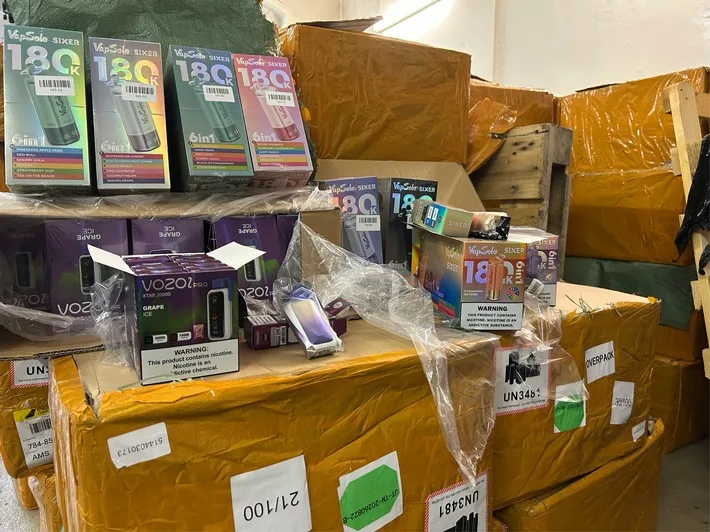
Although marijuana has been legalized in Connecticut, no stores in the state have been granted licenses to sell it. State law also requires all nicotine products to be kept behind store counters. Stores must also post notices about the legality of selling nicotine and THC products. Selling e-cigarette products within 500 feet of a residential area or church is illegal.
However, in Westport, all of these laws and regulations were broken.
This is the conclusion of the "West Port Tobacco Store Environmental Scan," recently conducted by Ben Fitzgerald of the Prevention Corps and Rachalle Ubaldo of Positive Directions. The results were submitted to the West Port Prevention Coalition on Tuesday.
Fitzgerald and Ubaldo visited six tobacco shops, gas stations, and convenience stores in Westport. The project was coordinated with the Westport Police Department.
The name of the company was not included in the report.
The two individuals conversed with a store clerk to learn about the popular products. They also attempted to make a purchase to see if their cards would be accepted.
Only three companies are registered to sell electronic cigarettes (also known as e-cigarettes or vape pens) in the state. Five of the stores are located within 500 feet of residential areas, while three are within 500 feet of a church. Three of the companies do not store all nicotine products behind the counter.
2FIRSTS will continue to cover this topic and update the latest developments on our mobile application, '2FIRSTSAPP'. Scan the QR code below to download the app.
Disclaimer
This article is provided solely for professional research, industry discussion, and informational purposes. Any references to brands, companies, products, technologies, or policies are made for factual reporting and analytical purposes only, and do not constitute endorsement, recommendation, promotion, or advertising by 2Firsts.
Nicotine-containing products, including but not limited to cigarettes, e-cigarettes, heated tobacco products, and nicotine pouches, carry significant health risks. Readers are responsible for complying with all applicable laws and regulations in their respective jurisdictions, including age restrictions and access limitations.
The information contained in this article should not be regarded as investment, legal, medical, regulatory, or commercial advice. While 2Firsts strives to ensure the accuracy and reliability of its content, it does not assume liability for any direct or indirect loss arising from errors, omissions, inaccuracies, or reliance on the information contained herein.
This article is not intended for individuals below the legal age for accessing tobacco or nicotine-related information in their jurisdiction.
Copyright Notice
This article is either original content produced by 2Firsts or content reproduced, translated, summarized, or adapted from third-party sources with attribution where applicable. The intellectual property rights of the original content remain with 2Firsts or the respective original rights holders.
No individual or organization may copy, reproduce, distribute, republish, modify, translate, or otherwise use this content without prior authorization. Any unauthorized use may result in legal action.
For copyright-related inquiries, corrections, or removal requests, please contact: info@2firsts.com.
AI-Assisted Translation and Editing Notice
Portions of this article may have been translated, edited, or reviewed with the assistance of artificial intelligence tools to improve efficiency and readability. Due to the limitations of AI-assisted translation and editing, discrepancies, omissions, or inaccuracies may exist when compared with the original source.
Where applicable, readers are advised to refer to the original source for the most complete and accurate information. If you identify any errors or believe that any content infringes upon your rights, please contact us at info@2firsts.com, and we will review and address the matter promptly.