Cambodia Takes Action Against Youth E-Cigarette Use

Regulations by 2FIRSTS.ai
Mar.28.2024
Cambodia Takes Action Against Youth E-Cigarette Use
Cambodia's Education, Youth and Sports Ministry seeks help from teachers and principals to educate students on the dangers of e-cigarettes.

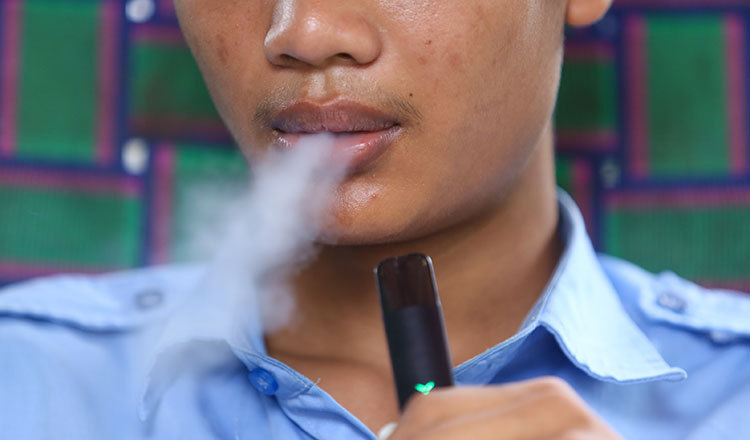
According to a report by Khmer Times on March 28, the Ministry of Education, Youth, and Sports in Cambodia is seeking help from teachers and principals to educate students about the serious dangers of using e-cigarettes. Deputy Minister of Education Soeur Socheata spoke at a seminar yesterday regarding the use and circulation of e-cigarettes among youth, revealing a new guideline that classifies e-cigarettes as a type of drug that can lead to addiction.


This guide points out that e-cigarettes pose a threat to health and are prohibited by law, with importation, distribution, and sales needing to cease. Sosetta calls on the Ministry of Education to take strict action against the sale and distribution of e-cigarettes, especially online distribution, and impose a firm ban on their importation.


She pointed out that the Cambodian Ministry of Education has conducted a survey on 1317 young people in three provinces and Phnom Penh, including 579 girls and 738 boys. She said the survey showed that 95% of respondents have seen e-cigarettes and are aware of their negative health effects, while 79% knew that e-cigarettes are prohibited by law. She added that 75% of those who stopped using e-cigarettes were students. The survey also found that most of their friends purchase e-cigarettes through online websites on social media, which are easily accessible.


The deputy director of the legal department of the Ministry of Interior, Ly Sokha, suggested that legal action should be taken against the circulation of e-cigarettes on social media websites such as Facebook and Telegram by government agencies including the Ministry of Interior, Ministry of Posts and Telecommunications, and the Ministry of Information, as these websites are the main sources for selling e-cigarettes to young people.


We welcome news tips, article submissions, interview requests, or comments on this piece.

Please contact us at info@2firsts.com, or reach out to Alan Zhao, CEO of 2Firsts, on LinkedIn


Notice

1.  This article is intended solely for professional research purposes related to industry, technology, and policy. Any references to brands or products are made purely for objective description and do not constitute any form of endorsement, recommendation, or promotion by 2Firsts.

2.  The use of nicotine-containing products — including, but not limited to, cigarettes, e-cigarettes, nicotine pouchand heated tobacco products — carries significant health risks. Users are responsible for complying with all applicable laws and regulations in their respective jurisdictions.

3.  This article is not intended to serve as the basis for any investment decisions or financial advice. 2Firsts assumes no direct or indirect liability for any inaccuracies or errors in the content.

4.  Access to this article is strictly prohibited for individuals below the legal age in their jurisdiction.


Copyright


This article is either an original work created by 2Firsts or a reproduction from third-party sources with proper attribution. All copyrights and usage rights belong to 2Firsts or the original content provider. Unauthorized reproduction, distribution, or any other form of unauthorized use by any individual or organization is strictly prohibited. Violators will be held legally accountable.

For copyright-related inquiries, please contact: info@2firsts.com


AI Assistance Disclaimer


This article may have been enhanced using AI tools to improve translation and editorial efficiency. However, due to technical limitations, inaccuracies may occur. Readers are encouraged to refer to the cited sources for the most accurate information.

We welcome any corrections or feedback. Please contact us at: info@2firsts.com

Indiana’s Foreign-Made Vape Ban Takes Effect, Forcing Brands and Retailers to Adjust Supply Chains
A new Indiana law restricting the sale of foreign-made vape products has taken effect, requiring retailers to adjust inventory and sourcing practices. According to The Sun, WDRB and other reports, some local vape shops are reviewing product origins and supplier information to comply with the new requirements. The measure represents a broader shift in U.S. vape regulation, with oversight expanding beyond product authorization and sales rules toward manufacturing origin and supply-chain management.
Jul.24
Dutch NVWA Seizes Record 277,000 Illegal Vapes; Video Shows “AL FAKHER” Cartons
The Dutch Food and Consumer Product Safety Authority, known as the NVWA, seized more than 277,000 illegal vapes near Rotterdam and nearly 150,000 boxes of nicotine pouches in Utrecht and Rotterdam, calling them the largest batches of such products it has found to date. Video footage released by the NVWA shows some cartons in the warehouse bearing the “AL FAKHER / الفاخر” name, though the agency did not identify brands.
Jul.10
South Korea Rejects 16 Trillion Won Tax-Evasion Claim Over Chinese Synthetic Nicotine
The South Korean government rejected allegations that Chinese synthetic-nicotine e-liquids were linked to about 16 trillion won in tobacco tax evasion, saying China does not ban synthetic nicotine exports and the estimate is difficult to verify, while acknowledging that pre-law synthetic-nicotine inventory is effectively difficult to tax.
Market
Jun.25
Japan’s Heated Tobacco Tax Changes Reshape Consumer Choices, Survey Reveals Impact of Price and Income
A consumer survey by Japanese heated tobacco information platform RELAZO found that rising tobacco prices and planned heated tobacco tax changes may influence smoking decisions among Japanese consumers. The survey covered 49,879 men and women aged 20 to 69 nationwide. It found that around 40% of respondents cumulatively indicated they may consider quitting when a pack reaches ¥600 (approximately US$4.1), while nearly 90% expressed potential quitting intentions at a ¥1,000 (approximately US$6.8) price level. The survey also found significant differences by income level, with lower-income respondents showing greater sensitivity to price increases.
Jul.24
Maine Approves Vape Stewardship Bill Requiring Producers to Manage End-of-Life Devices
The Maine Legislature has passed LD 1519, a bill that would establish a producer-funded stewardship program for electronic smoking devices, requiring manufacturers and importers to manage the collection, transportation, recycling and disposal of end-of-life products, particularly disposable vapes containing lithium-ion batteries.
Jun.12
NielsenIQ and Goldman Sachs Data Show Smokeless Was the Only Growing Major U.S. Nicotine Category
NielsenIQ and Goldman Sachs data show U.S. smokeless nicotine product sales rose more than 8% year over year in the 52 weeks ended May 30, making it the only major nicotine category to record growth.
Market
Jun.23