China Authorities Give Production License to RELX

RegulationsMarket
Jul.26.2022

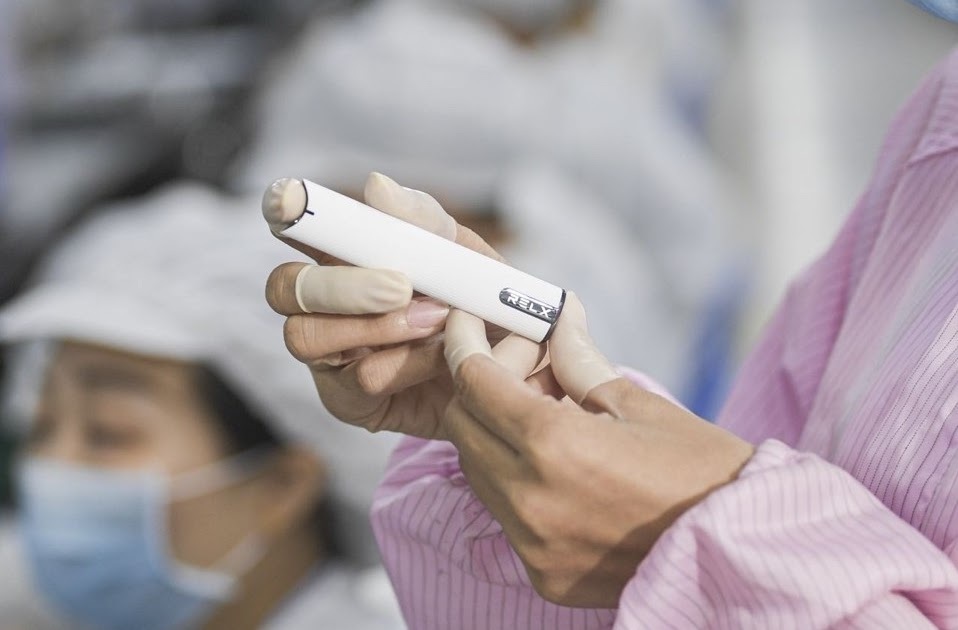
RELX Technology has joined a small but growing number of vaping product manufacturers that have received a manufacturing license from China’s State Tobacco Monopoly Administration (STMA).
China Authorities Give Production License to RELX

On Nov. 26, 2021, China’s State Council amended the country’s tobacco monopoly law to include vapor products, giving the STMA authority to regulate the sector.


The STMA license, which is valid until July 31, 2023, allows RLX Technology to manufacture 15.05 million rechargeable vaping devices, 328.7 million cartridges and 6.1 million disposable e-cigarettes per year.


Since the first quarter of 2022, Chinese authorities have issued a series of implementing rules and guiding opinions to strengthen oversight of e-cigarette products and regulate the e-cigarette industry. These rules and opinions set forth that all e-cigarette manufacturing enterprises must obtain a license from the STMA.


“This license represents an important milestone in our strategic roadmap as we strive to comply with the new regulatory requirements in a timely manner,” said Ying (Kate) Wang, co-founder, chairperson of the board of directors and CEO of RLX Technology, in a statement.


“We believe that we are well-positioned to achieve compliance in our operations according to schedule. To adapt to the new market dynamics and ensure business development, we will, and will urge our business partners to, continue making efforts to comply with all applicable regulatory requirements, including, but not limited to, obtaining requisite licenses and regulatory approvals, developing products that meet the mandatory national standards, and processing all transactions via the National E-cigarette Transaction Platform when it is implemented.


“We will remain committed to providing high-quality products that deliver superior performance and safety in strict compliance with legal and regulatory requirements, while exploring new growth opportunities in the industry.”


The content excerpted or reproduced in this article comes from a third-party, and the copyright belongs to the original media and author. If any infringement is found, please contact us to delete it. Any entity or individual wishing to forward the information, please contact the author and refrain from forwarding directly from here.

Special Report | Russia, Ukraine and Belarus Launch Fresh Push to Rein in Vaping
Russia, Ukraine and Belarus are tightening vape regulation through different tools, from Ukraine’s stronger enforcement push and Belarus’s proposed advertising restrictions to Russia’s new GOST standard and regional sales-ban mechanism. As black-market concerns persist, some Russian experts argue that China’s tightly controlled but legalised model — built around licensing, traceability and taxation — may offer a more effective alternative to blanket prohibition.
Jul.15
Product | SKE Launches FRESA PRO in the U.S., Introducing Fresh Lock Technology for E-Liquid Management in High-Capacity Vapes
Shenzhen SKE Technology has launched the FRESA PRO in the United States, a high-capacity rechargeable disposable vape featuring Fresh Lock electromagnetic valve supply control technology. The device combines a claimed capacity of up to 40,000 puffs, dual mesh coils, dual output modes and a transparent tank design. The launch reflects the high-capacity disposable vape segment’s shift from puff-count competition toward improved e-liquid management and device-level experience.
Aug.03
Australia’s Tobacco Tax Debate Intensifies as One Nation’s Barnaby Joyce Warns of Illicit Market Growth
Australian One Nation MP Barnaby Joyce has criticised continued tobacco excise increases, arguing that higher taxes are driving consumers toward illicit tobacco markets and benefiting organised crime groups.
Regulations
Jul.13 by 2Firsts Perspectives
French Anti-Tobacco Group Questions PMI’s IQOS “Curiosity” Campaign Over Potential Youth Appeal
According to French anti-tobacco group Générations Sans Tabac, Philip Morris International’s (PMI) IQOS “Curiosity” campaign has drawn attention from public health advocates. The group argues that the campaign uses themes including curiosity, exploration and lifestyle branding that could increase interest among younger audiences. PMI has positioned IQOS as a key part of its smoke-free product strategy, while France maintains strict restrictions on tobacco and nicotine product marketing. The debate highlights ongoing tensions between heated tobacco branding strategies and public health concerns in Europe.
Jul.24
Malaysia Nicotine Vape Market Faces Legal Uncertainty Over Tax and Poisons List Ruling
Malaysia’s Finance Minister Anwar Ibrahim said duties and taxes on nicotine-containing vape products will be determined in line with the Court of Appeal’s ruling on whether liquid or gel nicotine can be exempted from the Poisons List under the Poisons Act 1952, a case that could affect the legal basis for vape taxation, retail sales and future ban policy.
Jun.29
AP Questions FDA Rationale as Glas Fruit-Flavored Vapes Won Authorization Without Added Cessation Benefit
The U.S. Food and Drug Administration (FDA) recently authorized two fruit-flavored vaping products from Glas, but a newly released agency memo shows the products did not demonstrate greater smoking-cessation benefits than tobacco-flavored e-cigarettes. The Associated Press said the findings are likely to raise further questions about the FDA’s regulatory rationale and standards for flavored vaping products.
Jun.12