
China's E-cigarette Export Data for Germany, December 2023

Industry Insight by 2FIRSTS Mincy
Jan.30.2024
China's E-cigarette Export Data for Germany, December 2023
China's e-cigarette exports to Germany in December 2023 reached approximately $55.35 million, with a 22.22% month-on-month increase but a 19.87% year-on-year decrease.

According to the latest trade data updated by the General Administration of Customs of the People's Republic of China, 2FIRSTS has compiled the e-cigarette export data from China to Germany in December 2023. Here are the specifics:
China's E-cigarette Export Data for Germany, December 2023
Image source: 2FIRSTS (Created by Mincy)


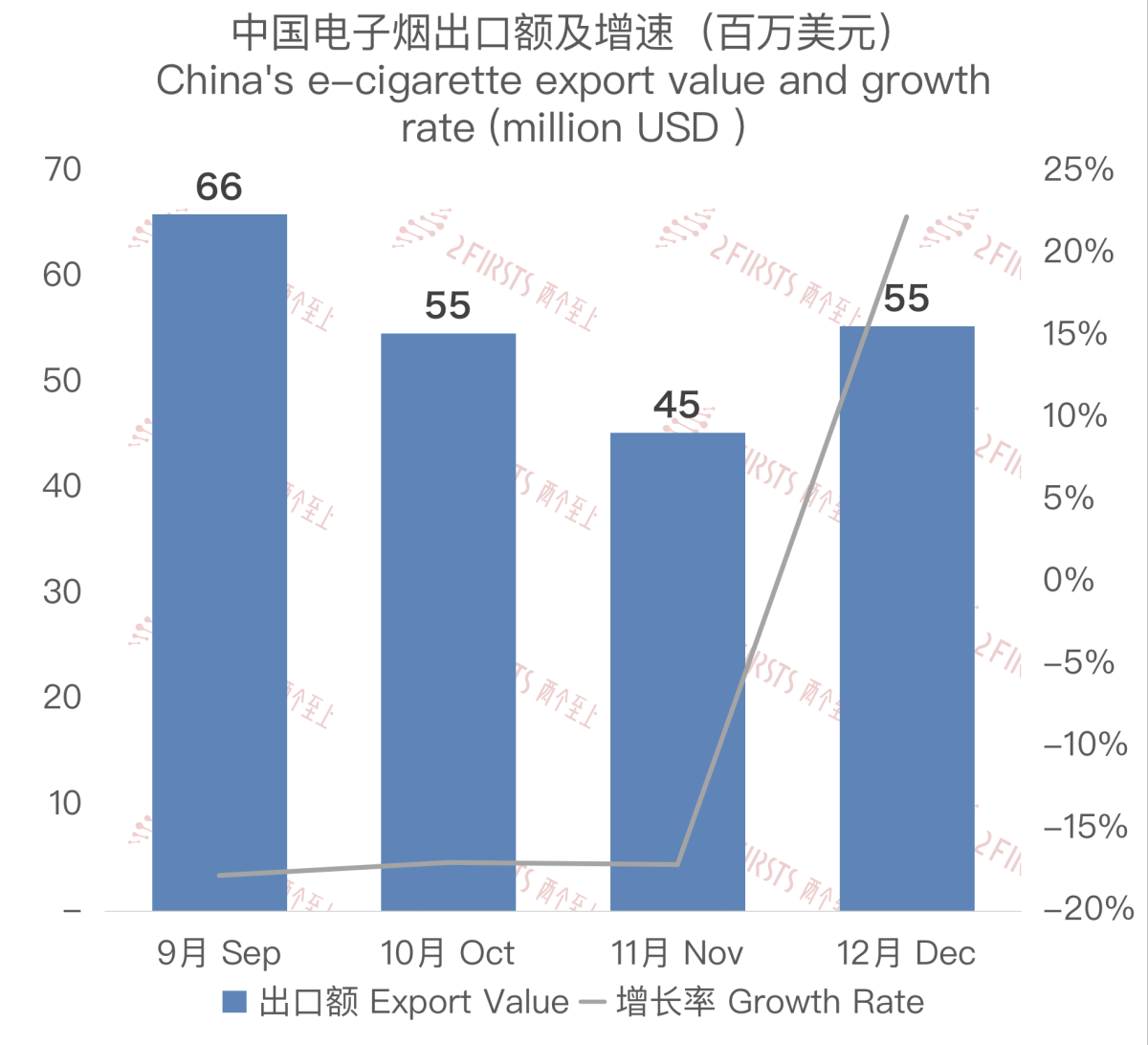
The export volume amounts to approximately 55.35 million US dollars, marking a month-on-month increase of 22.22% but a year-on-year decline of 19.87%.
China's E-cigarette Export Data for Germany, December 2023
Source of the image: 2FIRSTS (Mincy's chart)


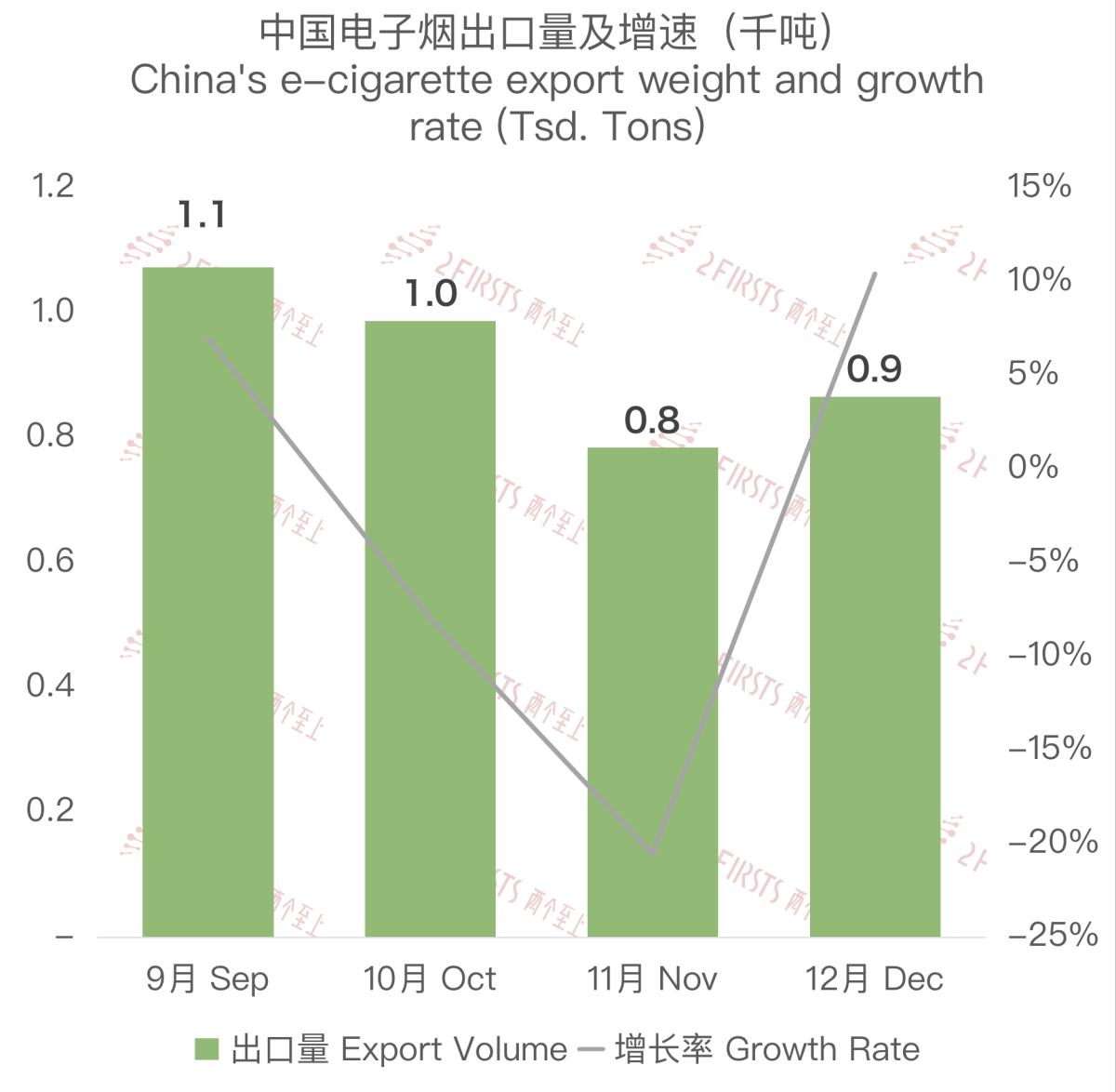
The export volume reached approximately 865 tons, increasing by 10.39% compared to the previous period and by 10.76% compared to the same period last year.
China's E-cigarette Export Data for Germany, December 2023
Image source: 2FIRSTS (graphics by Mincy)


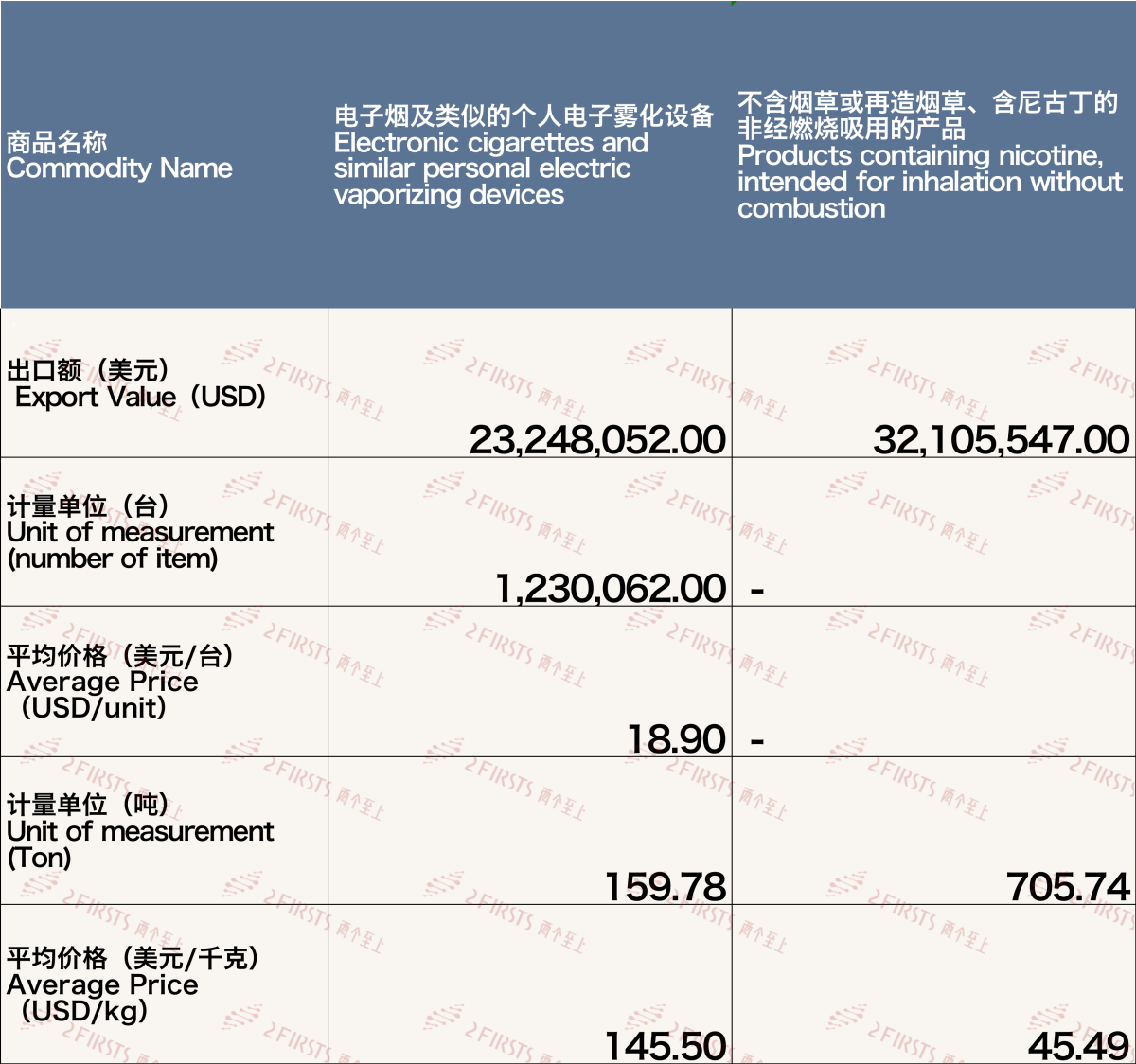
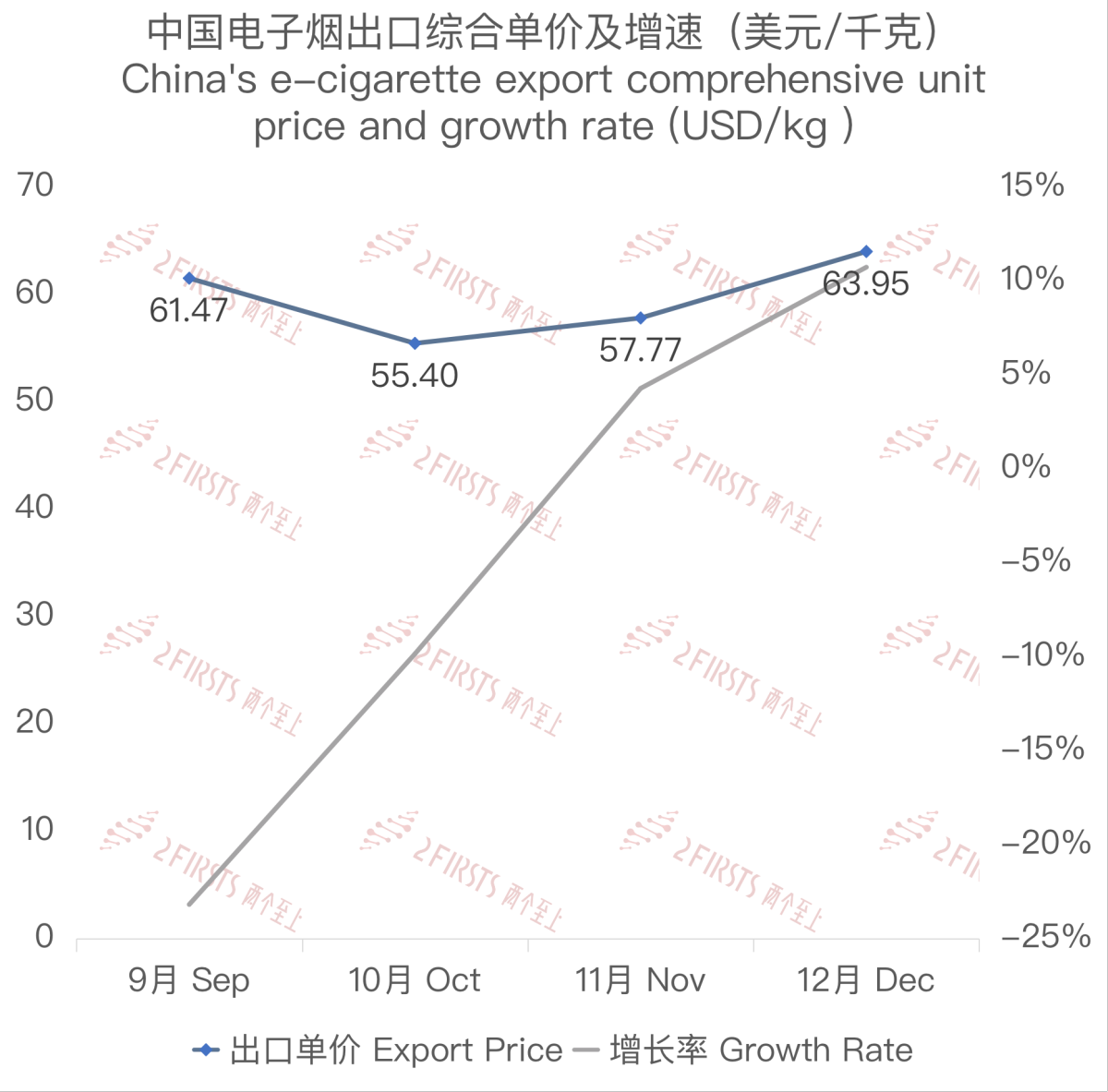
The average export unit price is $63.95 per kilogram, showing a 10.71% increase on a monthly basis, but a 27.66% decrease compared to the same period last year. Additionally, the average price for "e-cigarettes and similar personal electronic vaporizers" is $18.9 per unit.
China's E-cigarette Export Data for Germany, December 2023
Image source: 2FIRSTS (created by Mincy)


Among them, "e-cigarettes and similar personal electronic vapor devices" account for 42% of the export category, while "non-combustible products without tobacco or reconstituted tobacco, containing nicotine for non-smoke inhalation" account for 58%.
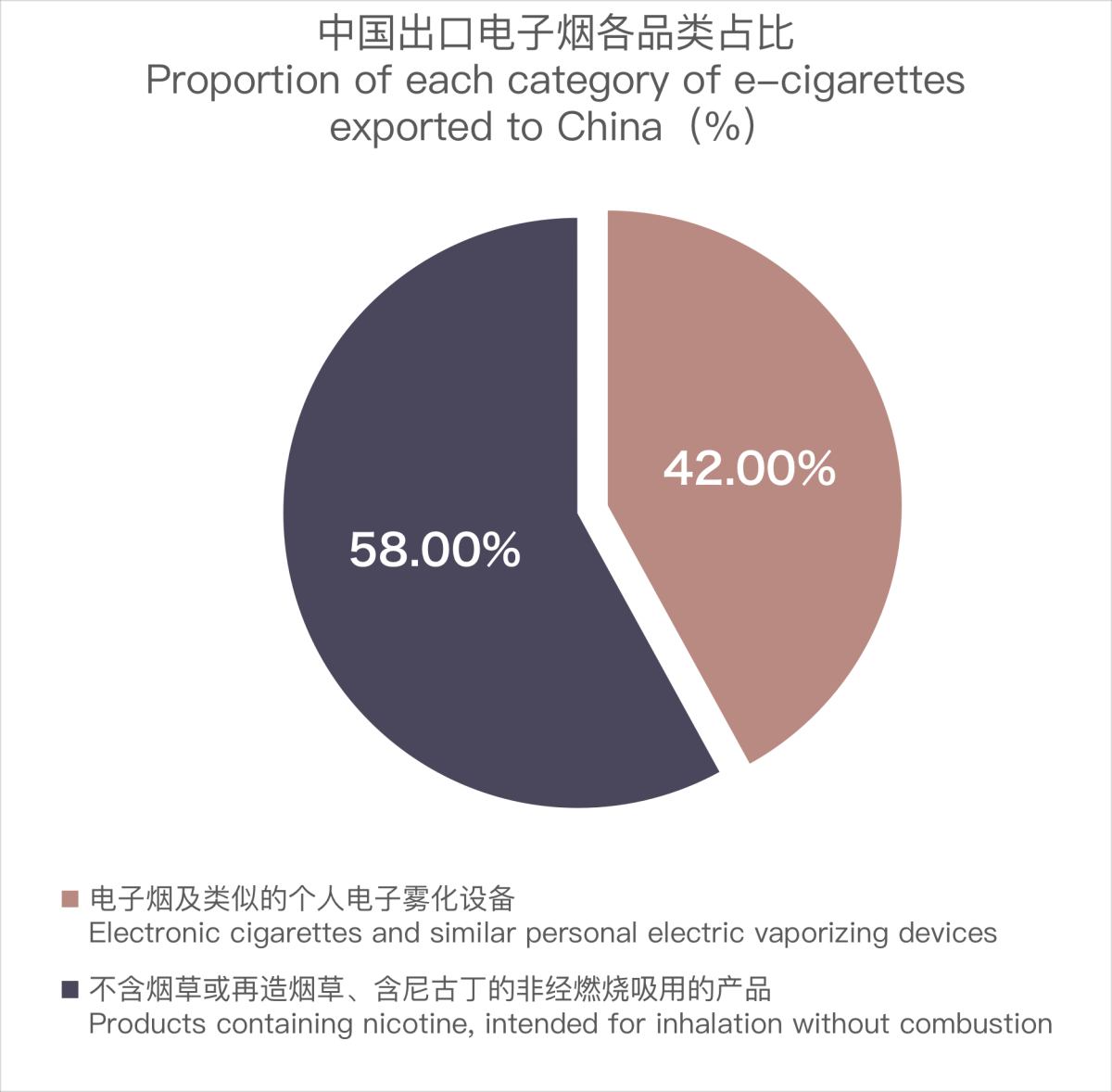
China's E-cigarette Export Data for Germany, December 2023
Source of the image: 2FIRSTS (created by Mincy)


We welcome news tips, article submissions, interview requests, or comments on this piece.

Please contact us at info@2firsts.com, or reach out to Alan Zhao, CEO of 2Firsts, on LinkedIn


Notice

1.  This article is intended solely for professional research purposes related to industry, technology, and policy. Any references to brands or products are made purely for objective description and do not constitute any form of endorsement, recommendation, or promotion by 2Firsts.

2.  The use of nicotine-containing products — including, but not limited to, cigarettes, e-cigarettes, nicotine pouchand heated tobacco products — carries significant health risks. Users are responsible for complying with all applicable laws and regulations in their respective jurisdictions.

3.  This article is not intended to serve as the basis for any investment decisions or financial advice. 2Firsts assumes no direct or indirect liability for any inaccuracies or errors in the content.

4.  Access to this article is strictly prohibited for individuals below the legal age in their jurisdiction.


Copyright


This article is either an original work created by 2Firsts or a reproduction from third-party sources with proper attribution. All copyrights and usage rights belong to 2Firsts or the original content provider. Unauthorized reproduction, distribution, or any other form of unauthorized use by any individual or organization is strictly prohibited. Violators will be held legally accountable.

For copyright-related inquiries, please contact: info@2firsts.com


AI Assistance Disclaimer


This article may have been enhanced using AI tools to improve translation and editorial efficiency. However, due to technical limitations, inaccuracies may occur. Readers are encouraged to refer to the cited sources for the most accurate information.

We welcome any corrections or feedback. Please contact us at: info@2firsts.com

The Volume Illusion: Measuring the Future of Nicotine with the Tools of the Past
As next-generation nicotine products become economically central rather than marginal, traditional volume-based metrics are increasingly unable to explain consumption, risk, and value. Units designed for a cigarette-based economy struggle to describe systems defined by delivery speed, pharmacokinetics, and adaptive user behavior. Drawing on financial reporting, regulation, and nicotine science, a fundamental question: can the future of nicotine still be measured using the tools of its past?
Feb.09 by Alan Zhao | 2Firsts Perspectives
Guam names retailers fined for selling tobacco to under-21 customers; penalties range from $2,000 to $4,000
Guam disclosed enforcement details for its 2025 tobacco retail compliance program, showing a 97.1% compliance rate among 277 inspected retailers. Nine violations were recorded, including eight underage sales cases and one signage violation, with fines ranging from $500 to $4,000.
Feb.10 by 2FIRSTS.ai
Fifth Circuit Upholds FDA’s 2021 PMTA Rule, Citing Statutory Health-Study Requirements
A Fifth Circuit panel upheld the U.S. Food and Drug Administration’s 2021 final rule requiring companies seeking premarket authorization for new tobacco products to include information on health-risk investigations. In a published opinion, the court found FDA satisfied the Regulatory Flexibility Act’s procedural requirements and reasonably relied on the economic analysis from the 2016 “deeming rule” as a factual basis to certify limited impact on small businesses.
Feb.27 by 2FIRSTS.ai
Shanghai releases 2025 smoke-free white paper: smoking incidence at designated smoke-free venues falls to 12.6%
Shanghai released its 2025 White Paper on Smoking Control in Public Places at a city tobacco control meeting on March 5. The paper reports a 12.6% smoking incidence in legally designated smoke-free venues, down 0.4 percentage points from 2024, and says 98.2% of residents support a full indoor smoking ban.
Mar.05
Germany Sees 18.2% Jump in Taxed Tobacco Substitutes in 2025, Including E-liquids
Germany’s Federal Statistical Office (Destatis) said 66.4 billion cigarettes were taxed in 2025, up 0.2% from 2024, while long-term volumes have more than halved since 1991 and per-capita consumption fell to 795 cigarettes. Taxed tobacco substitutes such as e-cigarette liquids reached 1.5 million liters, up 18.2% year on year.
Jan.26 by 2FIRSTS.ai
2Firsts Flash|PMI Reports 2025 Results as Smoke-Free Products Account for 41.5% of Net Revenues
Philip Morris International reported full-year 2025 results on February 6, with smoke-free products accounting for 41.5% of adjusted net revenues, up from 38.7% a year earlier. Total net revenues rose 7.3% to $40.65 billion, while shipment volumes increased 1.4%, widening the gap between revenue and volume growth. Cigarette shipments declined as smoke-free volumes rose 12.8%, driven by heated tobacco, oral nicotine and e-vapor products. Results were released alongside a 9:00 a.m. EST webcast.
Feb.06