China's E-cigarette Export Data to Indonesia in December 2023

Industry Insight by 2FIRSTS Mincy
Mar.07.2024
China's E-cigarette Export Data to Indonesia in December 2023
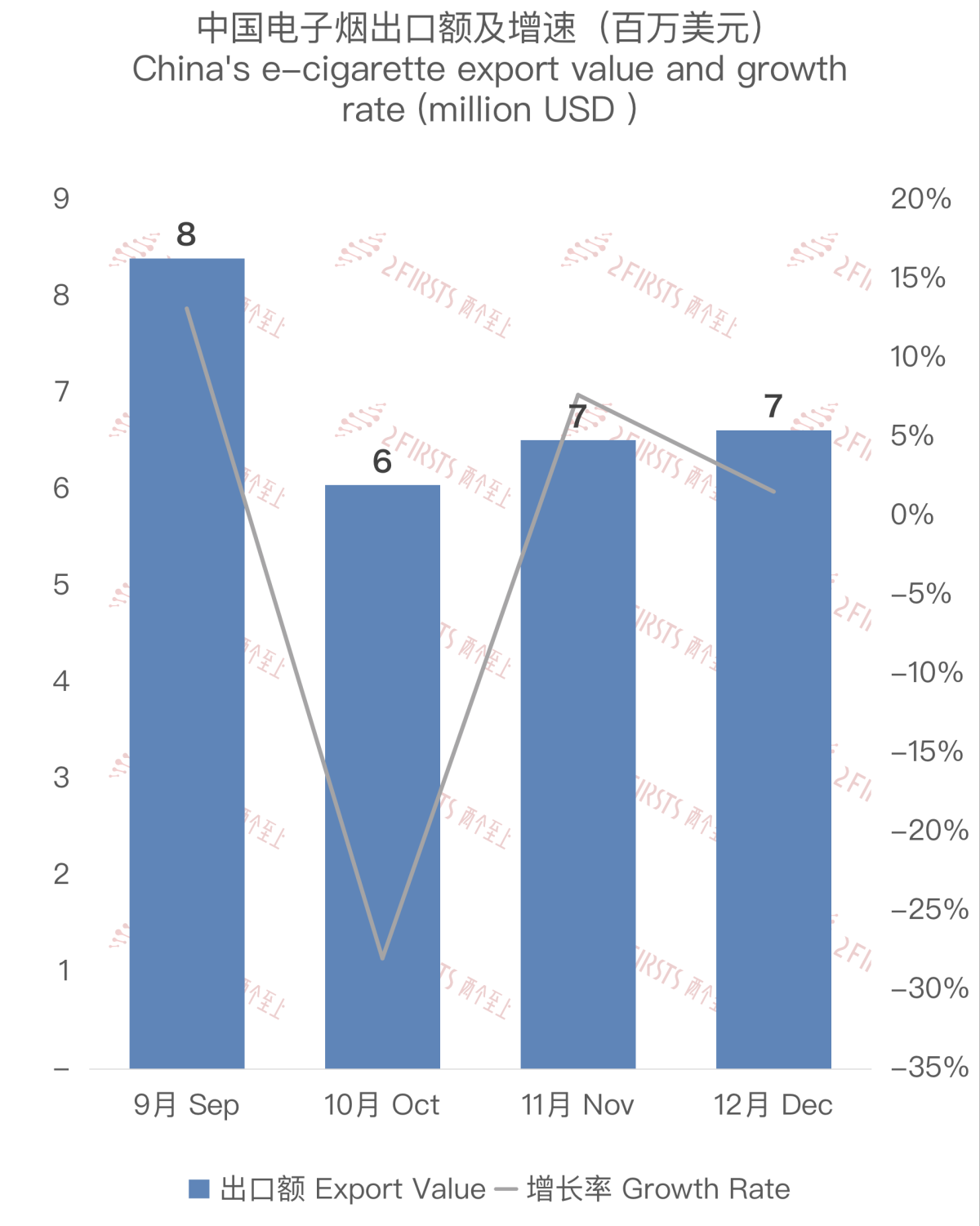
Chinese e-cigarette exports to Indonesia in December 2023 totaled $6.62 million, declining 14.23% year-on-year.

According to the latest trade data released by the General Administration of Customs of the People's Republic of China, 2FIRSTS has compiled the e-cigarette export data to Indonesia in December 2023. The specifics are as follows:
China's E-cigarette Export Data to Indonesia in December 2023
Image source: 2FIRSTS (Mincy mapping)


The export volume amounted to approximately 6.62 million US dollars, with a month-on-month increase of 1.58% and a year-on-year decrease of 14.23%.
China's E-cigarette Export Data to Indonesia in December 2023
Image source: 2FIRSTS (created by Mincy)


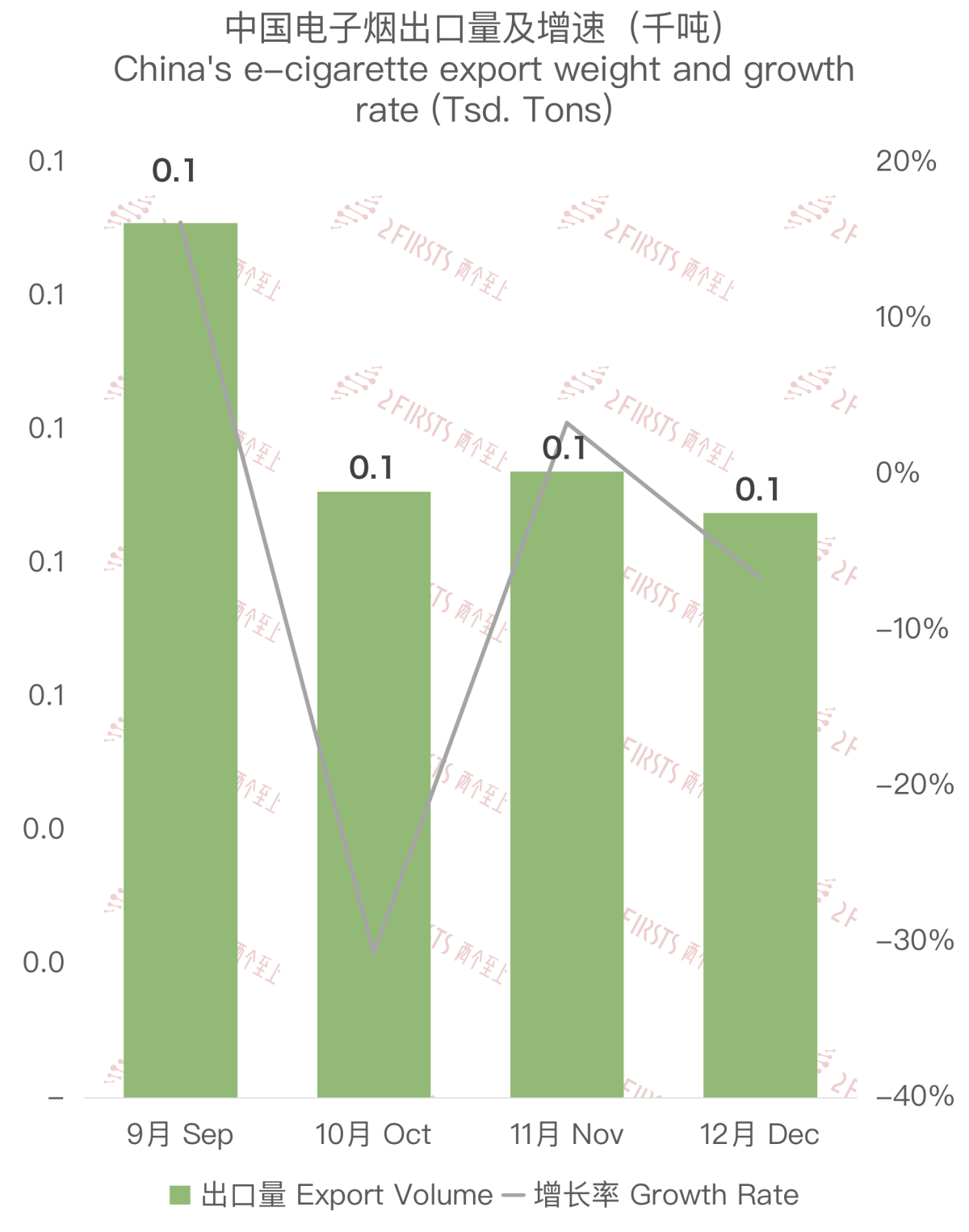
The export volume is approximately 87 tons, a decrease of 6.62% compared to the previous period and a decrease of 1.17% compared to the same period last year.
China's E-cigarette Export Data to Indonesia in December 2023
Image source: 2FIRSTS (created by Mincy)


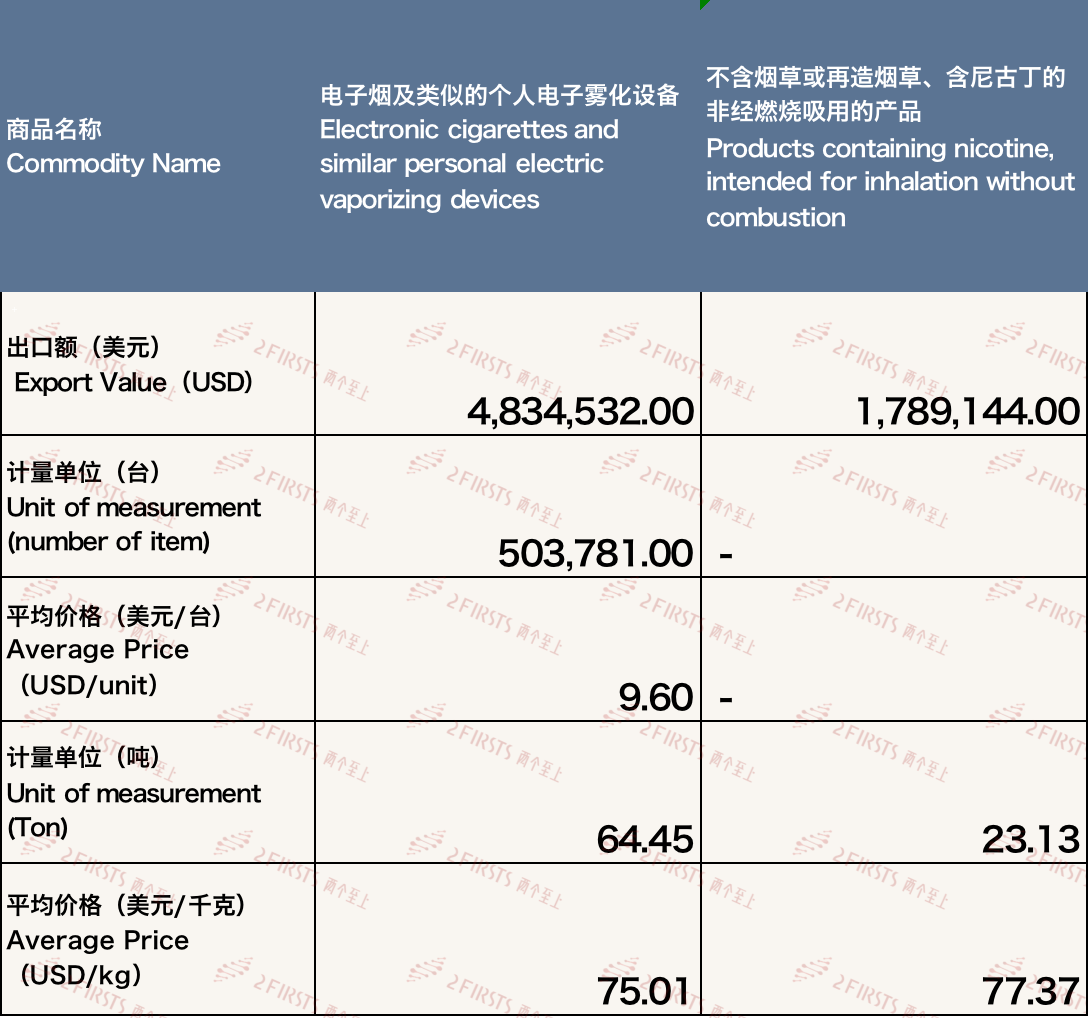
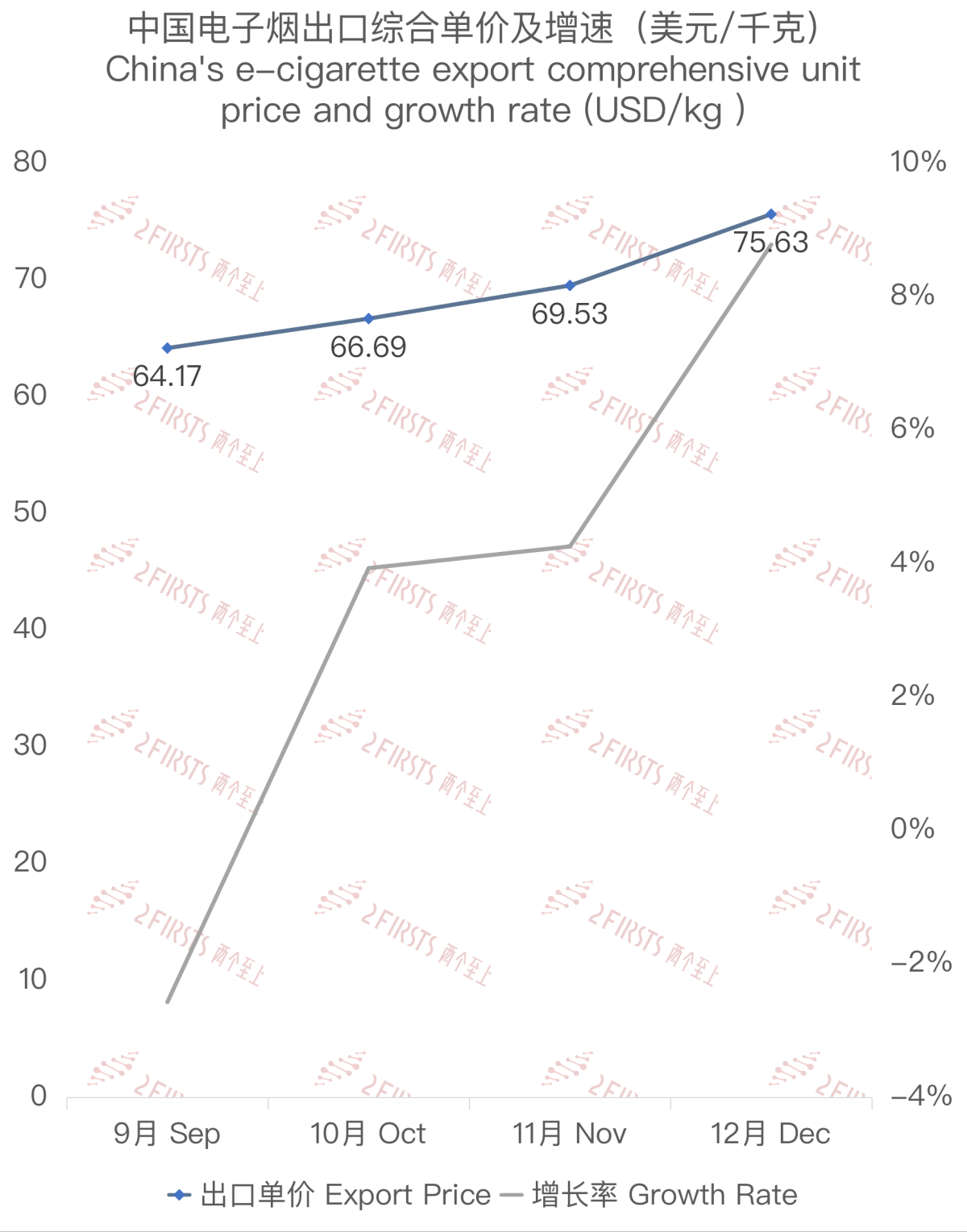
The export unit price is $75.63 per kilogram, showing a month-on-month increase of 8.78% but a year-on-year decrease of 13.21%. The average price of "e-cigarettes and similar personal electronic vaporizing devices" is $9.6 per unit.
China's E-cigarette Export Data to Indonesia in December 2023
Image source: 2FIRSTS (Mincy diagram)


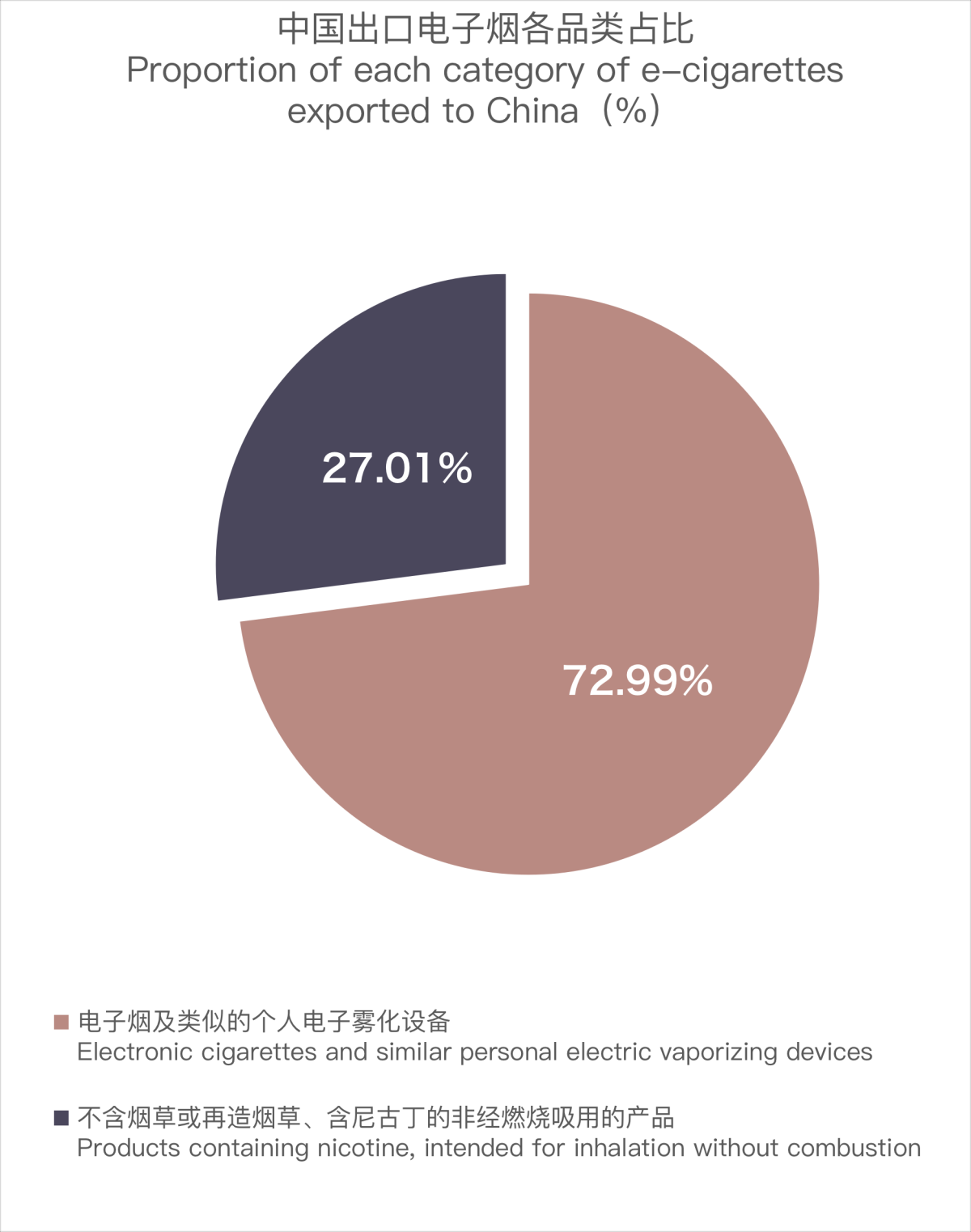
Among them, "e-cigarettes and similar personal electronic atomization devices" accounted for 72.99% of the export product categories, while "products that do not contain tobacco or reconstituted tobacco, contain nicotine, and are non-combustible for oral use" accounted for 27.01%.
China's E-cigarette Export Data to Indonesia in December 2023
Image source: 2FIRSTS (Mincy drawing)


We welcome news tips, article submissions, interview requests, or comments on this piece.

Please contact us at info@2firsts.com, or reach out to Alan Zhao, CEO of 2Firsts, on LinkedIn


Notice

1.  This article is intended solely for professional research purposes related to industry, technology, and policy. Any references to brands or products are made purely for objective description and do not constitute any form of endorsement, recommendation, or promotion by 2Firsts.

2.  The use of nicotine-containing products — including, but not limited to, cigarettes, e-cigarettes, nicotine pouchand heated tobacco products — carries significant health risks. Users are responsible for complying with all applicable laws and regulations in their respective jurisdictions.

3.  This article is not intended to serve as the basis for any investment decisions or financial advice. 2Firsts assumes no direct or indirect liability for any inaccuracies or errors in the content.

4.  Access to this article is strictly prohibited for individuals below the legal age in their jurisdiction.


Copyright


This article is either an original work created by 2Firsts or a reproduction from third-party sources with proper attribution. All copyrights and usage rights belong to 2Firsts or the original content provider. Unauthorized reproduction, distribution, or any other form of unauthorized use by any individual or organization is strictly prohibited. Violators will be held legally accountable.

For copyright-related inquiries, please contact: info@2firsts.com


AI Assistance Disclaimer


This article may have been enhanced using AI tools to improve translation and editorial efficiency. However, due to technical limitations, inaccuracies may occur. Readers are encouraged to refer to the cited sources for the most accurate information.

We welcome any corrections or feedback. Please contact us at: info@2firsts.com

Why AIRSCREAM Built its European Production Hub for Regulated Market Growth
AIRSCREAM’s production hub in the Czech Republic brings nicotine pouch manufacturing, e-liquid bottling, product documentation, warehousing and international logistics into one operation, giving brands and commercial partners a practical platform from which to launch, expand and enter new markets.
Market
Sep.16 by 2Firsts Perspectives
Bret Koplow Takes Permanent Charge of FDA Tobacco Center After Pushing Faster PMTA Reviews, as HHS Emphasizes Innovation and Access to Lower-Risk Alternatives
The U.S. Department of Health and Human Services has named Bret Koplow permanent director of the FDA’s Center for Tobacco Products, ending his period as acting chief. Koplow has spent years working on tobacco regulation, law and policy inside the FDA and, while serving as acting director, pushed for faster PMTA reviews and nicotine pouch review pilots. HHS also said CTP will prioritize innovation and access to less harmful alternatives for adult smokers while continuing efforts to protect youth.
Sep.09
EU Trade Department Faces Scrutiny Over Contacts With Tobacco Industry
European Ombudswoman Teresa Anjinho has opened an inquiry into how the European Commission’s Directorate-General for Trade handles interactions with the tobacco industry. The case follows a complaint from a civil society organisation that alleges regular, unnecessary and non-transparent contacts between DG TRADE and tobacco industry representatives, raising questions over compliance with the EU’s obligations under the WHO Framework Convention on Tobacco Control. The inquiry remains ongoing, and the Ombudswoman has not reached any finding of maladministration.
Aug.24
Australia’s One Nation Proposes 75% Tobacco Tax Cut, Says Lower Prices Could Hit Illicit Market
Australia’s One Nation party has proposed cutting tobacco excise by 75%, arguing that lower legal cigarette prices could narrow the gap with illicit tobacco and reduce demand for black-market products. The proposal comes as Australia continues expanding enforcement against illicit tobacco supply chains through border controls, retail inspections and organised-crime investigations. Supporters argue high taxes have contributed to illicit-market growth, while opponents warn that lower tobacco prices could undermine public-health goals. The proposal is a party policy position and has not been adopted by the Australian government.
Aug.18
F1 Faces Renewed Pressure Over Tobacco and Nicotine Sponsorships as 67 Groups Target ZYN and VELO Ahead of Madrid Race
Ahead of the Formula 1 race in Madrid, 67 Spanish and international public-health, medical and consumer organizations have sent an open letter to F1 President and CEO Stefano Domenicali calling for an end to sponsorships linked to the tobacco and nicotine industry, including nicotine pouches, vaping products and heated tobacco. The letter focuses on Philip Morris International’s ZYN partnership with Ferrari and British American Tobacco’s long-running partnership with McLaren and exposure for VELO. The campaign follows a March letter in which more than 160 organizations worldwide made a similar request to Formula 1.
Sep.10
South Korean Lawmaker Jeong Jin-wook Pushes Synthetic Nicotine Vape Probe, Highlighting Supply Chain and Tax Concerns
South Korean lawmaker Jeong Jin-wook has again called for stronger government action against liquid synthetic nicotine vape manufacturers and sellers, alleging that some businesses may have avoided regulation through product labeling changes and corporate restructuring. According to Newsworks, JNILBO and other Korean reports, Jeong has held his third press conference on the issue, calling for a government-wide investigation. The dispute involves whether synthetic nicotine products should fall under tobacco regulations, tax implications and supply-chain transparency. South Korean government agencies have previously said some estimates of potential tax losses cannot be verified due to limited sales data.
Jul.27