China's E-Cigarette Export Data to Vietnam in December 2023

Industry Insight by 2FIRSTS Mincy
Mar.13.2024
China's E-Cigarette Export Data to Vietnam in December 2023
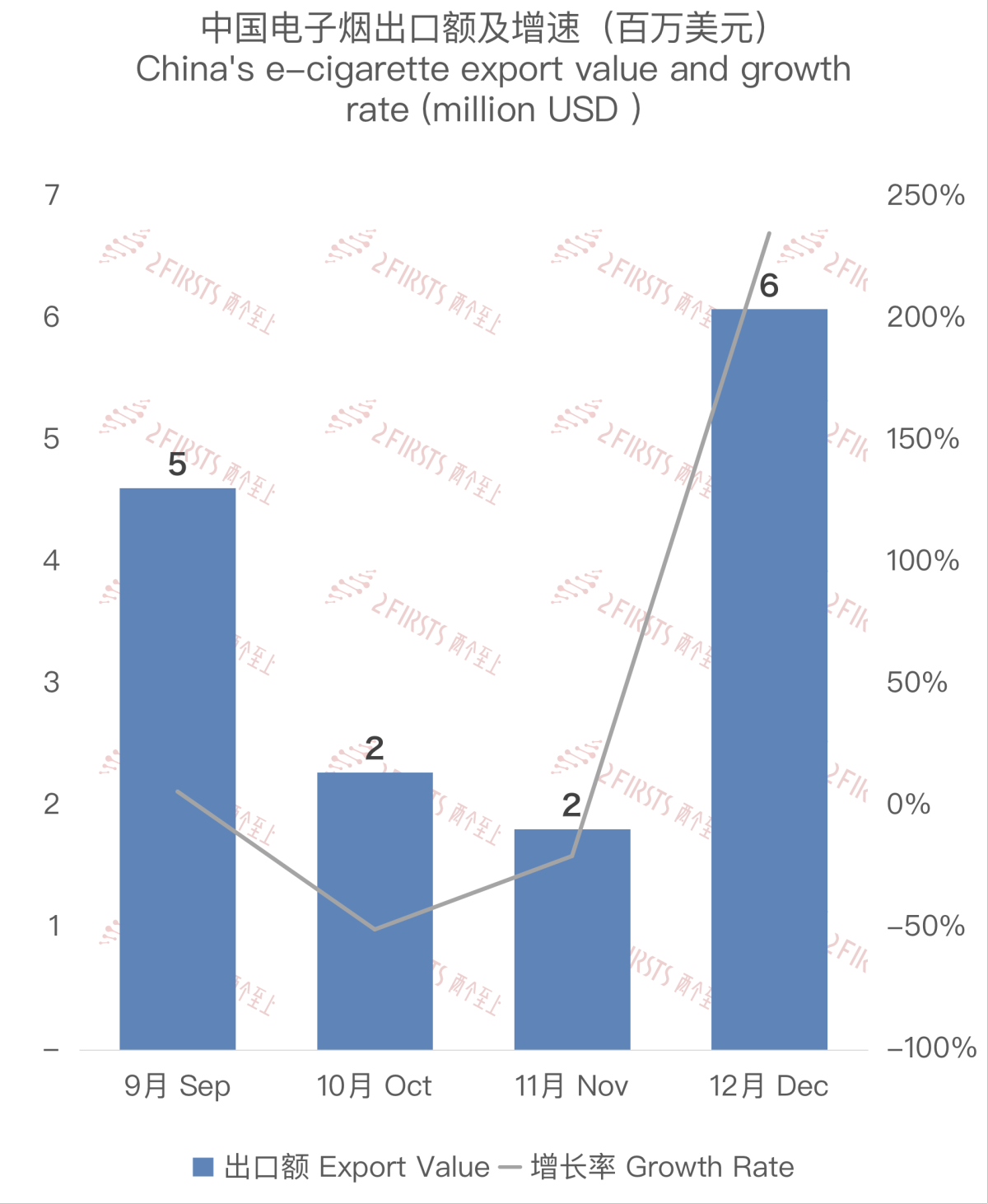
China's e-cigarette exports to Vietnam surged in December 2023, with a 252.49% year-on-year increase, totaling $6.08 million.

According to the latest trade data released by the General Administration of Customs of the People's Republic of China, 2FIRSTS has compiled the e-cigarette export data from China to Vietnam in December 2023. The specifics are as follows:
China's E-Cigarette Export Data to Vietnam in December 2023
Image source: 2FIRSTS (drawn by Mincy)


The export volume was approximately 6.08 million US dollars, reflecting a month-on-month increase of 235.20% and a year-on-year increase of 252.49%.
China's E-Cigarette Export Data to Vietnam in December 2023
Image source: 2FIRSTS (Mincy drawings)


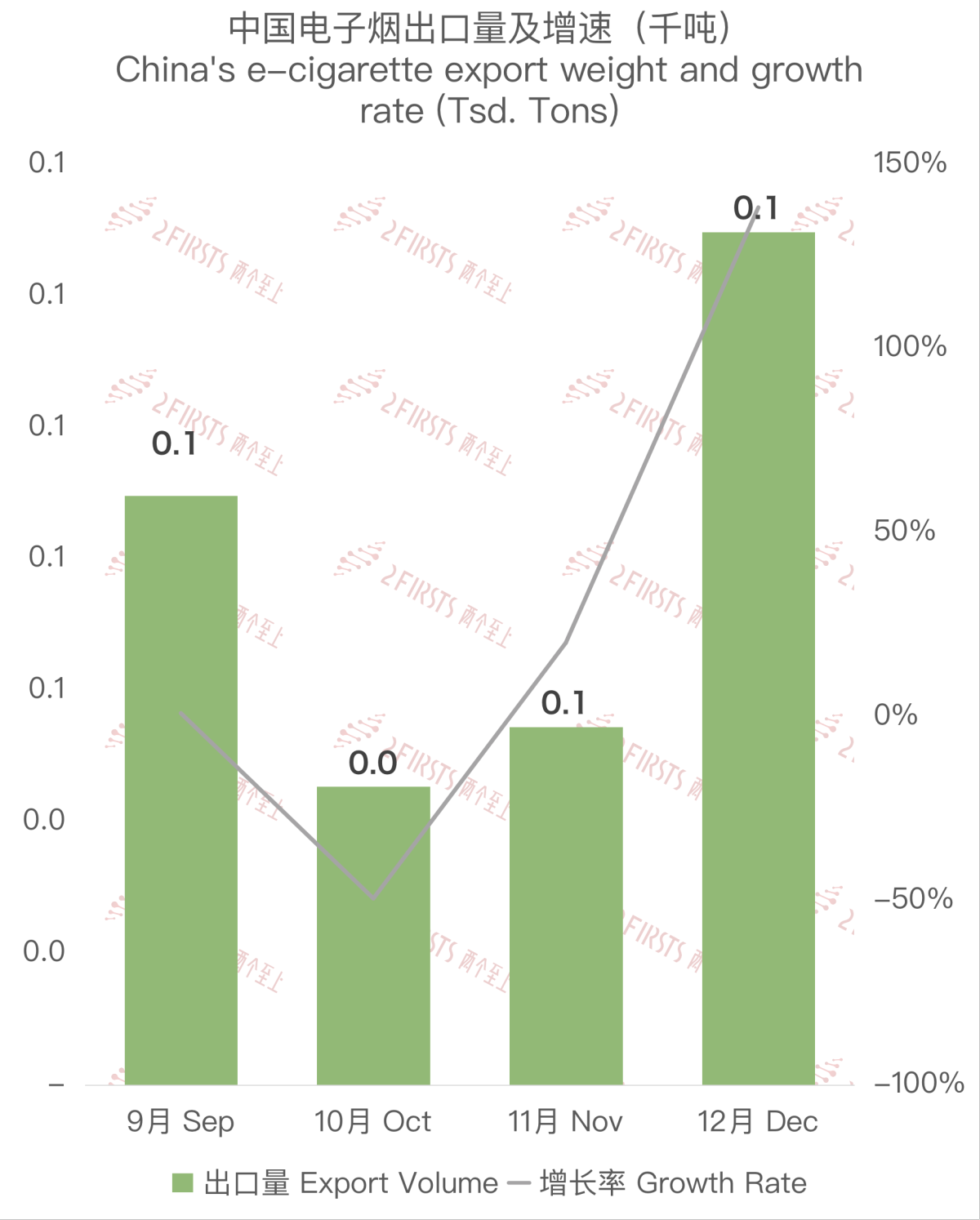
The export volume is about 130 tons, with a month-on-month increase of 138.27% and a year-on-year increase of 186.56%.
China's E-Cigarette Export Data to Vietnam in December 2023
Image source: 2FIRSTS (Mincy's drawing)


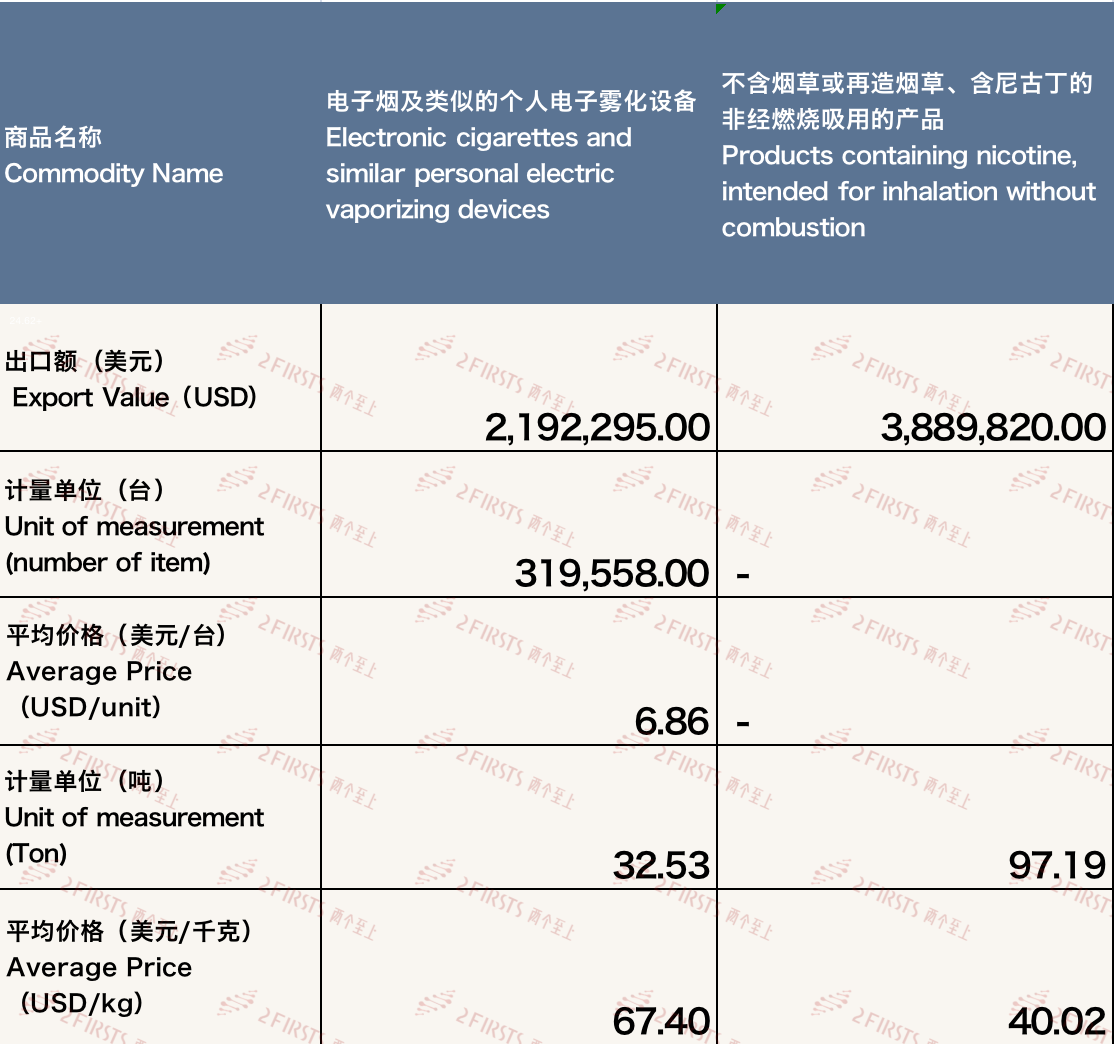
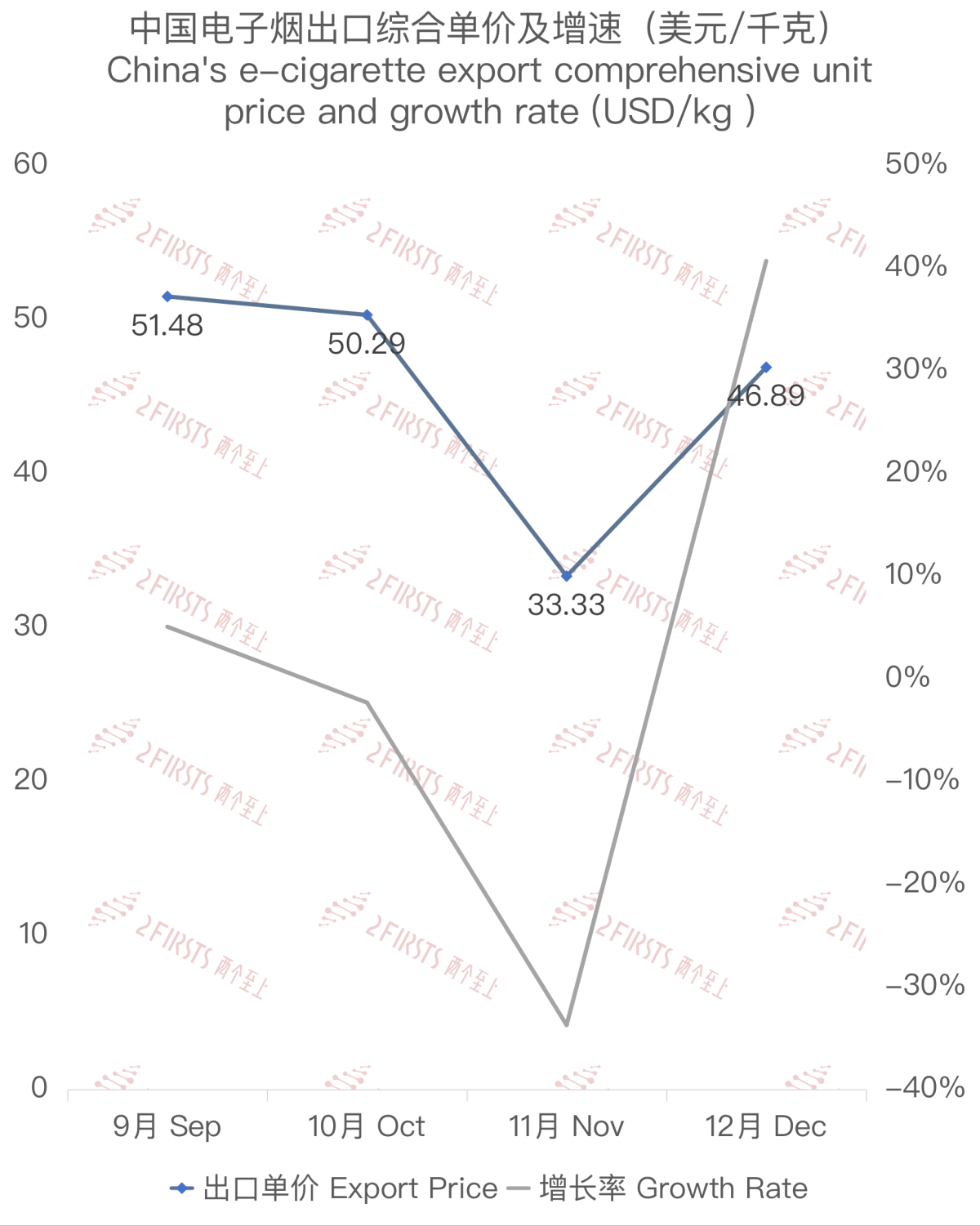
The export unit price is $46.89 per kilogram, an increase of 40.68% on a month-on-month basis and 23.00% year-on-year; the average price of "e-cigarettes and similar personal electronic vaporizing devices" is $6.86 per unit.
China's E-Cigarette Export Data to Vietnam in December 2023
Image source: 2FIRSTS (created by Mincy)


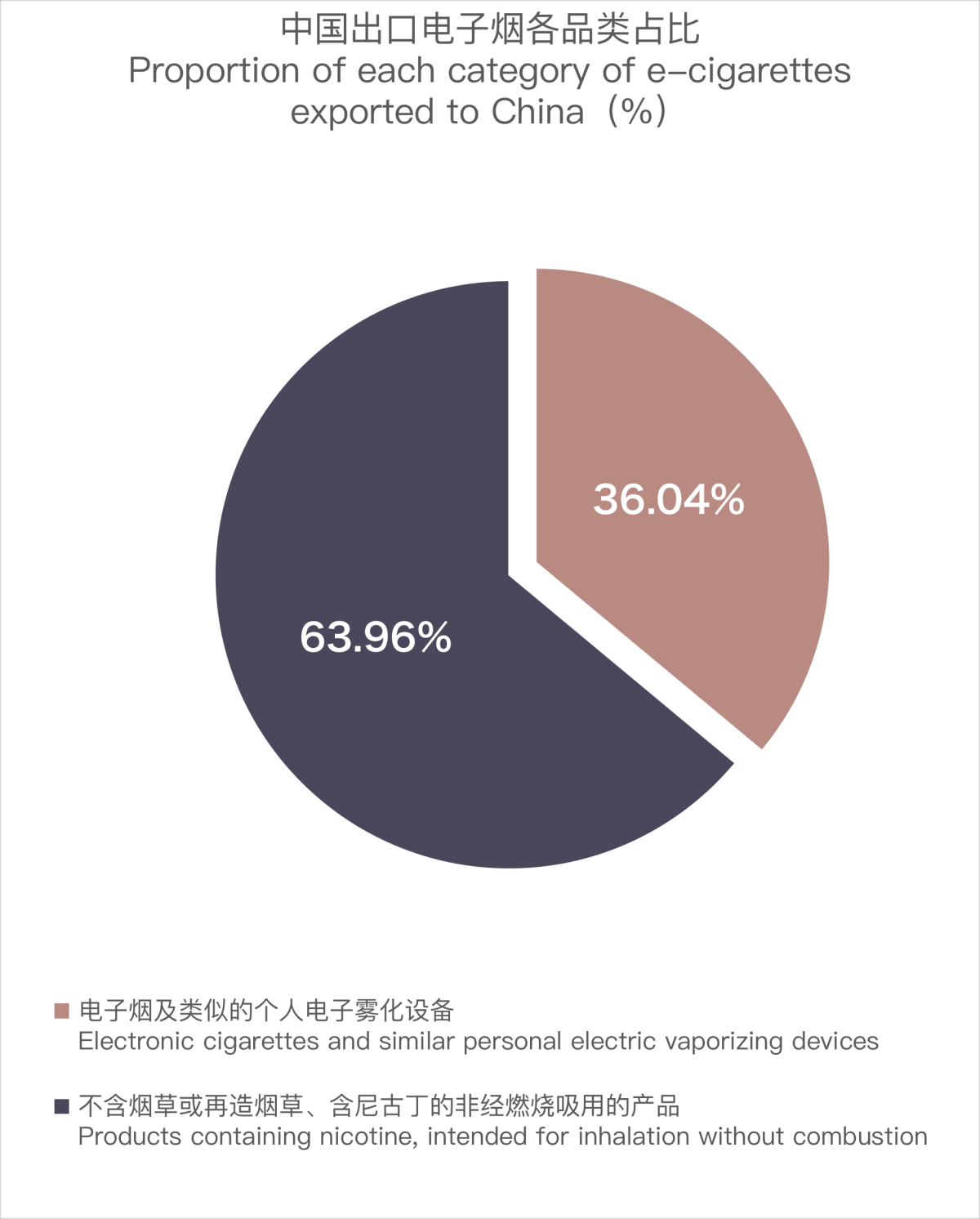
Among them, "e-cigarettes and similar personal electronic vaporization devices" account for 36.04% of the export category, while "non-combustible products containing nicotine that do not contain tobacco or reconstituted tobacco" account for 63.96%.
China's E-Cigarette Export Data to Vietnam in December 2023
Image source: 2FIRSTS (Chart by Mincy)


We welcome news tips, article submissions, interview requests, or comments on this piece.

Please contact us at info@2firsts.com, or reach out to Alan Zhao, CEO of 2Firsts, on LinkedIn


Notice

1.  This article is intended solely for professional research purposes related to industry, technology, and policy. Any references to brands or products are made purely for objective description and do not constitute any form of endorsement, recommendation, or promotion by 2Firsts.

2.  The use of nicotine-containing products — including, but not limited to, cigarettes, e-cigarettes, nicotine pouchand heated tobacco products — carries significant health risks. Users are responsible for complying with all applicable laws and regulations in their respective jurisdictions.

3.  This article is not intended to serve as the basis for any investment decisions or financial advice. 2Firsts assumes no direct or indirect liability for any inaccuracies or errors in the content.

4.  Access to this article is strictly prohibited for individuals below the legal age in their jurisdiction.


Copyright


This article is either an original work created by 2Firsts or a reproduction from third-party sources with proper attribution. All copyrights and usage rights belong to 2Firsts or the original content provider. Unauthorized reproduction, distribution, or any other form of unauthorized use by any individual or organization is strictly prohibited. Violators will be held legally accountable.

For copyright-related inquiries, please contact: info@2firsts.com


AI Assistance Disclaimer


This article may have been enhanced using AI tools to improve translation and editorial efficiency. However, due to technical limitations, inaccuracies may occur. Readers are encouraged to refer to the cited sources for the most accurate information.

We welcome any corrections or feedback. Please contact us at: info@2firsts.com

Malaysia Police Seize RM12.7 Million in Illegal Vapes and Cigarettes as Probe Points to Sea Shipments From China
Police in Malaysia’s Selangor state seized illegal vape products and contraband cigarettes worth about RM12.7 million (approximately $3 million) in two enforcement operations. According to New Straits Times and The Star, the vape-related operation uncovered 131,036 boxes of vape products, 4,900 bottles of e-liquid and 25,510 vape devices, valued at about RM9.4 million. Police said preliminary investigations indicated that some illegal vape products entered Malaysia through sea shipments from China before moving through storage and distribution networks.
Aug.10
R.J. Reynolds Vapor Company Launches Flavored Vuse Pro Pods in U.S. Without FDA Marketing Authorization
R.J. Reynolds Vapor Company has begun selling four flavored Vuse Pro pods — Peach, Berry, Watermelon and Fresh Mint — in Ohio and selected other U.S. markets. According to the Vuse U.S. FAQ, Vuse Pro contains approximately 5.0% nicotine by weight, and Vuse Pro pre-filled pods are intended for use with Vuse Alto devices. Reynolds told 2Firsts that product labeling lists an e-liquid capacity of 2.0 mL per pod. The Vuse Alto Power Unit received FDA marketing authorization in 2024, while the new Vuse Pro pods themselves have not received marketing granted orders. The rollout follows the FDA’s May 2026 revision of enforcement priorities for certain unauthorized vaping products with qualifying pending applications.
BAT
Sep.10
Ohio Supreme Court Weighs Whether State Consumer Law Can Restrict Flavored Vape Sales
The Ohio Supreme Court is hearing a case involving flavored vape sales and whether state authorities can use consumer protection laws to take action against retailers selling unauthorized vape products. Ohio officials argue that selling unauthorized flavored vapes may constitute consumer deception, while retailers argue that tobacco product regulation falls under federal Food and Drug Administration (FDA) authority and that states cannot impose additional restrictions through consumer laws. The case could affect the scope of state-level vape regulation across the United States.
Aug.06
U.S. Ninth Circuit Upholds FDA Denial of MH Global’s Flavored Vape PMTA Applications
The U.S. Court of Appeals for the Ninth Circuit upheld the FDA’s denial of MH Global LLC’s applications to market flavored electronic nicotine delivery systems (ENDS). The court ruled that FDA’s comparative-efficacy framework, which requires applicants to show that flavored products provide greater cessation or switching benefits than tobacco-flavored alternatives, is consistent with the Tobacco Control Act’s “appropriate for the protection of the public health” standard. The court also found that FDA was not required to establish the framework through notice-and-comment rulemaking.
Aug.26
Product | OXVA Launches ONEO Pro in France, Upgrading Its Open-Pod Platform
Vape brand OXVA has introduced the ONEO Pro, a refillable open-pod system that entered the French market in July 2026. The device features a 2,100mAh battery, up to 40W output, a 4ml refillable cartridge, multiple coil options and a 0.96-inch color TFT display. The launch reflects continued performance upgrades within the refillable open-pod segment, with brands adding higher capacity, adjustable output and smarter device interaction.
Aug.03
WIRED Investigation: Chinese-Made Vapes Turn to 6-Methyl-Nicotine and Other Analogs, Challenging U.S. Regulation
U.S. technology and investigative publication WIRED has examined how nicotine analogs are emerging as a new challenge for the country’s vape regulatory framework. The article argues that after the U.S. expanded federal oversight of nicotine products in 2022, some manufacturers began using nicotine-like compounds such as 6-methyl-nicotine that may fall outside existing definitions. Researchers cited by WIRED said some nicotine analogs could be more potent than traditional nicotine, although human health impacts remain unclear. U.S. policymakers are considering broader definitions of nicotine to bring these compounds under federal oversight.
Jul.27