Three arrows fired simultaneously.
In early November 2022, the Jiangxia District Bureau received a report and case leads from the Wuhan City Bureau. The report indicated that in a certain residential area in Jiangxia District, individuals were using logistics and delivery channels to receive and send illegal e-cigarettes in the shape of "violent bears" and "milk tea cups." The quantity and value of the e-cigarettes were significant, leading to suspicion of illegal business operations.
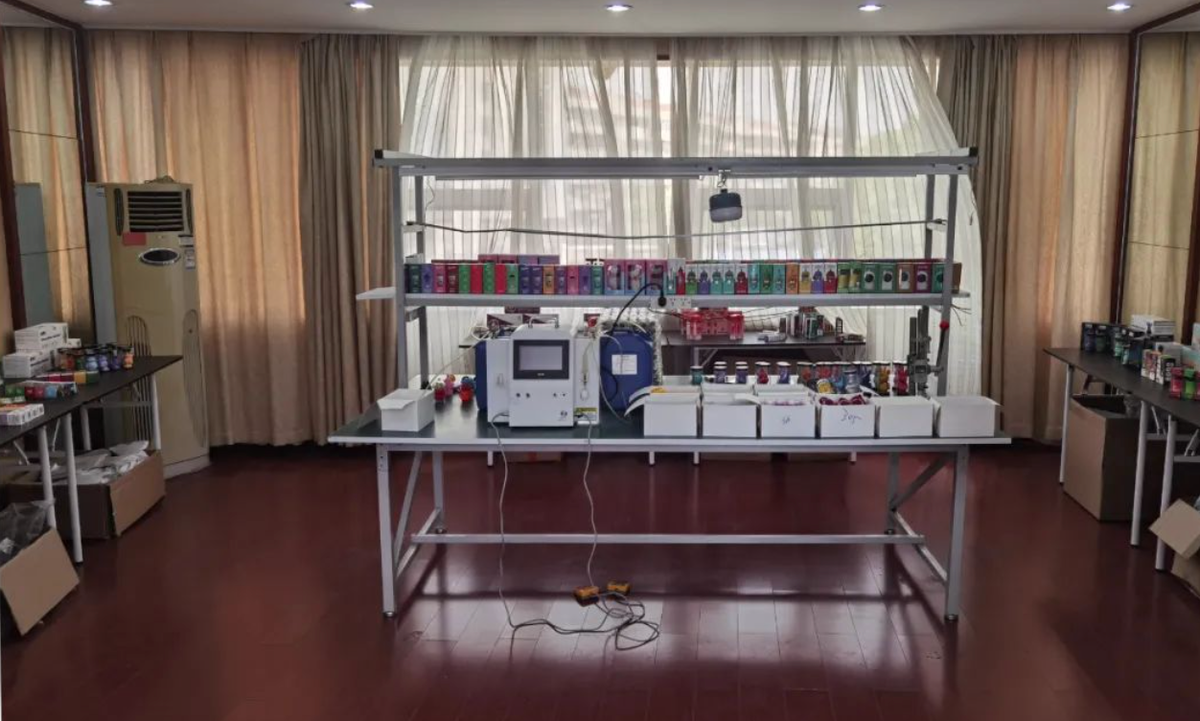
With the support of the Hubei Tobacco Big Data Wuhan Intelligence Center, the data analysis results confirmed some of the clues, combined with multiple joint field investigations, the Jiangxia District Bureau has initially identified the purchasing channels, sales model, and storage points of the suspect Wang.
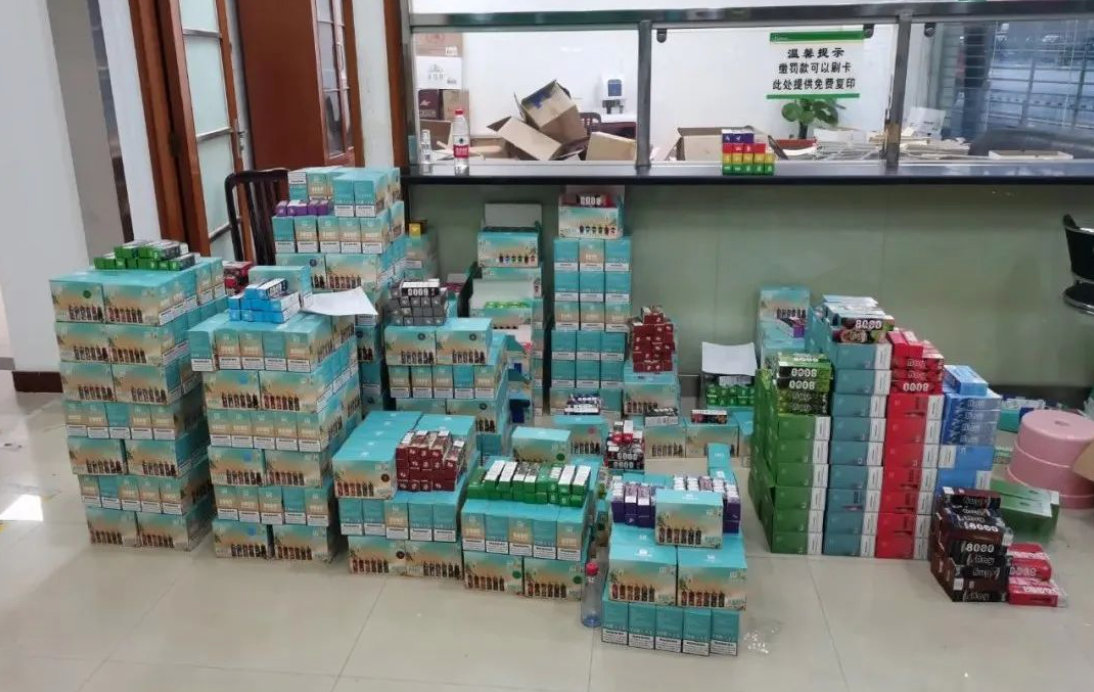
On December 26th, the Jiangxia District Bureau transferred information leads and related evidence to the Jiangxia District Public Security Sub-Bureau. The Jiangxia District Public Security Sub-Bureau filed a case for investigation according to the law, and promptly activated a joint investigation mechanism by establishing a special task force.
Based on data provided by a logistics and delivery company, investigators have identified as one of the main distributors of illegal e-cigarettes in Dongguan. They have also identified another suspect, Su XX, in a residential area in the Dongxihu District of Wuhan.
After data analysis and on-site verification, we believe that there is a network group operating illegally in an industrial park in Dongguan, involved in the production, assembly, and sale of e-cigarette products. Liu Yi, deputy team leader of the Wuhan Municipal Bureau's Special Inspection Detachment, stated that the group used the "Internet + logistics and delivery" method to distribute these illegal e-cigarette products to more than 30 provinces and cities nationwide.
In the battle against the illegal production and sale of flavored e-cigarettes, law enforcement officials and tobacco regulatory personnel are constantly competing with criminals in terms of speed.
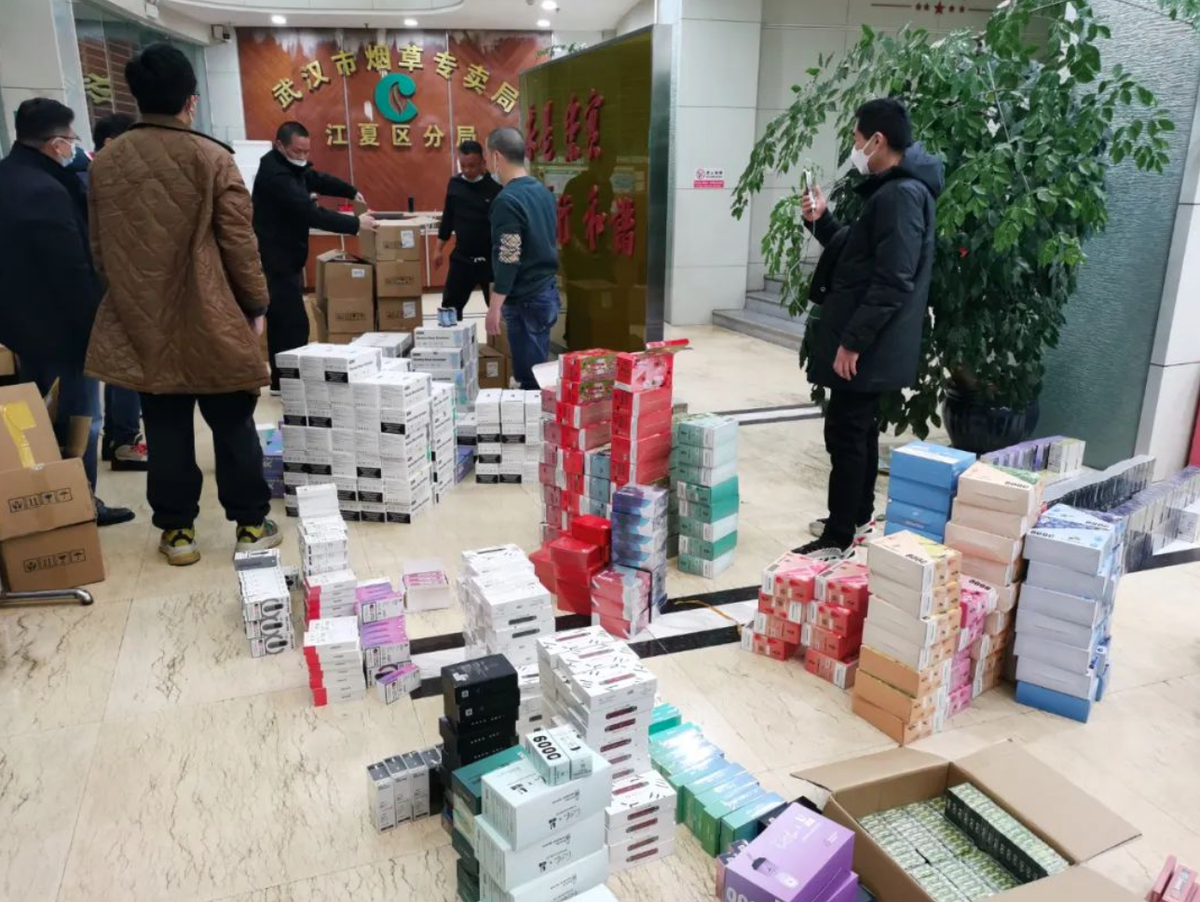
After gaining preliminary knowledge of the network structure of the criminal group, on January 8, 2023, the special task force carried out simultaneous raids in three locations in Hubei and Guangdong provinces: arresting suspect Wang in Jiangxia District, Wuhan, and suspect Su in Dongxihu District, Wuhan. Working together with Guangdong police and tobacco authorities, they also arrested 9 suspects in 4 locations in Dongguan City, seizing a large quantity of illegal disposable e-cigarettes, pods, smoking accessories, and e-liquid with a value of over 4 million RMB.
Three arrows were released simultaneously, and the first battle was won.
The task force continued to pursue and investigate leads, further expanding their achievements.
Heading south to the source.
Following the working method of "cutting off the roots, breaking the network, and capturing the main criminals," the special task force expanded and deepened the investigation into the production process and sales network of the gang, aiming to achieve a comprehensive breakthrough and dismantle the entire network.
On February 8, 2023, Wang and Su's superiors, Teng and Zhang, surrendered to authorities under pressure. Following this, another superior, Cao, surfaced. On February 18, Cao was arrested and brought into custody.
Cao was captured, leading to a significant breakthrough in the investigation of the "1.08" case. The special task force then identified Cao Jing, Zhang, and other members of the illegal e-cigarette manufacturing and sales group.
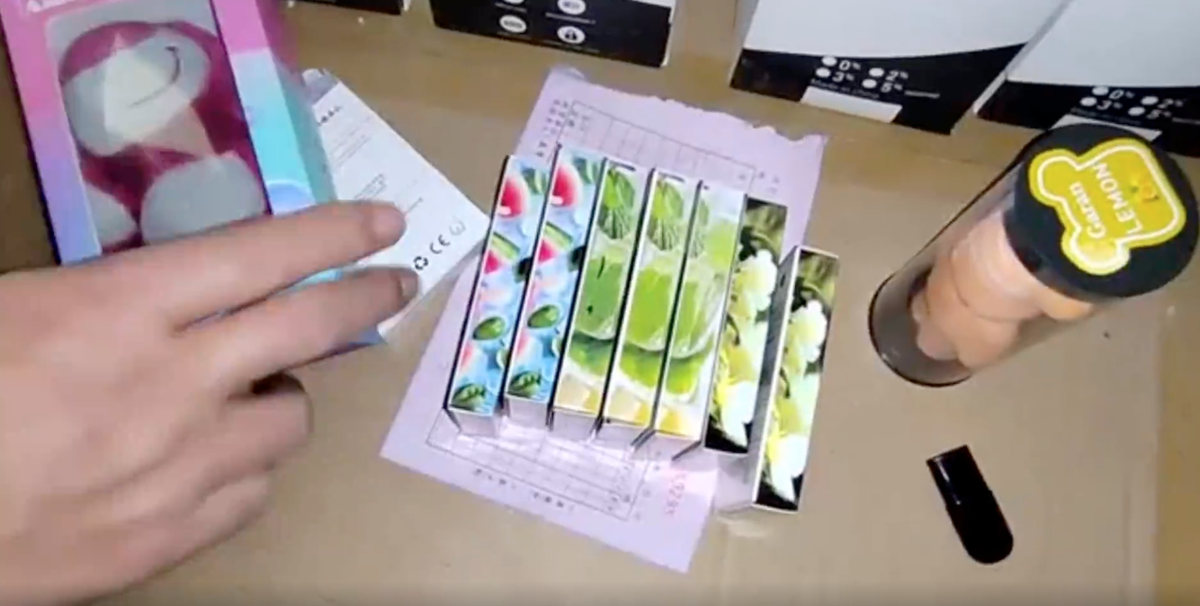
On February 28, 2023, the task force, in conjunction with the Dongguan Public Security Department, carried out a multi-line strike in Dongguan City, resulting in the arrest of five criminal suspects including Cao Moujing and Zhang Mou. A large number of illegal disposable e-cigarettes, semi-finished e-cigarettes, e-cigarette liquid, and packaging materials such as "milk tea cup" and "dolls" were seized at the scene, with a total value of more than 7 million yuan.
The process of capturing Cao Moujing was quite tortuous, said Zhang Xin, a member of the task force and former deputy director of the Jiangxia District Bureau. It was big data analysis that ultimately prevented the suspect from escaping.
It turns out that as the networks in Wuhan and Dongguan were successively captured, Cao Jing had already become aware and began to hide and avoid. When the task force arrived at a hideout on February 28, the workshops that were still in full production just a few days ago were found empty, with all equipment moved out, and the criminal suspects were nowhere to be found.
After concerted efforts by both the front and back end teams, the special task force successfully identified the new address where Cao Jing may be hiding through big data analysis. Upon arriving at the scene, they indeed caught her red-handed.
Heading south to track down its origins, the "big fish" has been caught. The special task force continues to dig deeper, further dismantling the criminal network carefully operated by Cao and Zhang.
Coordinated Attack
While the public security and tobacco departments in Wuhan were investigating the criminal network of Cao Moujing, the public security and tobacco departments in Jianhu County were also uncovering and cracking down on the same network. After conducting assessments, the two public security departments decided to handle the case jointly.
Before the consolidation, it was like two construction teams digging tunnels in the same mountain without knowing each other's positions, each digging on their own without forming any cooperation. After the consolidation, the two "construction teams" shared information, communicated with each other, and greatly improved their "construction efficiency." This was stated by Hao Qingping, a member of the special task force and head of the Special Sales Department of Jiangxia District Bureau.
Relying on information provided by Hubei authorities, the Jiangsu Anti-Smuggling Task Force successfully dismantled a distribution network operated by Chen and Li, and took legal action against 9 suspects involved in the criminal operation.
According to information provided by Jiangsu authorities, the Wuhan special task force further uncovered the true identity of the illegal e-liquid provider Lai, and arrested and detained them on June 9, 2023.
On September 11, 2023, the Ministry of Public Security and the State Tobacco Monopoly Administration designated the "1.08" case as a ministerial-level priority case.
At the same time, the public security and tobacco departments in Hubei and Jiangsu have transferred relevant case information and clues to more than 30 provinces and cities including Guangdong, Zhejiang, and Shandong, to promote coordinated crackdowns on illegal activities related to the "1·08" case.
On October 12, 2023, the main culprit in the "1·08" case, Cao Jing, was sentenced to five years and three months in prison. The remaining 28 people involved were also punished according to the law. A illegal production and operation chain of e-cigarette industry involving raw materials, production, sales, warehousing, and other links was completely severed, effectively protecting minors from the harm of e-cigarettes.
The "1·08" case is the first criminal case involving e-cigarettes handled by Hubei Province, and it is also a case of illegal operation of e-cigarettes involving the entire process, all elements, and the entire chain. During the investigation of the case, law enforcement officers implemented special case supervision, deep operation by special teams, intelligence analysis leading to investigation, and coordinated crackdown along the entire chain, overcoming difficulties such as obtaining evidence from different locations, inter-provincial cooperation, appraisal and pricing, and criminal pursuit. This has provided valuable replicable experience for handling similar cases.
The successful cracking of the '1·08' case has established a comprehensive case-handling system led by the public security department, with the coordinated efforts of various police forces, police stations, and the tobacco department to ensure effective law enforcement cooperation between the police and the tobacco industry. This has led to precise and swift actions in investigation and solving cases, effectively fulfilling political and social responsibilities," said Wang Hongbin, director of the Special Supervision and Management Office of the Hubei Provincial Bureau.
We welcome news tips, article submissions, interview requests, or comments on this piece.
Please contact us at info@2firsts.com, or reach out to Alan Zhao, CEO of 2Firsts, on LinkedIn
Notice
1. This article is intended solely for professional research purposes related to industry, technology, and policy. Any references to brands or products are made purely for objective description and do not constitute any form of endorsement, recommendation, or promotion by 2Firsts.
2. The use of nicotine-containing products — including, but not limited to, cigarettes, e-cigarettes, nicotine pouchand heated tobacco products — carries significant health risks. Users are responsible for complying with all applicable laws and regulations in their respective jurisdictions.
3. This article is not intended to serve as the basis for any investment decisions or financial advice. 2Firsts assumes no direct or indirect liability for any inaccuracies or errors in the content.
4. Access to this article is strictly prohibited for individuals below the legal age in their jurisdiction.
Copyright
This article is either an original work created by 2Firsts or a reproduction from third-party sources with proper attribution. All copyrights and usage rights belong to 2Firsts or the original content provider. Unauthorized reproduction, distribution, or any other form of unauthorized use by any individual or organization is strictly prohibited. Violators will be held legally accountable.
For copyright-related inquiries, please contact: info@2firsts.com
AI Assistance Disclaimer
This article may have been enhanced using AI tools to improve translation and editorial efficiency. However, due to technical limitations, inaccuracies may occur. Readers are encouraged to refer to the cited sources for the most accurate information.
We welcome any corrections or feedback. Please contact us at: info@2firsts.com