According to a report from Beijing News Network on May 16, after two months of in-depth investigation, the police in Dongying City, Shandong Province successfully dismantled a criminal gang specializing in producing counterfeit e-cigarettes. The gang was making e-cigarettes in the shape of "milk tea cups" and "coke cans" to deceive minors into purchasing them under the guise of quitting smoking. The amount involved in the case was as high as more than 10 million yuan.
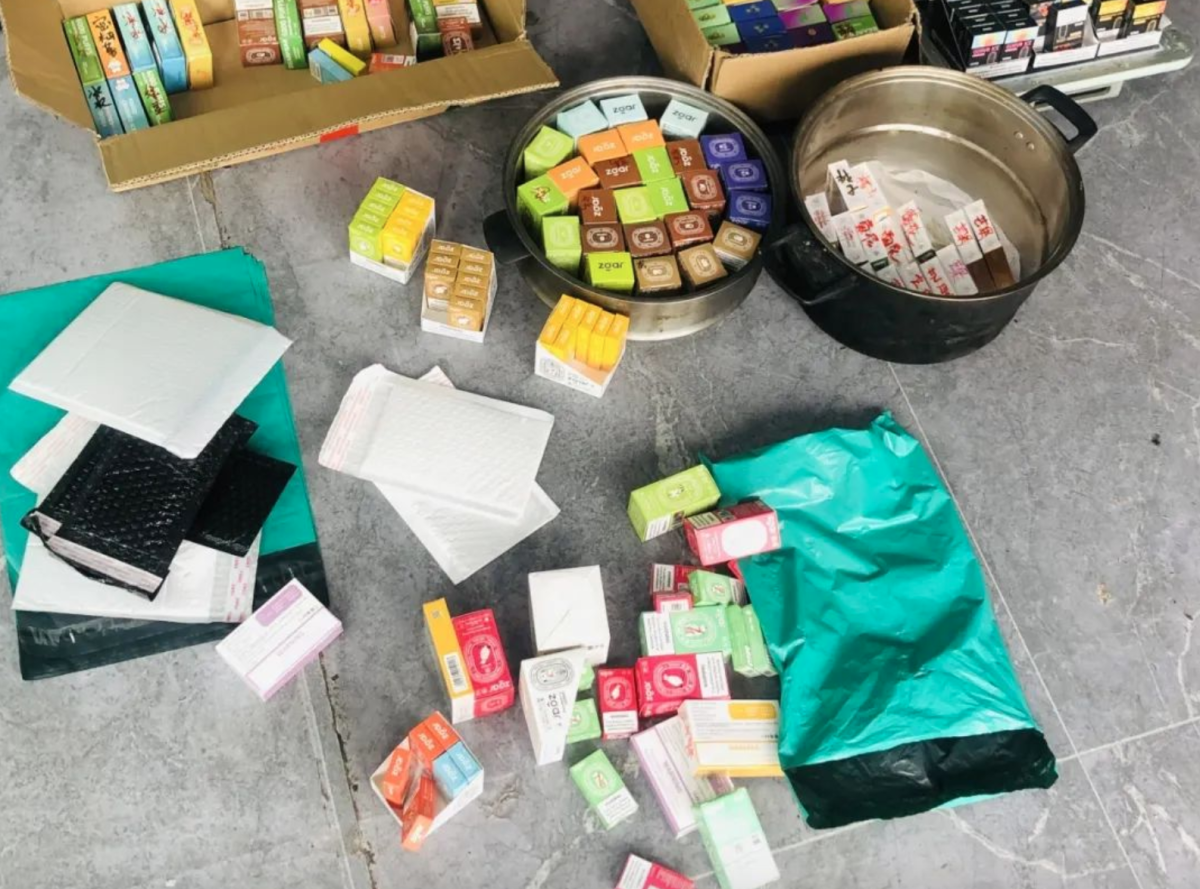
On January 29, 2024, the Kekou Sub-bureau of the Dongying Public Security Bureau in Shandong Province received a report from the district Tobacco Bureau that a store in its jurisdiction was suspected of selling fruit-flavored e-cigarettes to minors. The police quickly took action and seized 109 disposable non-standard e-cigarettes with names such as "Milk Tea Cup," "Rabbit Cup," "Cola Can," "Little Tiger," and "Ice Bear" as well as 504 pods at the scene of the store. Two suspects, Zhang and Wu, were arrested for suspected illegal e-cigarette sales.
During the period from October 2022 to January 2024, the criminal suspect Wu and the upstream and downstream criminal suspects Yuan, Huang, Zhang and others engaged in the illegal operation of e-cigarettes, using online social platforms to arrange the types and quantities of e-cigarettes and make online payments. The group transported goods through logistics, mainly targeting teenagers in 6 provinces in China, with monetary transactions amounting to over 10 million RMB.
Following this, the Kenli Sub-bureau established a special task force to crack down on illegal activities. They retrieved over 20,000 pieces of relevant data information through various channels about two suspected criminals, successfully tracing back to a criminal gang led by Gao, Fu, and Yuan that was illegally smuggling Vietnamese, Hong Kong, and Japanese versions of e-cigarettes.
Currently, the individuals involved in the case have been arrested, and the case is being processed according to the law.
According to Article 18 of the "Regulations on the Management of E-cigarettes", it is prohibited to set up e-cigarette sales outlets near ordinary primary and secondary schools, special education schools, secondary vocational schools, specialized schools, and kindergartens. Article 22 stipulates that it is prohibited to sell e-cigarette products to minors. E-cigarette operators should prominently display signs indicating that they do not sell e-cigarettes to minors; for those who are difficult to determine whether they are minors, they should be required to show identification documents.
We welcome news tips, article submissions, interview requests, or comments on this piece.
Please contact us at info@2firsts.com, or reach out to Alan Zhao, CEO of 2Firsts, on LinkedIn
Notice
1. This article is intended solely for professional research purposes related to industry, technology, and policy. Any references to brands or products are made purely for objective description and do not constitute any form of endorsement, recommendation, or promotion by 2Firsts.
2. The use of nicotine-containing products — including, but not limited to, cigarettes, e-cigarettes, nicotine pouchand heated tobacco products — carries significant health risks. Users are responsible for complying with all applicable laws and regulations in their respective jurisdictions.
3. This article is not intended to serve as the basis for any investment decisions or financial advice. 2Firsts assumes no direct or indirect liability for any inaccuracies or errors in the content.
4. Access to this article is strictly prohibited for individuals below the legal age in their jurisdiction.
Copyright
This article is either an original work created by 2Firsts or a reproduction from third-party sources with proper attribution. All copyrights and usage rights belong to 2Firsts or the original content provider. Unauthorized reproduction, distribution, or any other form of unauthorized use by any individual or organization is strictly prohibited. Violators will be held legally accountable.
For copyright-related inquiries, please contact: info@2firsts.com
AI Assistance Disclaimer
This article may have been enhanced using AI tools to improve translation and editorial efficiency. However, due to technical limitations, inaccuracies may occur. Readers are encouraged to refer to the cited sources for the most accurate information.
We welcome any corrections or feedback. Please contact us at: info@2firsts.com