Cracking Down on Counterfeit Tobacco Barcodes in Russia

Regulations by 2FIRSTS.ai
Mar.19.2024
Cracking Down on Counterfeit Tobacco Barcodes in Russia
Russian lawmaker proposes criminal liability for tobacco products without labels, as part of efforts to combat illegal trade.

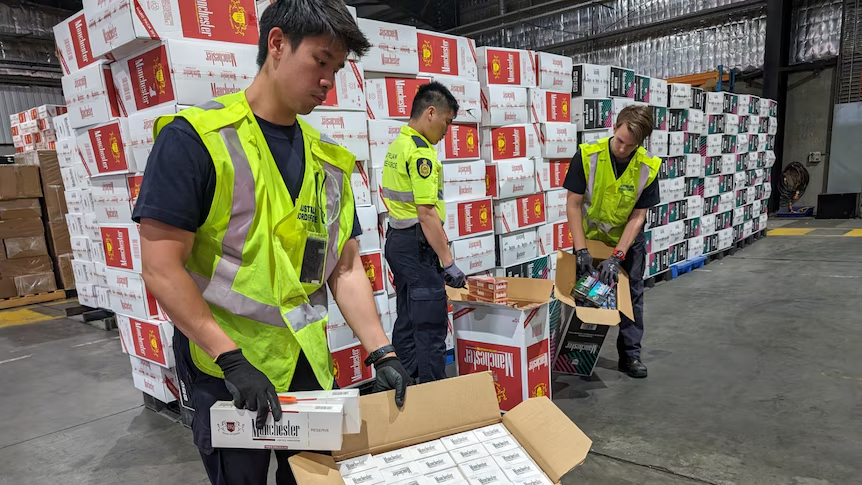
According to the Russian media outlet nakanune.ru, Alexander Spiridonov, the Deputy Director of the State Duma's Committee on Industry, stated that criminal liability must be established for the production and distribution of tobacco products without labels. The bill has been submitted to the parliament, and if passed, all tobacco products will be required to bear digital bar code labels.


Barcodes will replace the current consumption tax labels used to mark tobacco products. However, currently counterfeit tobacco barcodes do not have to take responsibility, so it is important to eliminate this legal loophole as soon as possible.


In December 2023, Biysultan Hamzayev, a member of parliament from Dagestan, proposed implementing a lifetime ban on smoking starting from adolescence.


We welcome news tips, article submissions, interview requests, or comments on this piece.

Please contact us at info@2firsts.com, or reach out to Alan Zhao, CEO of 2Firsts, on LinkedIn


Notice

1.  This article is intended solely for professional research purposes related to industry, technology, and policy. Any references to brands or products are made purely for objective description and do not constitute any form of endorsement, recommendation, or promotion by 2Firsts.

2.  The use of nicotine-containing products — including, but not limited to, cigarettes, e-cigarettes, nicotine pouchand heated tobacco products — carries significant health risks. Users are responsible for complying with all applicable laws and regulations in their respective jurisdictions.

3.  This article is not intended to serve as the basis for any investment decisions or financial advice. 2Firsts assumes no direct or indirect liability for any inaccuracies or errors in the content.

4.  Access to this article is strictly prohibited for individuals below the legal age in their jurisdiction.


Copyright


This article is either an original work created by 2Firsts or a reproduction from third-party sources with proper attribution. All copyrights and usage rights belong to 2Firsts or the original content provider. Unauthorized reproduction, distribution, or any other form of unauthorized use by any individual or organization is strictly prohibited. Violators will be held legally accountable.

For copyright-related inquiries, please contact: info@2firsts.com


AI Assistance Disclaimer


This article may have been enhanced using AI tools to improve translation and editorial efficiency. However, due to technical limitations, inaccuracies may occur. Readers are encouraged to refer to the cited sources for the most accurate information.

We welcome any corrections or feedback. Please contact us at: info@2firsts.com

Japan Says Heated Tobacco and E-Cigarette Use Is a Key Factor Behind Rising In-Flight Smoking
Japan’s transport ministry said on April 14 that major Japanese airlines reported 429 passenger smoking incidents on domestic and international flights in 2025, the highest level since comparable data collection began in 2004. The government said the spread of heated tobacco products and e-cigarettes was an important factor behind the increase. Japan plans to work with airlines to raise public awareness of fire risks on aircraft.
Apr.14 by 2FIRSTS.ai
Belgium Approves Vape Flavor Ban, Allowing Only Tobacco-Flavored and Unflavored Products From September 2028
Belgium’s federal government on Thursday approved a ban on flavored vapes, allowing only tobacco-flavored and unflavored e-cigarettes on the market from September 2028. Health Minister Frank Vandenbroucke said the measure is aimed at protecting the health of children and young people and preventing a new generation from becoming dependent on tobacco.
May.06 by 2FIRSTS.ai
    Shenzhen Tobacco Monopoly Bureau Moves to Advance E-Cigarette Regulatory System 2.0
Shenzhen Tobacco Monopoly Bureau Moves to Advance E-Cigarette Regulatory System 2.0
The Shenzhen Tobacco Monopoly Bureau recently held the city’s 2026 e-cigarette regulation work conference to implement higher-level meeting requirements, review the city’s e-cigarette regulatory work in 2025 and during the 14th Five-Year Plan period, assess the current situation, and deploy the rollout of E-cigarette Regulatory System 2.0 across Shenzhen’s tobacco commercial system.
Apr.28 by 2FIRSTS.ai
Indonesia to Step Up Vape Surveillance as Concerns Rise Over Drug-Laced E-Cigarettes
Indonesia will strengthen surveillance of vapes amid growing concerns over drug-laced e-cigarettes. The National Food and Drug Monitoring Agency, or BPOM, will soon take charge of monitoring nationwide vape distribution and said it will work with the National Narcotics Agency, or BNN. BNN recently floated a plan to completely ban e-cigarettes, saying a total ban was the only way to prevent liquid narcotics.
May.11 by 2FIRSTS.ai
PMI’s Smoke-Free Business Accounts for 43% of Net Revenues in Q1 as Full-Year EPS Guidance Rises
On April 22, 2026, Philip Morris International released its first-quarter 2026 results. The report showed net revenues of $10.146 billion, up 9.1% year on year; adjusted diluted EPS of $1.96, up 16.0%; and smoke-free products accounting for 43% of total net revenues. Based on first-quarter performance, the company raised its 2026 full-year adjusted diluted EPS forecast to $8.36 to $8.51, or $8.11 to $8.26 excluding currency.
Apr.23 by 2FIRSTS.ai
Brazilian Research Institutions Prepare Joint Recommendations on Electronic Smoking Device Studies
Brazil’s National Cancer Institute, the Oswaldo Cruz Foundation, and other research institutions are preparing a joint letter with recommendations and guidance for studies on electronic smoking devices, including e-cigarettes, vapes, and similar products. The guidelines were discussed on April 14 and 15 at the seminar “Building a Priority Research Agenda on Electronic Smoking Devices for Brazil” in Rio de Janeiro.
Apr.16 by 2FIRSTS.ai