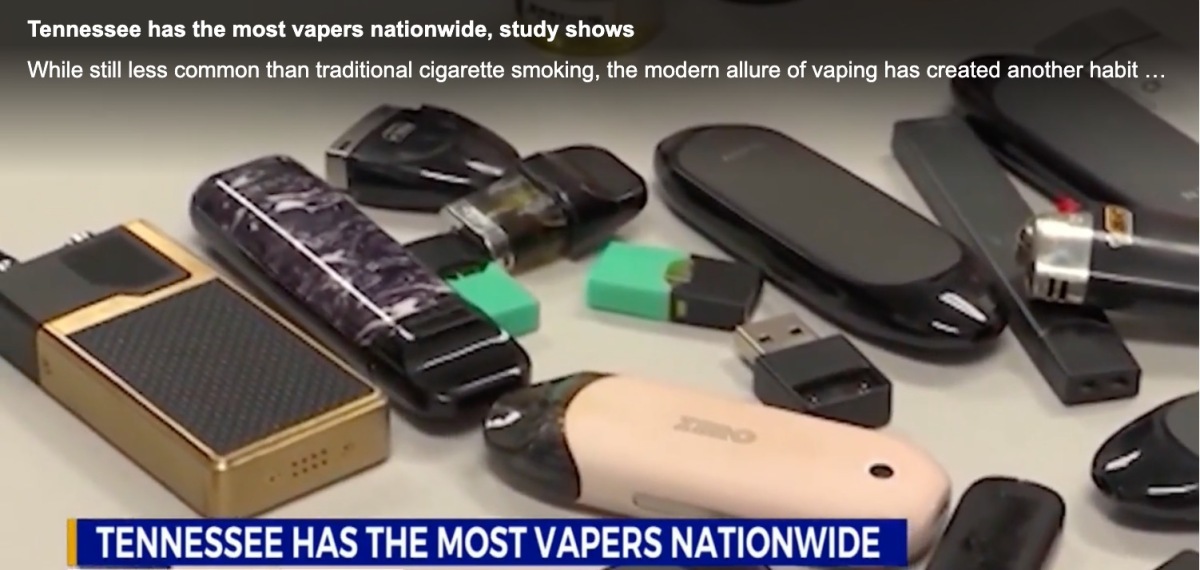
According to a report by Yahoo on January 26th, the latest research data from Forbes reveals that 5.8% of adults in the United States admit to using e-cigarettes. Surprisingly, Tennessee has the highest rate of e-cigarette usage in the entire country.
The Centers for Disease Control and Prevention (CDC) in the United States has indicated that e-cigarettes are not safe for adolescents, young adults, and pregnant women. However, research conducted by Forbes has found that young people between the ages of 18 and 24 are more prone to becoming addicted to e-cigarettes, with this age group representing approximately 11% of all adult e-cigarette users in the country.
In order to gain a deeper understanding of e-cigarette usage across different states, researchers from Forbes analyzed data from all 50 states provided by the CDC. This data included the proportion of e-cigarette users, the daily usage rate, and the trends in usage rates. Overall, 3.8% of adults in the United States claimed to use e-cigarettes on a daily basis, with this proportion reaching a high of 5.7% in the state of Tennessee.
According to reports, seven out of the ten states with the highest number of e-cigarette users are located in the southern region of the United States, including Alabama, Arkansas, Kentucky, Louisiana, Oklahoma, and Indiana. It is worth noting that Tennessee has experienced significant growth in e-cigarette users from 2016 to 2022, with a growth rate of 5.1 percentage points, making it the fastest-growing state. Kentucky, Oklahoma, Indiana, and Arkansas follow closely behind. On the other hand, the five states with the lowest number of e-cigarette users include Maryland, Illinois, Connecticut, Massachusetts, and Delaware. Other studies indicate that despite the popularity of e-cigarettes in Tennessee, the state still has a significant population using traditional cigarettes, making it one of the states with the third highest smoking rates in the country.
The Centers for Disease Control and Prevention (CDC) has reported that the benefits of e-cigarettes as a substitute for traditional cigarettes for non-pregnant adults remain uncertain, and further research is needed to determine their long-term health effects. However, many people are still attempting to quit smoking. Research has shown that 83% of current e-cigarette users in the United States have tried to quit smoking at least once, with health concerns being the primary reason. In recent years, many states have implemented regulations on the sale and use of e-cigarettes. Worth noting is that Tennessee is one of the thirteen states in the US where e-cigarette sales do not require a license.
We welcome news tips, article submissions, interview requests, or comments on this piece.
Please contact us at info@2firsts.com, or reach out to Alan Zhao, CEO of 2Firsts, on LinkedIn
Notice
1. This article is intended solely for professional research purposes related to industry, technology, and policy. Any references to brands or products are made purely for objective description and do not constitute any form of endorsement, recommendation, or promotion by 2Firsts.
2. The use of nicotine-containing products — including, but not limited to, cigarettes, e-cigarettes, nicotine pouchand heated tobacco products — carries significant health risks. Users are responsible for complying with all applicable laws and regulations in their respective jurisdictions.
3. This article is not intended to serve as the basis for any investment decisions or financial advice. 2Firsts assumes no direct or indirect liability for any inaccuracies or errors in the content.
4. Access to this article is strictly prohibited for individuals below the legal age in their jurisdiction.
Copyright
This article is either an original work created by 2Firsts or a reproduction from third-party sources with proper attribution. All copyrights and usage rights belong to 2Firsts or the original content provider. Unauthorized reproduction, distribution, or any other form of unauthorized use by any individual or organization is strictly prohibited. Violators will be held legally accountable.
For copyright-related inquiries, please contact: info@2firsts.com
AI Assistance Disclaimer
This article may have been enhanced using AI tools to improve translation and editorial efficiency. However, due to technical limitations, inaccuracies may occur. Readers are encouraged to refer to the cited sources for the most accurate information.
We welcome any corrections or feedback. Please contact us at: info@2firsts.com