Easy Access to E-cigarettes for Children in Melbourne, Australia

Regulations by 2FIRSTS.ai
Dec.01.2023
Easy Access to E-cigarettes for Children in Melbourne, Australia
A new study reveals that children in western Melbourne can easily purchase e-cigarettes illegally, raising concerns about underage access.

According to a report by the Australian Broadcasting Corporation (ABC) on November 30, a new study has found that children in the western suburbs of Melbourne, Australia, can easily purchase e-cigarettes illegally.
Easy Access to E-cigarettes for Children in Melbourne, Australia
Type analysis | Image source: ABC


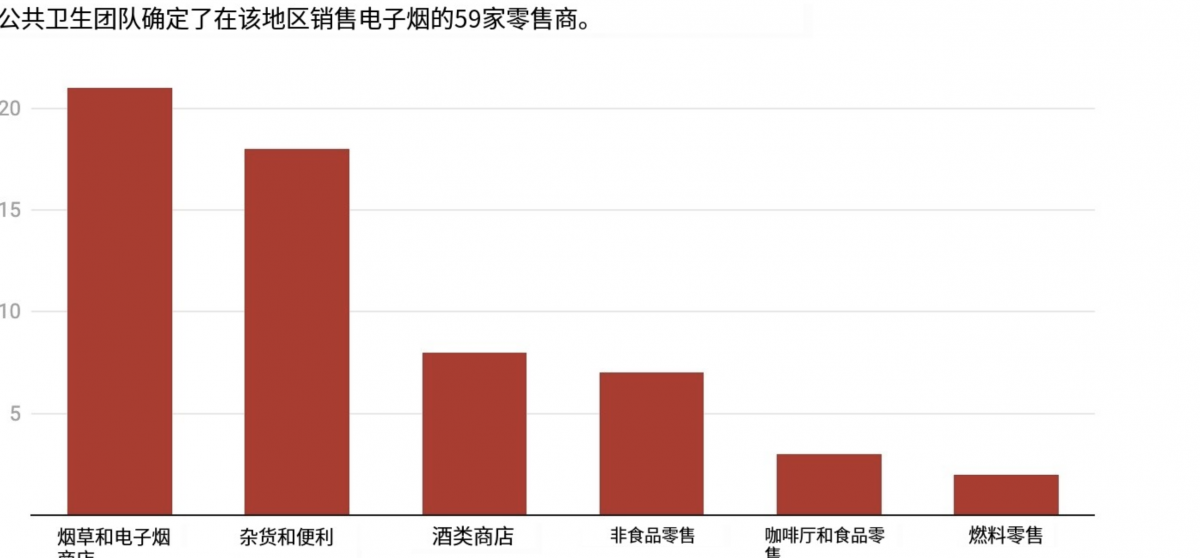
A report by the Western Public Health Unit (WPHU) has revealed that the majority of e-cigarette shops are located within a distance of less than 750 meters from schools. Third-party retailers, including both cigarette and e-cigarette stores, account for one-third of all e-cigarette sales outlets, while the rest are comprised of milk bars, grocery stores, convenience stores, cafes, and non-food retailers.


WPHU has discovered 59 stores in Brimbank selling e-cigarettes. The average price of e-cigarettes is $25, with prices ranging from $10 to $45.


The next phase of the Australian government's crackdown on e-cigarettes is set to begin on January 1st, when the ban on importing disposable e-cigarettes will come into effect. Dr. Romanes, Director of the WPHU, expressed his hope that this will be a turning point.


He stated, "At some point next year, there will be a comprehensive ban on the commercial sale of non-prescription e-cigarettes, marking a highly significant moment.


We welcome news tips, article submissions, interview requests, or comments on this piece.

Please contact us at info@2firsts.com, or reach out to Alan Zhao, CEO of 2Firsts, on LinkedIn


Notice

1.  This article is intended solely for professional research purposes related to industry, technology, and policy. Any references to brands or products are made purely for objective description and do not constitute any form of endorsement, recommendation, or promotion by 2Firsts.

2.  The use of nicotine-containing products — including, but not limited to, cigarettes, e-cigarettes, nicotine pouchand heated tobacco products — carries significant health risks. Users are responsible for complying with all applicable laws and regulations in their respective jurisdictions.

3.  This article is not intended to serve as the basis for any investment decisions or financial advice. 2Firsts assumes no direct or indirect liability for any inaccuracies or errors in the content.

4.  Access to this article is strictly prohibited for individuals below the legal age in their jurisdiction.


Copyright


This article is either an original work created by 2Firsts or a reproduction from third-party sources with proper attribution. All copyrights and usage rights belong to 2Firsts or the original content provider. Unauthorized reproduction, distribution, or any other form of unauthorized use by any individual or organization is strictly prohibited. Violators will be held legally accountable.

For copyright-related inquiries, please contact: info@2firsts.com


AI Assistance Disclaimer


This article may have been enhanced using AI tools to improve translation and editorial efficiency. However, due to technical limitations, inaccuracies may occur. Readers are encouraged to refer to the cited sources for the most accurate information.

We welcome any corrections or feedback. Please contact us at: info@2firsts.com

Research | Swedish Study Finds Oral Lesions in 79% of Examined Nicotine Pouch Users, With Distinct Tissue Responses
A new Swedish study found oral mucosal lesions in 79% of examined nicotine pouch users and 89% of tobacco-derived snus users, with different tissue-response patterns between the two categories. For manufacturers and regulators, the findings shift attention toward product formulation, flavouring, pouch materials and local oral exposure, not only whether a product contains tobacco. The study found no higher prevalence of caries or periodontal disease, but it could not establish causality, long-term outcomes or differences between individual products or designs.
Special Report
Jul.27
EU Trade Department Faces Scrutiny Over Contacts With Tobacco Industry
European Ombudswoman Teresa Anjinho has opened an inquiry into how the European Commission’s Directorate-General for Trade handles interactions with the tobacco industry. The case follows a complaint from a civil society organisation that alleges regular, unnecessary and non-transparent contacts between DG TRADE and tobacco industry representatives, raising questions over compliance with the EU’s obligations under the WHO Framework Convention on Tobacco Control. The inquiry remains ongoing, and the Ombudswoman has not reached any finding of maladministration.
Aug.24
Product | BAT Launches glo Hyper pro+ in Japan, Upgrading the Hyper Platform With Faster Start and Smart Device Management
British American Tobacco Japan (BAT Japan) has introduced glo Hyper pro+, an upgraded device within the existing glo Hyper platform. The device adds QuickStart™ rapid heating technology, an EasyView™ display and maintenance notification features to improve daily usability. Launched in Japan on July 13, 2026, glo Hyper pro+ maintains compatibility with existing Hyper-format tobacco sticks, including neo, Lucky Strike and KENT.
Jul.30
Australia’s TGA Places Nicotine Pouches Under Therapeutic Goods Rules From July 24, Blocking Imports of Unapproved Products
Australia is strengthening controls on nicotine pouches under its existing therapeutic goods regulatory framework. According to the Therapeutic Goods Administration (TGA), nicotine pouch products must meet regulatory requirements, and unapproved products cannot be legally imported. The move follows Australia’s broader approach of maintaining strict oversight of nicotine products, including nicotine-containing vapes. As nicotine pouches expand globally, Australia’s regulatory approach highlights growing differences in how countries manage emerging smoke-free nicotine products.
Regulations
Jul.27
BofA Upgrades Imperial Brands, Says Market Overreacted to Australia Slump
Bank of America upgraded Imperial Brands to “buy” from “neutral,” saying investors have overreacted to the tobacco group’s Australian business downturn and that the share-price pullback has created a more attractive entry point.
Jul.16
JAMA Issues First U.S. Clinical Guidance on Vaping for Smoking Cessation, Urging Complete Switch From Cigarettes
JAMA has published a Special Communication offering systematic recommendations for U.S.-based clinicians on the use of nicotine e-cigarettes in adult smoking cessation. Developed by the Harm Reduction Workgroup of the Society for Research on Nicotine and Tobacco’s Treatment Research Network, the paper recommends including e-cigarettes alongside FDA-approved cessation medications in risk-benefit discussions. It cites high-certainty evidence that nicotine e-cigarettes achieve higher quit rates than nicotine replacement therapy and evidence suggesting efficacy comparable to highly effective medications such as varenicline and cytisine. For adults who choose vaping to quit, the authors recommend FDA-authorized products, sufficient nicotine delivery and a rapid, complete transition away from cigarettes rather than prolonged dual use.
Aug.13