
FDA announced that it has issued warning letters to nine online retailers and one manufacturer on October 30, accusing them of selling and/or distributing unapproved disposable e-cigarettes.
These products have designs and features similar to smart technology, including capabilities similar to those of mobile phones and gaming devices.
The products mentioned in the warning letters are marketed with various features designed to appeal to young people, such as the ability to play games, connect to smartphones, receive text messages or call notifications, play music, or personalize the device with custom wallpapers.
"These products may resemble smart devices, but there's nothing smart about them," said Brian King, Ph.D., M.P.H., director of FDA's Center for Tobacco Products. "They're illegal to sell and a flagrant attempt to target kids." (According to FDA's ctp-newsroom.)
Additionally, the design of these unauthorized products may attract young users by helping conceal their nature as tobacco products from parents, teachers, or other adults. The warning letters include comparison images showing these unauthorized products alongside common consumer electronic devices.
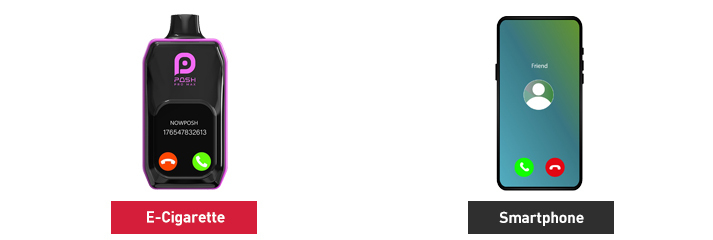

The companies receiving these warning letters are involved in selling and/or distributing e-cigarettes in the U.S. without FDA authorization for lawful new product sales, thereby violating the FD&C Act.
In addition to the violations outlined in the warning letters, retailers and manufacturers have been advised to address any similar or related violations promptly and to take all necessary actions to comply with the law. Failure to rectify these violations in a timely manner could result in further FDA actions, including injunctions, seizures, and/or civil penalties.
"FDA remains unwavering in enforcing the law," said John Verbeten, Director of the CTP's Office of Compliance and Enforcement. "We will continue to take appropriate steps and work alongside our federal enforcement partners to address unauthorized tobacco products, especially those most appealing to youth".
This latest round of warning letters represents another step in the FDA's ongoing effort to remove unauthorized e-cigarette products from the market, particularly those that attract younger audiences.
To date, FDA has issued more than 700 warning letters to companies involved in manufacturing, selling, and/or distributing unauthorized new tobacco products, along with over 690 warning letters to retailers selling unauthorized tobacco products.
Additionally, FDA has filed civil penalty complaints against more than 75 manufacturers and 150 retailers for distributing and/or selling unauthorized tobacco products.
As of October 30, 2024, FDA has approved 34 e-cigarette products and devices. The agency has provided a printable flyer listing all authorized e-cigarette products, which retailers can refer to in order to verify which products can be legally marketed and sold in the U.S.
Entities that manufacture, import, sell, or distribute e-cigarettes without the required premarket authorization risk enforcement actions.
We welcome news tips, article submissions, interview requests, or comments on this piece.
Please contact us at info@2firsts.com, or reach out to Alan Zhao, CEO of 2Firsts, on LinkedIn
Notice
1. This article is intended solely for professional research purposes related to industry, technology, and policy. Any references to brands or products are made purely for objective description and do not constitute any form of endorsement, recommendation, or promotion by 2Firsts.
2. The use of nicotine-containing products — including, but not limited to, cigarettes, e-cigarettes, nicotine pouchand heated tobacco products — carries significant health risks. Users are responsible for complying with all applicable laws and regulations in their respective jurisdictions.
3. This article is not intended to serve as the basis for any investment decisions or financial advice. 2Firsts assumes no direct or indirect liability for any inaccuracies or errors in the content.
4. Access to this article is strictly prohibited for individuals below the legal age in their jurisdiction.
Copyright
This article is either an original work created by 2Firsts or a reproduction from third-party sources with proper attribution. All copyrights and usage rights belong to 2Firsts or the original content provider. Unauthorized reproduction, distribution, or any other form of unauthorized use by any individual or organization is strictly prohibited. Violators will be held legally accountable.
For copyright-related inquiries, please contact: info@2firsts.com
AI Assistance Disclaimer
This article may have been enhanced using AI tools to improve translation and editorial efficiency. However, due to technical limitations, inaccuracies may occur. Readers are encouraged to refer to the cited sources for the most accurate information.
We welcome any corrections or feedback. Please contact us at: info@2firsts.com