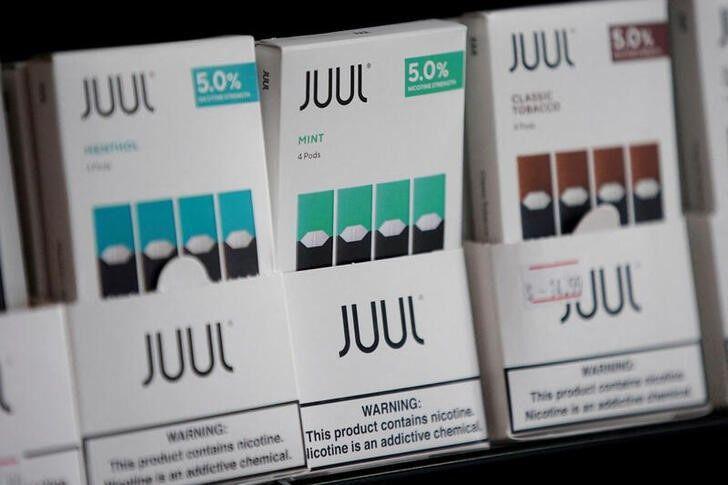
A federal judge has permitted both adult and underage individuals who have purchased Juul e-cigarettes to file a collective lawsuit, demanding compensation from the company for deceptive marketing practices.
On Tuesday, U.S. District Judge William Orrick certified four groups, consisting of adults and minors both nationwide and in California, but rejected arguments made by Juul and its largest shareholder, tobacco giant Altria Group Inc., stating that the potential members of the collective were too diverse to bring a lawsuit for their claims together.
These class-action lawsuits do not accuse the product of causing bodily harm, but rather demand a refund of the money spent on purchasing Juul products.
The above is part of the multi-district litigation being handled by Orrick, which includes personal injury claims and lawsuits brought by local governments and school districts alleging that Juul fueled an epidemic of youth addiction.
Lawyers for plaintiffs Juul and Altria did not immediately respond to requests for comment.
The economic loss claims allege that Juul downplayed the addictive nature of its products and, had it not been for deceptive marketing, consumers would not have purchased these products or would have spent less money on them.
Juul argues that they should not be classified as a class-action lawsuit because different consumers were exposed to different advertisements, and some individuals became addicted while others did not.
However, Orrick believes that these differences are "largely immaterial under the legal theory being asserted.
Under pressure from regulators, Juul removed popular flavors such as mango and cucumber from retail stores in 2018 and closed its social media channels on Instagram and Facebook.
Earlier this month, the US Food and Drug Administration (FDA) ordered the removal of all Juul e-cigarettes from the market, but this decision was temporarily halted by the federal appeals court.
Juul has agreed to pay over $87 million to settle charges related to its marketing of products to minors with four states.
Source: Reuters
Disclaimer
This article is provided solely for professional research, industry discussion, and informational purposes. Any references to brands, companies, products, technologies, or policies are made for factual reporting and analytical purposes only, and do not constitute endorsement, recommendation, promotion, or advertising by 2Firsts.
Nicotine-containing products, including but not limited to cigarettes, e-cigarettes, heated tobacco products, and nicotine pouches, carry significant health risks. Readers are responsible for complying with all applicable laws and regulations in their respective jurisdictions, including age restrictions and access limitations.
The information contained in this article should not be regarded as investment, legal, medical, regulatory, or commercial advice. While 2Firsts strives to ensure the accuracy and reliability of its content, it does not assume liability for any direct or indirect loss arising from errors, omissions, inaccuracies, or reliance on the information contained herein.
This article is not intended for individuals below the legal age for accessing tobacco or nicotine-related information in their jurisdiction.
Copyright Notice
This article is either original content produced by 2Firsts or content reproduced, translated, summarized, or adapted from third-party sources with attribution where applicable. The intellectual property rights of the original content remain with 2Firsts or the respective original rights holders.
No individual or organization may copy, reproduce, distribute, republish, modify, translate, or otherwise use this content without prior authorization. Any unauthorized use may result in legal action.
For copyright-related inquiries, corrections, or removal requests, please contact: info@2firsts.com.
AI-Assisted Translation and Editing Notice
Portions of this article may have been translated, edited, or reviewed with the assistance of artificial intelligence tools to improve efficiency and readability. Due to the limitations of AI-assisted translation and editing, discrepancies, omissions, or inaccuracies may exist when compared with the original source.
Where applicable, readers are advised to refer to the original source for the most complete and accurate information. If you identify any errors or believe that any content infringes upon your rights, please contact us at info@2firsts.com, and we will review and address the matter promptly.