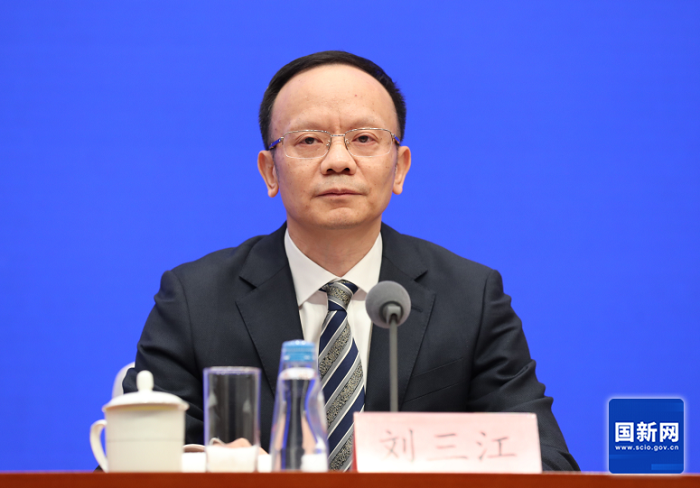
Former official of the State Administration for Market Regulation, Liu Sanjiang, has been Appointed as the Deputy Director of China STMA

News by 2Firsts
Dec.13.2024
Former official of the State Administration for Market Regulation, Liu Sanjiang, has been Appointed as the Deputy Director of China STMA
Previously, Liu served as the Director of the Department of Quality Development under SAMR.

Disclaimer:
1. The content of this article is for reference only. Please refer to the official announcements for accurate information.
2. Some parts have been translated into English; please refer to the original Chinese text for accuracy.


[Reported by 2Firsts from Shenzhen] On December 13, according to official announcements, former State Administration for Market Regulation (SAMR) official Liu Sanjiang has been appointed as the Deputy Director of China’s State Tobacco Monopoly Administration (STMA).


Previously, Liu served as the Director of the Department of Quality Development under SAMR. According to the department’s official mandate, it formulates and implements policies to advance the national quality strategy, coordinates national quality infrastructure services and applications, proposes measures to improve quality incentive systems, and develops systems for enhancing product and service quality, mandatory reporting of product quality incidents, and product recall mechanisms. The department also oversees quality supervision for major engineering projects, product anti-counterfeiting, service quality monitoring, and investigations of major quality incidents.


This appointment follows a series of corruption investigations targeting senior STMA officials, as disclosed in earlier official reports.


China operates under a state tobacco monopoly system. The STMA is the country’s official regulatory body overseeing the tobacco industry and market, including NGPs such as e-cigarettes.
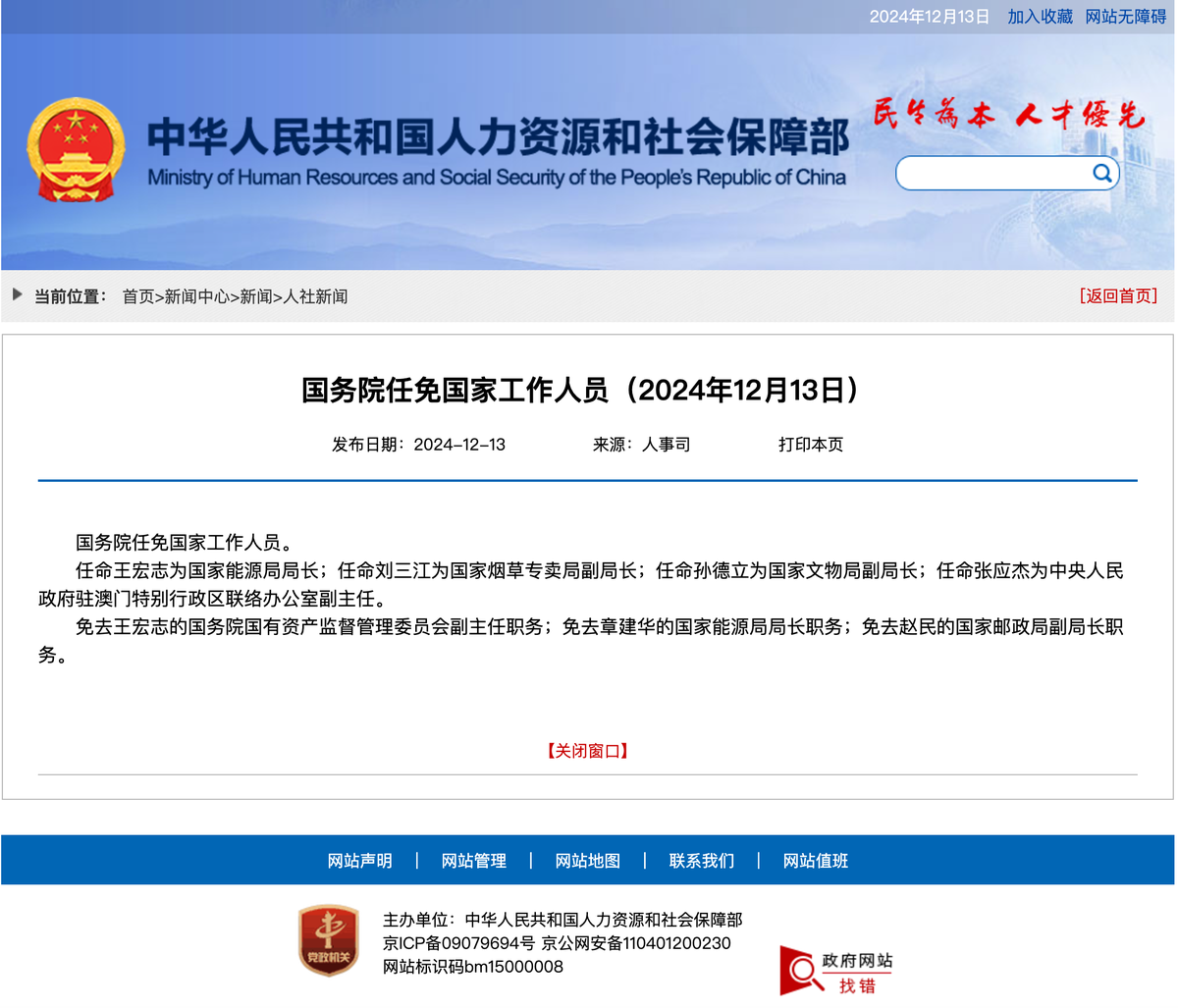
 

Former official of the State Administration for Market Regulation, Liu Sanjiang, has been Appointed as the Deputy Director of China STMA
"State Council Appoints and Removes National Civil Servants (December 13, 2024)" Announcement screenshot | Image source: official website of the Ministry of Human Resources and Social Security of the People's Republic of China


Former official of the State Administration for Market Regulation, Liu Sanjiang, has been Appointed as the Deputy Director of China STMA
On August 16, 2024, the State Council Information Office held a series of themed press conferences on "Promoting High-Quality Development" (State Administration for Market Regulation) | Image source: State Administration for Market Regulation


Read More


China Tobacco and International Tobacco Firms Exchange Briefing (Oct. 2024)


For more discussions on China’s tobacco regulatory policies and news with 2Firsts, please contact us at: info@2firsts.com.


We welcome news tips, article submissions, interview requests, or comments on this piece.

Please contact us at info@2firsts.com, or reach out to Alan Zhao, CEO of 2Firsts, on LinkedIn


Notice

1.  This article is intended solely for professional research purposes related to industry, technology, and policy. Any references to brands or products are made purely for objective description and do not constitute any form of endorsement, recommendation, or promotion by 2Firsts.

2.  The use of nicotine-containing products — including, but not limited to, cigarettes, e-cigarettes, nicotine pouchand heated tobacco products — carries significant health risks. Users are responsible for complying with all applicable laws and regulations in their respective jurisdictions.

3.  This article is not intended to serve as the basis for any investment decisions or financial advice. 2Firsts assumes no direct or indirect liability for any inaccuracies or errors in the content.

4.  Access to this article is strictly prohibited for individuals below the legal age in their jurisdiction.


Copyright


This article is either an original work created by 2Firsts or a reproduction from third-party sources with proper attribution. All copyrights and usage rights belong to 2Firsts or the original content provider. Unauthorized reproduction, distribution, or any other form of unauthorized use by any individual or organization is strictly prohibited. Violators will be held legally accountable.

For copyright-related inquiries, please contact: info@2firsts.com


AI Assistance Disclaimer


This article may have been enhanced using AI tools to improve translation and editorial efficiency. However, due to technical limitations, inaccuracies may occur. Readers are encouraged to refer to the cited sources for the most accurate information.

We welcome any corrections or feedback. Please contact us at: info@2firsts.com

AP Questions FDA Rationale as Glas Fruit-Flavored Vapes Won Authorization Without Added Cessation Benefit
The U.S. Food and Drug Administration (FDA) recently authorized two fruit-flavored vaping products from Glas, but a newly released agency memo shows the products did not demonstrate greater smoking-cessation benefits than tobacco-flavored e-cigarettes. The Associated Press said the findings are likely to raise further questions about the FDA’s regulatory rationale and standards for flavored vaping products.
Jun.12
Product | ZYN Adds Tropical Flavor and Expands 1.5mg Nicotine Options in the Philippines
ZYN has expanded its nicotine pouch portfolio in the Philippines with the addition of Cool Breeze 1.5mg and Tropical in 3mg and 6mg strengths. Public information shows that 1.5mg is among the lower nicotine strengths offered by ZYN in the Philippine market and is positioned for adult nicotine consumers who are new to nicotine pouches.
PMI
Jun.08
South Korea Set to Enforce Liquid Vape Ban in Smoke-Free Areas, but Welfare Ministry Abruptly Adds Two-Month Guidance Period
Local governments across South Korea recently issued press releases saying they would intensively crack down on the use of liquid e-cigarettes in smoke-free areas. Since the revised Tobacco Business Act, passed in December last year, included liquid e-cigarettes within the definition of tobacco and took effect on April 24, local authorities had prepared to begin enforcement immediately.
Apr.27 by 2FIRSTS.ai
Russian Vape GOST Revision Would Limit Capacity, Packaging Design and Warning Labels
Russia is preparing changes to its e-cigarette state standard GOST R 58109–2018. Under a draft order submitted to Rosstandart, the shelf life of vape devices and liquids would be limited to no more than two years, and capacity would be strictly capped at 2 mL for replaceable capsules, 10 mL for disposable systems and 30 mL for refill containers.
Apr.27 by 2FIRSTS.ai
    Shenzhen Tobacco Monopoly Bureau Moves to Advance E-Cigarette Regulatory System 2.0
Shenzhen Tobacco Monopoly Bureau Moves to Advance E-Cigarette Regulatory System 2.0
The Shenzhen Tobacco Monopoly Bureau recently held the city’s 2026 e-cigarette regulation work conference to implement higher-level meeting requirements, review the city’s e-cigarette regulatory work in 2025 and during the 14th Five-Year Plan period, assess the current situation, and deploy the rollout of E-cigarette Regulatory System 2.0 across Shenzhen’s tobacco commercial system.
Apr.28 by 2FIRSTS.ai
Special Report | Russian Vape Compromise Faces First Hurdles
Russia’s regional vape-ban model is facing early legal and political tests, as Perm Krai moves ahead before federal legislation is fully adopted. The case highlights uncertainty over regional authority, concerns from business groups about market fragmentation, and the risk that pressure against regional bans could revive calls for a stricter nationwide prohibition.
Industry Insight
May.28