Guam E-Cigarette Shops Closing in Protest of Proposed Ban

Regulations by 2FIRSTS.ai
Jan.04.2024
Guam E-Cigarette Shops Closing in Protest of Proposed Ban
Several e-cigarette stores on the US territory of Guam will close on Thursday in protest of a proposed ban on certain e-cigarette products.

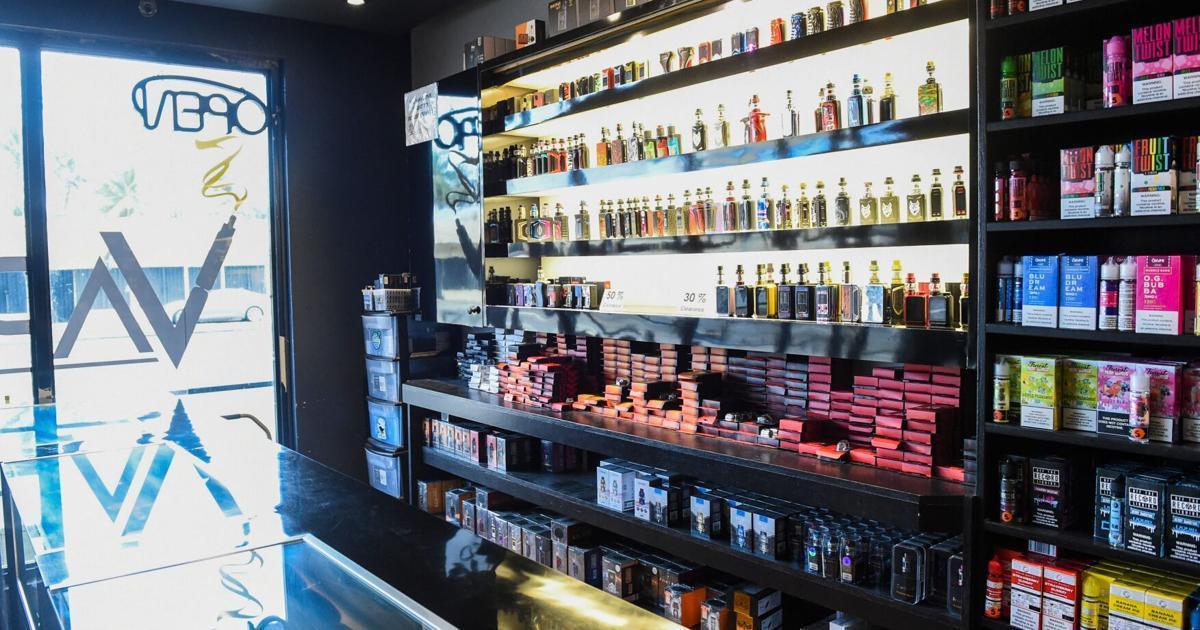
In recent days, according to Guampdn, a local e-cigarette store in Guam called Vape Escape has issued a statement announcing that several e-cigarette stores in Guam will be closing on Thursday, January 4th, in opposition to a proposed bill that seeks to ban specific e-cigarette products.


In a previous development, Senator Tom Fisher of Guam proposed a ban on the sale of e-liquids in fruit and dessert flavors, as these products have gained significant popularity in recent years. Fisher argued that this ban aims to reduce the sale of e-cigarette products targeting children.


If the proposal becomes law, any retailer who violates the prohibition will be fined $500 for the first offense, with subsequent offenses carrying a maximum fine of $2000.


According to a statement from Vape Escape, the coordinated action to close e-cigarette stores on Thursday symbolizes the industry's opposition to legislation that could potentially threaten the safety, legal purchase, and availability of e-cigarette products.


The participating e-cigarette retailers and industry stakeholders emphasize that this temporary shutdown is a strong symbol of unity and consensus within the industry. By coming together, they highlight the value of e-cigarette products for adult smokers seeking reduced harm alternatives.


As responsible members of the e-cigarette community, we are taking concrete actions to draw attention to the importance of reasonable regulations. If this negligent legislation passes, it could harm numerous adult consumers. Theseus Mendiola, the owner and operator of Vape Escape store, stated, "We are willing to sit down with policymakers to discuss finding a balance between public health concerns and alternative avenues for adult consumer choices."


We welcome news tips, article submissions, interview requests, or comments on this piece.

Please contact us at info@2firsts.com, or reach out to Alan Zhao, CEO of 2Firsts, on LinkedIn


Notice

1.  This article is intended solely for professional research purposes related to industry, technology, and policy. Any references to brands or products are made purely for objective description and do not constitute any form of endorsement, recommendation, or promotion by 2Firsts.

2.  The use of nicotine-containing products — including, but not limited to, cigarettes, e-cigarettes, nicotine pouchand heated tobacco products — carries significant health risks. Users are responsible for complying with all applicable laws and regulations in their respective jurisdictions.

3.  This article is not intended to serve as the basis for any investment decisions or financial advice. 2Firsts assumes no direct or indirect liability for any inaccuracies or errors in the content.

4.  Access to this article is strictly prohibited for individuals below the legal age in their jurisdiction.


Copyright


This article is either an original work created by 2Firsts or a reproduction from third-party sources with proper attribution. All copyrights and usage rights belong to 2Firsts or the original content provider. Unauthorized reproduction, distribution, or any other form of unauthorized use by any individual or organization is strictly prohibited. Violators will be held legally accountable.

For copyright-related inquiries, please contact: info@2firsts.com


AI Assistance Disclaimer


This article may have been enhanced using AI tools to improve translation and editorial efficiency. However, due to technical limitations, inaccuracies may occur. Readers are encouraged to refer to the cited sources for the most accurate information.

We welcome any corrections or feedback. Please contact us at: info@2firsts.com

JT Plans ¥800 Billion Investment in Heated Tobacco Over Three Years, Betting on Ploom as Second Growth Engine
Japan Tobacco Inc. (JT) CEO Takehiko Tsutsui said the company plans to invest about ¥800 billion (approximately US$5.4 billion) in heated tobacco products over three years through 2028, aiming to establish Ploom as a second growth engine after combustible cigarettes. Tsutsui said Ploom AURA helped JT increase its share of Japan’s heated tobacco market to 15.8% in the first quarter of 2026. Ploom products are now available in 29 markets, with Ploom AURA sold in 25 markets including Japan. JT also plans to continue its cigarette business while positioning its food operations, particularly frozen noodle products in North America, as another growth opportunity.
Jul.23
Research | Swedish Study Finds Oral Lesions in 79% of Examined Nicotine Pouch Users, With Distinct Tissue Responses
A new Swedish study found oral mucosal lesions in 79% of examined nicotine pouch users and 89% of tobacco-derived snus users, with different tissue-response patterns between the two categories. For manufacturers and regulators, the findings shift attention toward product formulation, flavouring, pouch materials and local oral exposure, not only whether a product contains tobacco. The study found no higher prevalence of caries or periodontal disease, but it could not establish causality, long-term outcomes or differences between individual products or designs.
Special Report
Jul.27
Special Report | Russia, Ukraine and Belarus Launch Fresh Push to Rein in Vaping
Russia, Ukraine and Belarus are tightening vape regulation through different tools, from Ukraine’s stronger enforcement push and Belarus’s proposed advertising restrictions to Russia’s new GOST standard and regional sales-ban mechanism. As black-market concerns persist, some Russian experts argue that China’s tightly controlled but legalised model — built around licensing, traceability and taxation — may offer a more effective alternative to blanket prohibition.
Jul.15
Product | JT Upgrades with2 Infused Tobacco Capsules With Double-Size BIG PACK
Japan Tobacco Inc. (JT) announced that it will introduce a BIG PACK version of all five tobacco capsule variants designed for its with2 infused tobacco system. Scheduled for release in Japan on August 4, 2026, the refreshed packaging doubles the contents from five capsules and one cartridge to ten capsules and two cartridges while maintaining the same flavors and formulations
News
Jun.26 by 2Firsts Perspectives
2Firsts Data | China’s U.S. Vape Exports Have Yet to Regain Previous Growth Momentum in H1 2026, but Hardware Grew 15.2% and 6-Methyl Nicotine-Related Products Rose 234.7%
China’s vape exports to the U.S. reached approximately $1.58 billion in the first half of 2026, remaining broadly stable from a year earlier but still below previous growth momentum. 2Firsts’ analysis of China Customs data shows that the U.S. market has not simply returned to its previous trajectory after the enforcement shock and inventory-driven swings of 2025. Instead, export momentum is shifting across product categories. Vaping devices and atomization hardware increased 15.2% year over year, while 6-methyl nicotine-related and other nicotine substitute products surged 234.7%. Meanwhile, traditional nicotine-containing vaping products continued to face pressure.
Jul.22
Bringing Tax and Insurance Into Nicotine Regulation: Insights From a Tobacco Harm-Reduction Report
A smoke-free nicotine policy report argues that tobacco harm reduction should move beyond product bans and health warnings into tax policy, insurance pricing and risk-based regulation. While some projections remain open to debate, the report highlights a wider challenge: nicotine products, technologies and consumer behavior have changed sharply over the past decade, and regulatory systems may need new tools to better align tobacco control with harm-reduction goals.
Jun.08