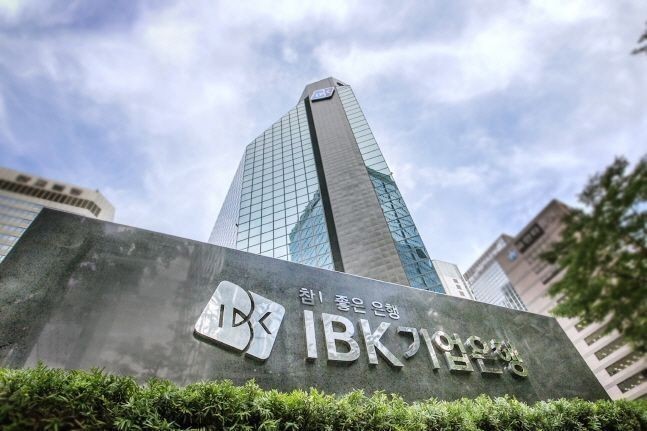
IBK Corporate Bank Opposes KT&G Executive Appointments

News by 2FIRSTS.ai
Mar.13.2024
IBK Corporate Bank Opposes KT&G Executive Appointments
IBK Corporate Bank opposes nominations of KT&G executives, calling for better corporate governance structure with independent directors.

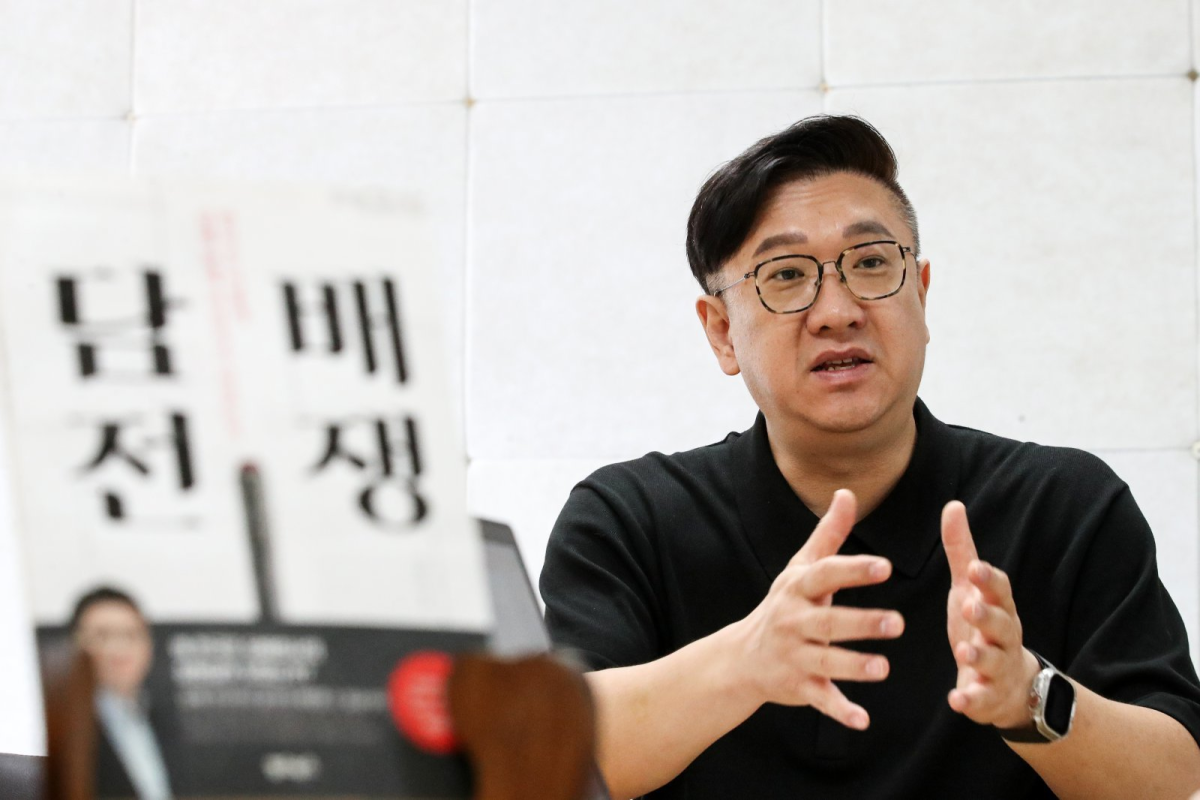
According to South Korean media outlet Naver, IBK Corporate Bank officially announced its opposition to the appointment of Bang Kyung-man and others recommended by the KT&G board as directors.


The industrial bank emphasized that as the largest shareholder of KT&G, they have put forth a shareholder proposal opposing such nominations, and are urging other shareholders to join their stance.


Finance industry professionals say that industrial banks hope to improve the governance structure of companies by enhancing the professionalism and independence of the board of directors. They are urging other shareholders to oppose the appointment of Bang Kyung-man and Lin Minkui, while supporting the candidate recommended by the industrial bank, Choi Dong-hwan. It is understood that these measures may be aimed at preventing Bang Kyung-man from being appointed as the representative of KT&G at the upcoming shareholders' meeting.


With the appointment of Bang Kyung-man, KT&G's operating profit has decreased by 20%, and issues such as overseas business trips have become a focus for the company. IBK Industrial Bank has expressed strong dissatisfaction with this and stated that KT&G's external directors were reappointed without adequately addressing market concerns, increasing the power of external directors and creating a clear conflict with the goal of increasing industrial value.


We welcome news tips, article submissions, interview requests, or comments on this piece.

Please contact us at info@2firsts.com, or reach out to Alan Zhao, CEO of 2Firsts, on LinkedIn


Notice

1.  This article is intended solely for professional research purposes related to industry, technology, and policy. Any references to brands or products are made purely for objective description and do not constitute any form of endorsement, recommendation, or promotion by 2Firsts.

2.  The use of nicotine-containing products — including, but not limited to, cigarettes, e-cigarettes, nicotine pouchand heated tobacco products — carries significant health risks. Users are responsible for complying with all applicable laws and regulations in their respective jurisdictions.

3.  This article is not intended to serve as the basis for any investment decisions or financial advice. 2Firsts assumes no direct or indirect liability for any inaccuracies or errors in the content.

4.  Access to this article is strictly prohibited for individuals below the legal age in their jurisdiction.


Copyright


This article is either an original work created by 2Firsts or a reproduction from third-party sources with proper attribution. All copyrights and usage rights belong to 2Firsts or the original content provider. Unauthorized reproduction, distribution, or any other form of unauthorized use by any individual or organization is strictly prohibited. Violators will be held legally accountable.

For copyright-related inquiries, please contact: info@2firsts.com


AI Assistance Disclaimer


This article may have been enhanced using AI tools to improve translation and editorial efficiency. However, due to technical limitations, inaccuracies may occur. Readers are encouraged to refer to the cited sources for the most accurate information.

We welcome any corrections or feedback. Please contact us at: info@2firsts.com

Bangladesh High Court Questions Legality of BEZA’s Approval for Philip Morris Nicotine Pouch Factory
The High Court in Bangladesh has asked government bodies to explain why the approval granted to Philip Morris to establish a nicotine pouch factory should not be deemed illegal. Petitioners argue the decision contradicts existing policies and a 2016 Appellate Division ruling that restricts new tobacco-related enterprises. Authorities have ten days to respond.
Nov.20 by 2FIRSTS.ai
Illegal Vape Sellers in the Netherlands Could Be Fined Up to €4,040
The outgoing Dutch government plans to raise fines for illegal sales of vapes and cigarettes, with first-time offenders facing a €2,040 penalty. The new fines, up to €4,040 for large companies, are expected to take effect on July 1, 2026, pending parliamentary approval.
Nov.10 by 2FIRSTS.ai
Vietnam to Ban Investment and Trade in E-cigarettes and Heated Tobacco, with Exceptions for Export and Research
Vietnam’s finance vice minister proposes banning investment and business in e-cigarettes and heated tobacco under a 2024 resolution, with possible exceptions for export-only products and research/medical/defense uses.
Oct.17 by 2FIRSTS.ai
Wales Passes Law Banning Tobacco Sales to Anyone Born After 2009
The Welsh Parliament (Senedd) has approved new legislation banning tobacco sales to anyone born on or after January 1, 2009. The law, passed on December 9, 2025, also imposes stricter controls on how vapes and nicotine products are advertised and sold. Designed by the UK Government but voted on separately in Wales, the bill passed with 36 votes in favor, two abstentions, and nine against. It grants stronger enforcement powers to Trading Standards to combat illegal tobacco and vape sales.
Dec.10 by 2FIRSTS.ai
Denmark Proposes Sharper Tax Hike: Heated Tobacco Up 132%, Nicotine Pouches Facing 1,000% Increase
According to foreign media, the European Union will examine a strengthened Danish proposal to amend the Tobacco Excise Directive. The plan introduces sharper tax increases on heated tobacco, nicotine pouches and other products. Despite overwhelming public opposition in earlier consultations, the revision continues to move forward, raising concerns about supply chain impacts and potential growth in illicit trade.
Dec.04
South Korea’s National Assembly Passes Law Classifying E-Cigarettes as Tobacco Products with Full Equivalent Regulation
South Korea’s National Assembly recently passed a comprehensive package of 79 bills that, among other measures, formally classifies liquid vapes — e-cigarette products using nicotine-containing e-liquids — as tobacco products. These products will now be subject to the same taxation, sales restrictions and advertising controls as traditional cigarettes, and the vaping industry in South Korea is expected to face significant adjustments in compliance costs, market access and business strategy.
Dec.03