KT&G CEO Appointment Uncertainty: Largest Shareholder Opposing

News by 2FIRSTS.ai
Mar.04.2024
KT&G CEO Appointment Uncertainty: Largest Shareholder Opposing
KT&G shareholders to vote on CEO nominee amid controversy over performance and shareholder dissent. Uncertainty looms over appointment.

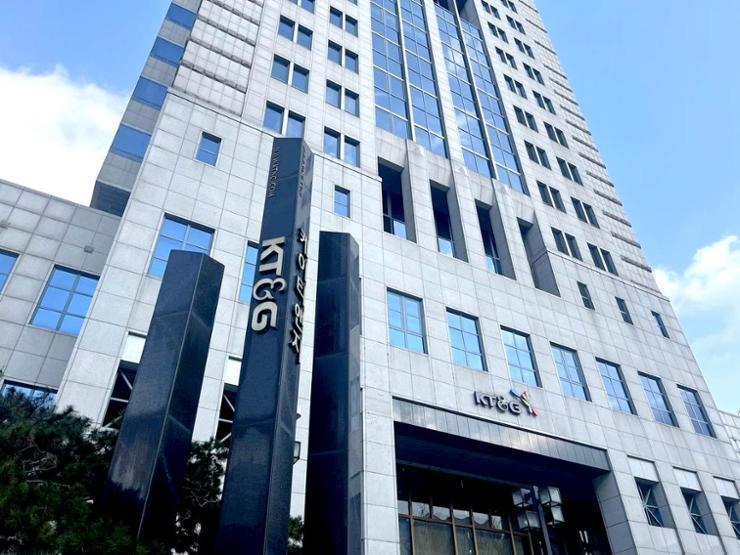
According to South Korean media Koreatimes on March 1st, shareholders of KT&G are expected to vote later this month on the appointment of a new CEO candidate. The largest shareholder is opposed to the appointment, claiming that the candidate should be held responsible for the company's stagnant performance in recent years.


On February 22nd, the company appointed Senior Executive Vice President Bang Kyung-man as the final candidate for the position of Chief Executive Officer.


However, KT&G's largest shareholder, Industrial Bank of Korea (IBK), has decided to vote against Fang Jingman's appointment at the shareholders' meeting scheduled for March 28. In addition, the activist hedge fund Flashlight Capital Partners (FCP) has raised questions about the nomination process, creating uncertainty about whether Bang will be appointed as CEO at the meeting.


IBK, which holds a 6.93% stake in KT&G, recently stated that there are issues with the process of selecting nominees. An executive at IBK added that since the nominee for CEO was appointed as a senior executive vice president, the company's operating profit has decreased by over 20%.


The National Pension Service (NPS), which owns a 6.31% stake, is also expected to decide on the appointment of the CEO candidate at the shareholders' meeting on March 28.


In response to opposition regarding the appointment of the CEO candidate, KT&G stated that the selection process for the new CEO was conducted fairly, including the first time in 20 years that a candidate was chosen from outside the company. The CEO nominee also meets the criteria set by the company for the new chief executive officer.


The entire CEO appointment process has been conducted and guided by an independent external board committee. In addition, public recruitment is considered as one of the channels to form a pool of CEO candidates, providing a fair assessment opportunity for both internal and external candidates. Without the establishment of an advisory group composed of external experts, the fairness and objectivity of the appointment process have been ensured through the committee's impartial and objective viewpoints being taken into account.


We welcome news tips, article submissions, interview requests, or comments on this piece.

Please contact us at info@2firsts.com, or reach out to Alan Zhao, CEO of 2Firsts, on LinkedIn


Notice

1.  This article is intended solely for professional research purposes related to industry, technology, and policy. Any references to brands or products are made purely for objective description and do not constitute any form of endorsement, recommendation, or promotion by 2Firsts.

2.  The use of nicotine-containing products — including, but not limited to, cigarettes, e-cigarettes, nicotine pouchand heated tobacco products — carries significant health risks. Users are responsible for complying with all applicable laws and regulations in their respective jurisdictions.

3.  This article is not intended to serve as the basis for any investment decisions or financial advice. 2Firsts assumes no direct or indirect liability for any inaccuracies or errors in the content.

4.  Access to this article is strictly prohibited for individuals below the legal age in their jurisdiction.


Copyright


This article is either an original work created by 2Firsts or a reproduction from third-party sources with proper attribution. All copyrights and usage rights belong to 2Firsts or the original content provider. Unauthorized reproduction, distribution, or any other form of unauthorized use by any individual or organization is strictly prohibited. Violators will be held legally accountable.

For copyright-related inquiries, please contact: info@2firsts.com


AI Assistance Disclaimer


This article may have been enhanced using AI tools to improve translation and editorial efficiency. However, due to technical limitations, inaccuracies may occur. Readers are encouraged to refer to the cited sources for the most accurate information.

We welcome any corrections or feedback. Please contact us at: info@2firsts.com

Australia’s Victoria Steps Up Illegal Tobacco Enforcement With Store Closures and Penalties of Up to A$2.5 Million
Australia’s state of Victoria has activated new powers allowing Tobacco Licensing Victoria and police to shut premises suspected of selling, supplying or possessing illicit tobacco for up to 90 days. Longer closures can be ordered by a magistrates’ court. Businesses subject to closure orders must generally cease all trading and will be placed on a public list. Breaching a closure order can carry penalties of up to A$2.5 million and 20 years in prison.
Sep.10
U.S. Ninth Circuit Upholds FDA Denial of MH Global’s Flavored Vape PMTA Applications
The U.S. Court of Appeals for the Ninth Circuit upheld the FDA’s denial of MH Global LLC’s applications to market flavored electronic nicotine delivery systems (ENDS). The court ruled that FDA’s comparative-efficacy framework, which requires applicants to show that flavored products provide greater cessation or switching benefits than tobacco-flavored alternatives, is consistent with the Tobacco Control Act’s “appropriate for the protection of the public health” standard. The court also found that FDA was not required to establish the framework through notice-and-comment rulemaking.
Aug.26
NAS 2026 | Cliff Douglas: Risk Continuum Should Play a Central Role in Tobacco Policy
Cliff Douglas, a veteran U.S. tobacco-control and public health policy figure, told NAS 2026 that the “continuum of risk” should play a central role in tobacco policy. He called for clearer market pathways, stronger risk communication, differentiated regulation and enforcement, and said possible FDA reforms to PMTA reviews could be a “welcome correction” if they create a more efficient, predictable route for scientifically substantiated lower-risk products. Read 2Firsts’ on-site coverage.
Sep.26
PMI Global R&D Chief Meets Chinese Tobacco Regulator as China Advances Heated Cigarette Standards
Philip Morris International’s global R&D chief Michele Cattoni met Liu Sanjiang, deputy director of China’s State Tobacco Monopoly Administration, in Beijing on Aug. 27. The meeting comes as China advances mandatory standards for heated cigarettes and nicotine pouches, laying groundwork for their domestic introduction. Cattoni has held senior roles in PMI’s heated tobacco development, while China’s draft standard covers multiple heating architectures, including systems similar in principle to PMI’s IQOS ILUMA technology.
Aug.27
Indiana Halts Sales of Elf Bar, Lost Mary, MR FOG and iJOY Vapes Under Foreign-Adversary Rules; Some Products Return After Compliance Filings
Indiana's Alcohol and Tobacco Commission (ATC) ordered tobacco certificate holders in September to remove certain vaping products marketed under Elf Bar, Lost Mary, MR FOG, iJOY and other brands from inventory under the state's foreign-adversary product law. The agency later listed 257 MR FOG products and 77 Lost Mary product entries as lawful for sale. The Lost Mary revision expressly stated that compliance evidence had been received for 20 additional products. 2Firsts compliance expert Kurt said potential filings could include e-liquid and ingredient-origin records, U.S. nicotine-analog supply-chain documentation and FDA premarket application status.
Regulations
Oct.08
Arizona Turns to a 50% Retail Vape Tax as Tobacco Tax Revenue Falls 47% From 2008
Arizona's First Things First is pushing for an excise tax equal to 50% of the retail price of vaping products, estimating that the measure could generate about $100 million annually. The agency says its tobacco-tax revenue has fallen 47% from 2008 levels. Arizona has attempted to broaden its nicotine tax base in each of the past two years: a 2025 bill proposed a 50% wholesale-price tax, while a 2026 measure shifted to a 50% retail-price tax covering alternative nicotine products and vapor products. Separately, the state enacted HB 4001 this year to establish a new licensing and sales framework for alternative nicotine products.
Sep.21