Illegal Cigarette Sales and Tax Evasion in Magelang, Indonesia

Regulations by 2FIRSTS.ai
Jan.11.2024
Illegal Cigarette Sales and Tax Evasion in Magelang, Indonesia
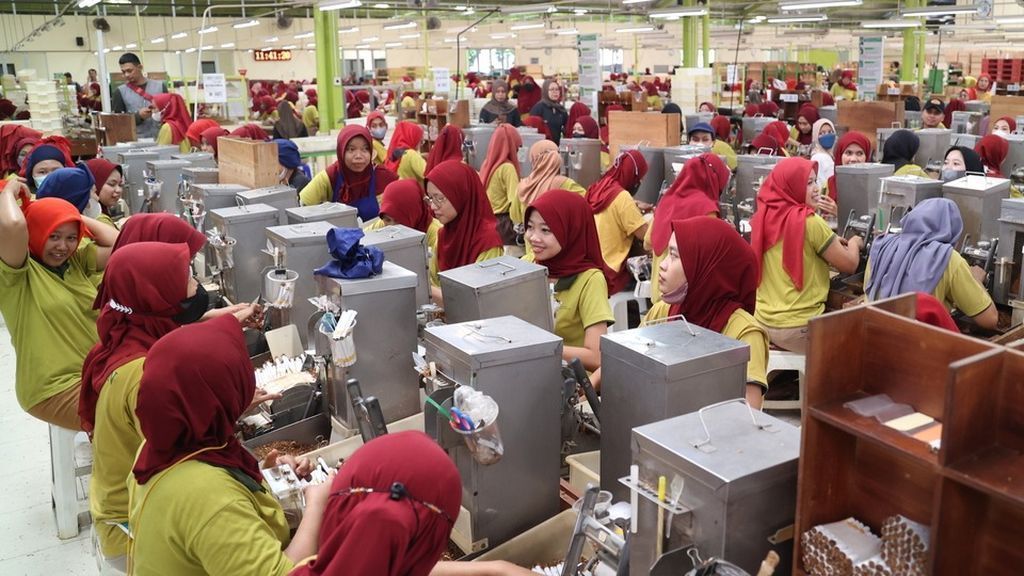
Illegal cigarette sales continue in Magelang City, Central Java, Indonesia, despite the government's increasing tobacco taxes.

According to a January 9 report by the Indonesian newspaper "KOMPAS," despite the government's ongoing efforts to increase cigarette taxes, there is still illegal sale of cigarettes occurring in Magelang City, located in Central Java Province. In these locations, some illegal cigarettes are using counterfeit tax stamps.


Since January 2024, the government has implemented an upgraded tobacco tax rate policy. According to Regulation No. 191 issued by the Ministry of Finance in 2022, the tobacco tax for traditional cigarettes has increased on average by 10%, while the tax rate for e-cigarettes has risen by an average of 15%. Additionally, the average tax rate for other tobacco products has increased to 6%.


This policy has prompted some smokers to reconsider their expenses, such as 33-year-old Fajar Dharmawan. He stated that due to the increase in tobacco taxes in 2021, he has turned to the relatively more affordable option of e-cigarettes.


Although this tax policy may seem to swiftly restrain user behavior, its objective is not only to control health issues caused by cigarettes but also to increase government revenue.


The Indonesian tobacco industry aims to achieve a tax revenue target of 230.4 trillion rupees in 2023, accounting for 95% of the total tobacco tax revenues for that year.


We welcome news tips, article submissions, interview requests, or comments on this piece.

Please contact us at info@2firsts.com, or reach out to Alan Zhao, CEO of 2Firsts, on LinkedIn


Notice

1.  This article is intended solely for professional research purposes related to industry, technology, and policy. Any references to brands or products are made purely for objective description and do not constitute any form of endorsement, recommendation, or promotion by 2Firsts.

2.  The use of nicotine-containing products — including, but not limited to, cigarettes, e-cigarettes, nicotine pouchand heated tobacco products — carries significant health risks. Users are responsible for complying with all applicable laws and regulations in their respective jurisdictions.

3.  This article is not intended to serve as the basis for any investment decisions or financial advice. 2Firsts assumes no direct or indirect liability for any inaccuracies or errors in the content.

4.  Access to this article is strictly prohibited for individuals below the legal age in their jurisdiction.


Copyright


This article is either an original work created by 2Firsts or a reproduction from third-party sources with proper attribution. All copyrights and usage rights belong to 2Firsts or the original content provider. Unauthorized reproduction, distribution, or any other form of unauthorized use by any individual or organization is strictly prohibited. Violators will be held legally accountable.

For copyright-related inquiries, please contact: info@2firsts.com


AI Assistance Disclaimer


This article may have been enhanced using AI tools to improve translation and editorial efficiency. However, due to technical limitations, inaccuracies may occur. Readers are encouraged to refer to the cited sources for the most accurate information.

We welcome any corrections or feedback. Please contact us at: info@2firsts.com

The Volume Illusion: Measuring the Future of Nicotine with the Tools of the Past
As next-generation nicotine products become economically central rather than marginal, traditional volume-based metrics are increasingly unable to explain consumption, risk, and value. Units designed for a cigarette-based economy struggle to describe systems defined by delivery speed, pharmacokinetics, and adaptive user behavior. Drawing on financial reporting, regulation, and nicotine science, a fundamental question: can the future of nicotine still be measured using the tools of its past?
Feb.09 by Alan Zhao | 2Firsts Perspectives
UK vape retailer VPZ to expand manufacturing, open 40 stores in 2026
UK specialist vape retailer VPZ has launched a multi-million-pound investment programme to boost domestic production capacity and tighten supply-chain controls. The plan includes adding a fifth production line, opening 40 new stores across the UK in 2026 and creating hundreds of jobs, while establishing a bonded warehouse at its Edinburgh headquarters as regulation tightens and a vaping tax is planned.
Feb.02 by 2FIRSTS.ai
Make Your Brand Understood by the People Who Matter
Feb.02
UK Disposable Vape Ban Fallout: Convenience Vape Units Down 20.8%, Retailers Hit by a “Triple Whammy,” Talysis Says
UK convenience insight agency Talysis says vape unit sales in convenience stores have fallen 20.8% and value sales 12.7% nearly eight months after the disposable vape ban took effect.
Jan.28 by 2FIRSTS.ai
BAT CEO: to ramp up ‘next-generation’ tobacco capacity in Italy, plans €500 mln investment in Trieste plant by 2027
British American Tobacco (BAT) CEO Tadeu Marroco said the group will continue to invest in equipment and technology in Italy and expand capacity for next-generation tobacco products such as e-cigarettes and heated tobacco. BAT’s Trieste innovation hub is slated to receive a total investment of 500 million euros by 2027 and add 16 new production lines.
Feb.03 by 2FIRSTS.ai
Korea’s MFDS sets 2026 plan to manage and disclose harmful constituents in tobacco products
South Korea’s Ministry of Food and Drug Safety (MFDS) said it has established its 2026 work plan to systematically manage harmful constituents in tobacco products and disclose related information under the Tobacco Harmfulness Management Act, which took effect in November 2025.
Jan.16 by 2FIRSTS.ai