Illegal E-cigarette Trade Thriving Despite Ban in Vietnam Market.

Mar.04.2025
Illegal E-cigarette Trade Thriving Despite Ban in Vietnam Market.
Despite a ban on e-cigarette sales in Vietnam, the market continues to thrive, especially on online platforms. (20 words)

Key points:

Illegal E-cigarette Trade Thriving Despite Ban in Vietnam Market.
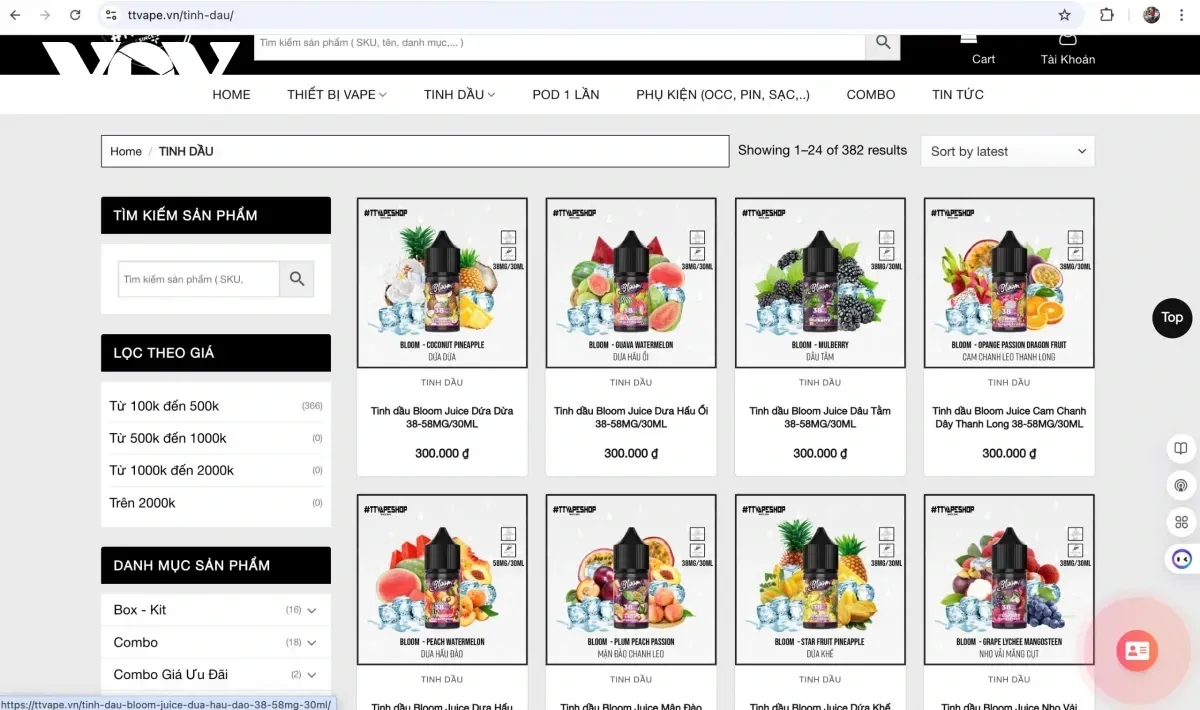
A prohibited goods trading website | Image source: Vov


Although e-cigarettes and heated tobacco products are banned in Vietnam, buying and selling activities are still rampant in the market, especially on online platforms.


Young people are the primary users of e-cigarettes, engaging in transactions through social networks to bypass regulation.


Legal experts suggest strengthening regulation of online platforms to curb illegal e-cigarette transactions.


According to a report from VOV on March 4th, Vietnam has banned the purchase, sale, exchange, and use of e-cigarettes and heated tobacco products since January 1st. Violators may face fines or even up to 15 years in prison. However, these transactions are still active in the market, rendering the ban ineffective.


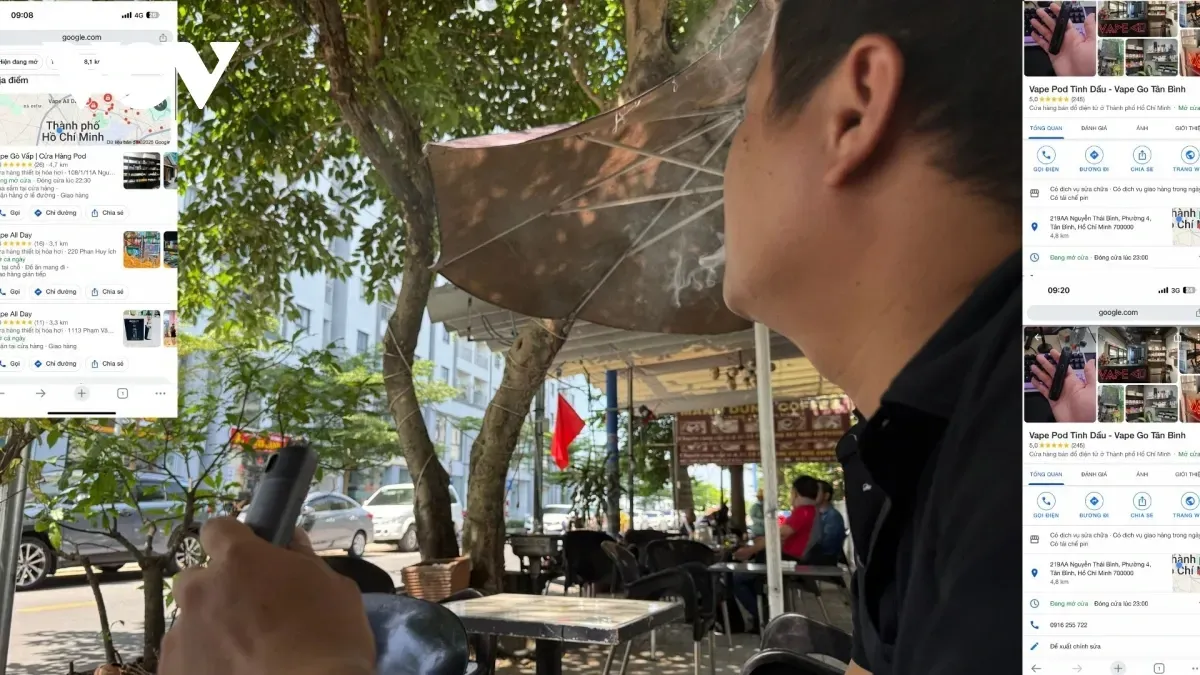
According to Vietnamese media Vov, entering the keyword "Vape - Pod" in the Google search engine immediately brings up millions of results, showing that there are hundreds or even thousands of stores selling these products in the area, almost all of which are labeled as "open for business." A reporter randomly selected a store in Ho Chi Minh City to investigate its sales situation. The store owner stated that they currently only sell products online, and directed customers to add them as a friend on Zalo to choose from a variety of products. The shopping and shipping process can all be done online.


Not only are the businesses marked on Google continuing to buy and sell, but there are also specialized websites meticulously showcasing various prohibited products. On the website https://ttvape.vn/, all banned items are detailedly introduced, including origin, weight, and price. The merchants also provide contact numbers for transactions.


A university student in Ho Chi Minh City stated that the ban on purchasing e-cigarettes has had little impact, as transactions can still be made through Google, online platforms, and social networks. He pointed out that many social platforms such as Facebook, TikTok, and Telegram still have transactions taking place, and people are still exchanging and selling as usual.


According to reports, there have not been many enforcement actions nationwide involving e-cigarettes since the ban was implemented. The buying, selling, storing, and using of these prohibited products are still widespread throughout the country. Lawyer Dương Lê Ước An stated that although the law is now in effect, there is a lack of effective enforcement, especially when dealing with young people who primarily conduct transactions online, which increases the difficulty of detection and prosecution.


He suggested that relevant authorities should enhance supervision over social networking platforms and e-commerce platforms, requiring these platforms to delete related transaction websites and keywords, and add them to the list of prohibited items for sale.


According to reports, the Vietnamese National Assembly has passed Resolution No. 173, which declares that the production, sale, import, possession, transportation, and use of e-cigarettes and heated tobacco will be illegal as of 2025. Violators will be handled according to the law. (Related reading: Vietnam Customs General Department issues ban: Import procedures for e-cigarettes and heated tobacco products will stop starting in 2025)


We welcome news tips, article submissions, interview requests, or comments on this piece.

Please contact us at info@2firsts.com, or reach out to Alan Zhao, CEO of 2Firsts, on LinkedIn


Notice

1.  This article is intended solely for professional research purposes related to industry, technology, and policy. Any references to brands or products are made purely for objective description and do not constitute any form of endorsement, recommendation, or promotion by 2Firsts.

2.  The use of nicotine-containing products — including, but not limited to, cigarettes, e-cigarettes, nicotine pouchand heated tobacco products — carries significant health risks. Users are responsible for complying with all applicable laws and regulations in their respective jurisdictions.

3.  This article is not intended to serve as the basis for any investment decisions or financial advice. 2Firsts assumes no direct or indirect liability for any inaccuracies or errors in the content.

4.  Access to this article is strictly prohibited for individuals below the legal age in their jurisdiction.


Copyright


This article is either an original work created by 2Firsts or a reproduction from third-party sources with proper attribution. All copyrights and usage rights belong to 2Firsts or the original content provider. Unauthorized reproduction, distribution, or any other form of unauthorized use by any individual or organization is strictly prohibited. Violators will be held legally accountable.

For copyright-related inquiries, please contact: info@2firsts.com


AI Assistance Disclaimer


This article may have been enhanced using AI tools to improve translation and editorial efficiency. However, due to technical limitations, inaccuracies may occur. Readers are encouraged to refer to the cited sources for the most accurate information.

We welcome any corrections or feedback. Please contact us at: info@2firsts.com

Malaysia Liquid Nicotine Returns to Poisons List, Leaving Vape Retail and RM354 Million Tax Collection in Legal Uncertainty
Malaysia’s withdrawal of its appeal in a landmark liquid-nicotine case has left a High Court ruling that struck down the 2023 nicotine exemption in force, bringing liquid and gel nicotine used in vaping products back under the Poisons Act 1952. At the same time, the Control of Smoking Products for Public Health Act 2024 continues to provide a regulatory framework for vaping products, creating uncertainty over retail sales, taxation and existing inventory. MPs are calling for nicotine vape sales and excise collection to stop, including refunds of more than RM354 million collected since 2023, while industry and consumer groups are asking the government to clarify the current legal position.
Sep.04
Retail Case Study | Wisconsin Vape Market One Year After New Regulations: Johnny Vapes Reports 80% Sales Decline as Consumers Shift Online and Across State Lines
According to WNCY on August 24, 2026, some independent vape retailers in Wisconsin say they have faced significant business pressure one year after new vape regulations took effect. Johnny Vapes, a retailer operating in northeast Wisconsin, said its store count fell from seven locations to four, sales declined by about 80%, and roughly 90% of its inventory was affected. Retailers said some consumers have shifted to online purchases or traveled to neighboring Michigan to buy vape products. The case highlights how local regulations can reshape retail operations, inventory management and consumer purchasing patterns.
Aug.28
How Large Is France’s Off-Channel Tobacco Market? Logista Says It Has Become Structural, While the Official Estimate Is 17.7% and Some Industry Studies Put It Above 50%
Logista France says tobacco consumption outside France’s official tobacconist network has become a large and structural market phenomenon, but official and industry estimates differ sharply. France’s TAFE study estimates that 17.7% of tobacco consumption escaped domestic taxation in 2023, with most of that volume attributed to cross-border purchasing rather than street sales. Some industry studies use broader off-channel definitions and put the figure above 50%. Meanwhile, French Customs seized 547.94 tonnes of tobacco in 2025, up 12%, showing continued pressure from illicit trade.
Sep.04
Philippine Local Governments Urge Marcos to Prioritize Smoke- and Vape-Free Bill
The League of Municipalities of the Philippines (LMP) has urged President Ferdinand Marcos Jr. to prioritize the Smoke- and Vape-Free Bill, seeking a nationwide legal framework for tobacco and vape regulation. Local government leaders said national legislation would help standardize enforcement and strengthen public health measures. The proposal remains at the advocacy stage and has not yet become law.
Jul.29
InterTabac 2026: Further Sessions on Regulation, Market Access and Innovation Confirmed; 2FIRSTS to Host China Market Forum
InterTabac 2026 will bring together international experts to discuss European regulation, tax policy, Track & Trace, market access, retail impacts, consumer behavior and innovation. Sessions will also examine Poland’s tobacco-growing perspective and the growing fragmentation of Europe’s tobacco and nicotine market. Media partner 2FIRSTS will host the second “2FIRSTS Connect at InterTabac” on September 16, focusing on developments in China’s tobacco and nicotine industry.
Aug.06
UK PM Andy Burnham Reshapes Vape Retail Rules as Licensing Could Raise Barriers for New Shops
UK Prime Minister Andy Burnham is pushing a high street reform agenda that could give local authorities greater powers over commercial activity, including vape retail. The reforms could involve expanded planning powers and a potential vape retail licensing system, allowing councils to play a larger role in store locations and market access. The measures are part of the UK’s broader shift toward tighter vape regulation, although no nationwide vape retail restrictions have yet been implemented.
Aug.11