Officials believe that a shipment of American e-cigarettes smuggled into the UK and targeted at children is linked to organized crime.
Local trade standards officials in the Kensington and Chelsea district in London have confiscated illegal electronic cigarettes. (Photo: Getty, RBKC)
So far this year, trade standards officials have confiscated thousands of illegal products across the country, including in Northumberland, Staffordshire, Nottingham and London.
Some e-cigarettes have volumes and nicotine concentrations that are more than double what current UK law permits, and they offer flavors like Fanta and rainbow candy, raising concerns about their appeal to children.
It is reported that social media influencers are also promoting their products to young audiences on platforms such as TikTok.
According to reports, young people who use illegal electronic cigarette products are experiencing health issues, including coughing up blood, nosebleeds, headaches, chest pain, and dizziness.
It is believed that with the global concern about the younger generation getting hooked on nicotine through vaping, authorities in the United States have tightened regulations on e-cigarettes, leading to a surge in imports.
Many countries, including the United Kingdom, have set a goal to achieve "smoke-free" status by 2030, meaning the adult smoking rate falls below 5%.
The government's stance has been supported by an independent review conducted by Dr. Javed Khan in June, stating that e-cigarettes are a healthier alternative to smoking but should not be embraced by non-smokers.
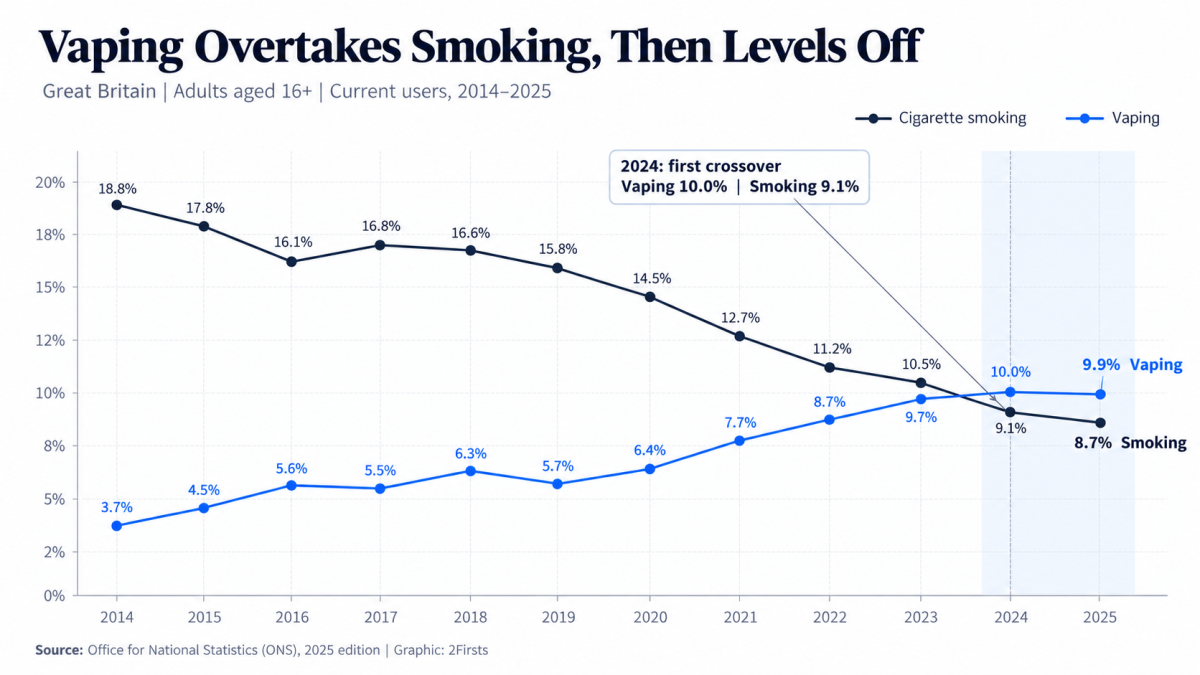
However, despite smoking being far less popular among young people now than in previous decades, research shows that electronic cigarettes are on the rise among adolescents.
Last month, a yearly survey by Action on Smoking and Health (ASH) found that the percentage of 11-17 year olds who reported frequently using electronic cigarettes rose from 4% to 7%.
The proportion of children who have admitted to smoking electronic cigarettes has increased from 14% to 16% within a year.
Although it is illegal to sell electronic cigarettes to those under 18, almost half of teenage e-cigarette users state that their primary source of supply comes from stores.
Trade standard officials seized 3,500 illegal electronic cigarettes worth £27,000 in Staffordshire between April and July this year.
According to operations manager Tony Shaw, this is clearly a growing market and he anticipates that this number will increase.
Since April, officials in Staffordshire County have confiscated nearly 1,000 illegal electronic cigarettes each month (pictured: Staffordshire County Council).
We have definitely seen an increase in the popularity of illegal electronic cigarettes," he said.
My intuition is that it will rise even further.
“We have discovered that shops selling illegal tobacco are entering this area.”
Compared to those who suddenly decide to sell illegal e-cigarettes, I believe that this is more related to organized crime, where a group of criminals obtain these illegal e-cigarettes and incorporate them into their own supply chain.
This is my own feeling, and it is supported by some information.
Mr. Xiao stated that trade regulatory authorities are cooperating with a wide range of law enforcement agencies, including police, border officials, and the national crime bureau.
Officials are currently focusing on disrupting the supply of illegal e-cigarettes through seizures rather than prosecutions, but Mr. Xiao agrees that this is becoming a bigger priority for authorities.
Aside from being a symbol of increasing status among young people, part of the appeal of electronic cigarettes is their lower cost compared to traditional smoking.
The electronic cigarette industry states that by spending only £27 per month, one can replace the daily consumption of a pack of cigarettes which costs approximately £310.
Deborah Arnott, CEO of the anti-smoking charity ASH, said: "Last year's popular disposable e-cigarettes were small, brightly colored products with a sweet taste and enticing names that even children under five could purchase. It's no wonder they are attractive to kids.
As suggested by the Khan's review, an additional investment of 15 million pounds is needed for law enforcement, including electronic cigarettes and tobacco products.
The law needs to be strengthened to prohibit child-friendly packaging and labeling of e-cigarette products and to prevent promotion on social media.
Statement:
This article is compiled from third-party information and is intended solely for industry communication and learning.
This article does not represent the views of 2FIRSTS, and 2FIRSTS cannot confirm the authenticity and accuracy of the content. The translation of this article is only intended for industry exchange and research purposes.
Due to limitations in the translator's proficiency, the translated article may not fully convey the original meaning. Please refer to the original article for accuracy.
2FIRSTS maintains complete alignment with the Chinese government regarding their position and stance on any domestic, Hong Kong, Macau, Taiwan, or foreign-related issues.
The copyright of the compiled information belongs to the original media and author. If there is any infringement, please contact us for removal.
Disclaimer
This article is provided solely for professional research, industry discussion, and informational purposes. Any references to brands, companies, products, technologies, or policies are made for factual reporting and analytical purposes only, and do not constitute endorsement, recommendation, promotion, or advertising by 2Firsts.
Nicotine-containing products, including but not limited to cigarettes, e-cigarettes, heated tobacco products, and nicotine pouches, carry significant health risks. Readers are responsible for complying with all applicable laws and regulations in their respective jurisdictions, including age restrictions and access limitations.
The information contained in this article should not be regarded as investment, legal, medical, regulatory, or commercial advice. While 2Firsts strives to ensure the accuracy and reliability of its content, it does not assume liability for any direct or indirect loss arising from errors, omissions, inaccuracies, or reliance on the information contained herein.
This article is not intended for individuals below the legal age for accessing tobacco or nicotine-related information in their jurisdiction.
Copyright Notice
This article is either original content produced by 2Firsts or content reproduced, translated, summarized, or adapted from third-party sources with attribution where applicable. The intellectual property rights of the original content remain with 2Firsts or the respective original rights holders.
No individual or organization may copy, reproduce, distribute, republish, modify, translate, or otherwise use this content without prior authorization. Any unauthorized use may result in legal action.
For copyright-related inquiries, corrections, or removal requests, please contact: info@2firsts.com.
AI-Assisted Translation and Editing Notice
Portions of this article may have been translated, edited, or reviewed with the assistance of artificial intelligence tools to improve efficiency and readability. Due to the limitations of AI-assisted translation and editing, discrepancies, omissions, or inaccuracies may exist when compared with the original source.
Where applicable, readers are advised to refer to the original source for the most complete and accurate information. If you identify any errors or believe that any content infringes upon your rights, please contact us at info@2firsts.com, and we will review and address the matter promptly.