Illicit E-cigarette Sales Rise in UK, Concerns for Youth Heath

Regulations by 2FIRSTS.ai
Apr.17.2024
Illicit E-cigarette Sales Rise in UK, Concerns for Youth Heath
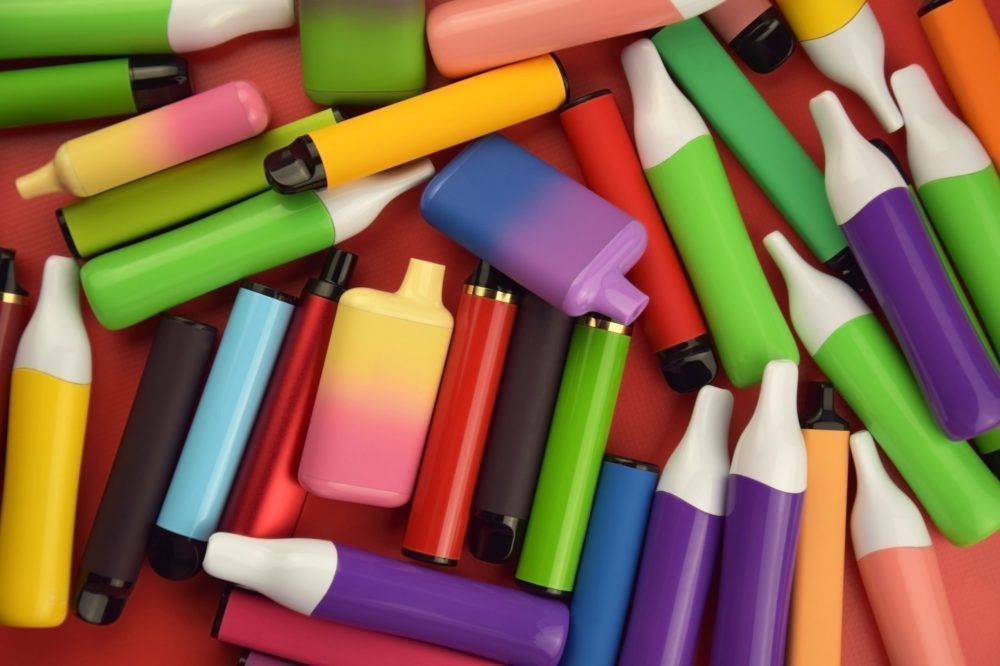
The trading standards team in Radnorshire County, UK, seized over 6000 illegal e-cigarettes in a crackdown operation.

According to a report from the Welsh newspaper "The National Youth Daily" on April 16th, the Trading Standards team of the local government in Reksem County, UK, confiscated over 6,000 illegal e-cigarettes in a crackdown operation in 2023.


According to data released by the Rexham Commission under the Freedom of Information Act, a total of 6,339 illegal e-cigarettes were discovered in the county's municipalities in 2023. This marks a 411% increase from the 1,240 e-cigarettes confiscated in 2022, with no previous records of such incidents in the preceding three years.


Illegal e-cigarette products have now become the primary item seized in the region. In comparison, only 1,516 packs of illegal cigarettes were seized last year, with the recent 2021 figures skyrocketing to as high as 7,834 packs.


A senior official from the local government has stated that they are specifically targeting illegal e-cigarettes due to concerns about their impact on children's health. This is particularly concerning as some illegal e-cigarette products have been found to contain nicotine levels far above what is permitted for sale on the market.


Roger Mapleson, trade standards officer at Reckham, stated, "Locally, market regulators have been monitoring the supply of illegal disposable e-cigarettes. These products have been gaining popularity over the past few years, attracting a significant number of non-smokers, especially children.


Although e-cigarette products are very effective aids in smoking cessation, a simple recommendation for non-smokers (both children and adults) is, if you do not smoke, do not use e-cigarettes. Disposable e-cigarette products are very popular, and illegal versions are stronger than what the law allows (containing more than 20mg of nicotine per milliliter of e-liquid), for example, exceeding the allowed size (more than 2ml of e-liquid), and versions without labels.


He also added, "Illegal e-cigarettes are entering our country through smuggling, completely unregulated, meaning that the content of these products is not controlled at all. Those selling illegal e-cigarettes are unlikely to restrict sales to those over 18 years old, and may sell them to children. Therefore, from a market supervision perspective, monitoring these products is of utmost importance."


Despite increased focus on cracking down on the illegal sale of e-cigarettes in recent years, the city council stated that illegal tobacco remains their top priority. Still, over 5,000 people nationwide die prematurely each year due to smoking-related causes.


Mr. Mapleson urges people to remain vigilant about the possibility of purchasing illegal products when it comes to e-cigarettes.


He said: "As a very rough guide, illegal e-cigarettes can be identified by looking at the number of puffs the product claims to offer. Anything over 600 puffs is suspicious, as illegal e-cigarettes often claim to provide several thousand puffs. In addition, you can check the nicotine strength indicated on the packaging. 20ml/mg is the maximum, usually considered as two percent. Anything higher is likely illegal. E-cigarettes sold on social media, workplaces, or other informal markets such as flea markets may also be illegal. E-cigarettes sold in mainstream high street stores and supermarkets are highly unlikely to be illegal products."


We welcome news tips, article submissions, interview requests, or comments on this piece.

Please contact us at info@2firsts.com, or reach out to Alan Zhao, CEO of 2Firsts, on LinkedIn


Notice

1.  This article is intended solely for professional research purposes related to industry, technology, and policy. Any references to brands or products are made purely for objective description and do not constitute any form of endorsement, recommendation, or promotion by 2Firsts.

2.  The use of nicotine-containing products — including, but not limited to, cigarettes, e-cigarettes, nicotine pouchand heated tobacco products — carries significant health risks. Users are responsible for complying with all applicable laws and regulations in their respective jurisdictions.

3.  This article is not intended to serve as the basis for any investment decisions or financial advice. 2Firsts assumes no direct or indirect liability for any inaccuracies or errors in the content.

4.  Access to this article is strictly prohibited for individuals below the legal age in their jurisdiction.


Copyright


This article is either an original work created by 2Firsts or a reproduction from third-party sources with proper attribution. All copyrights and usage rights belong to 2Firsts or the original content provider. Unauthorized reproduction, distribution, or any other form of unauthorized use by any individual or organization is strictly prohibited. Violators will be held legally accountable.

For copyright-related inquiries, please contact: info@2firsts.com


AI Assistance Disclaimer


This article may have been enhanced using AI tools to improve translation and editorial efficiency. However, due to technical limitations, inaccuracies may occur. Readers are encouraged to refer to the cited sources for the most accurate information.

We welcome any corrections or feedback. Please contact us at: info@2firsts.com

Product | R.J. Reynolds Launches Four Flavored Vuse Pro Pods for Vuse Alto Devices in U.S.
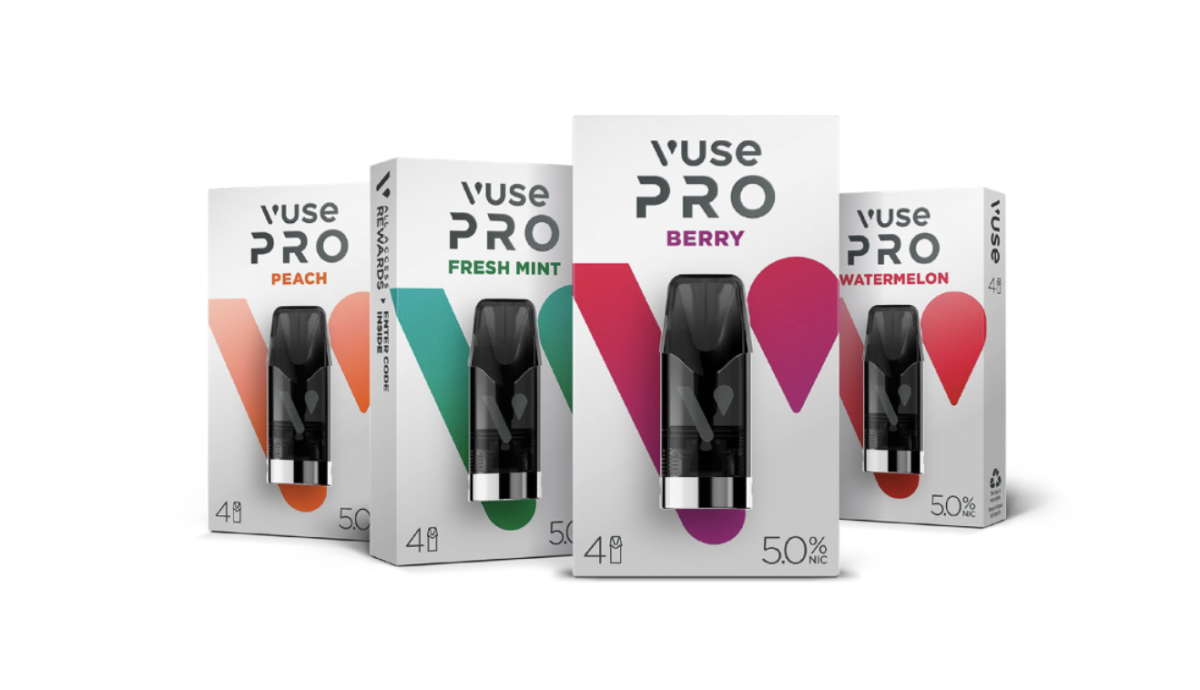
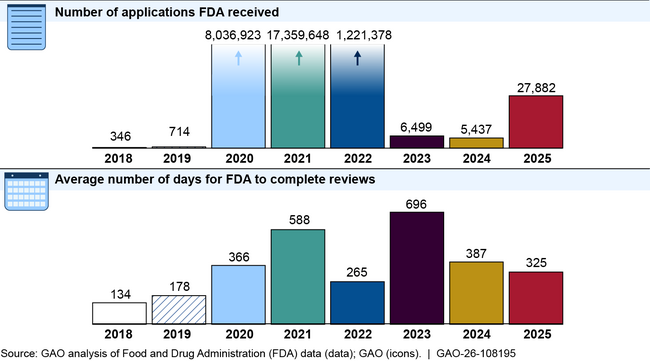
R.J. Reynolds Vapor Company has introduced Vuse Pro prefilled pods in Peach, Berry, Watermelon and Fresh Mint in selected U.S. states. Vuse’s U.S. website says the pods are intended for use with existing Vuse Alto devices. Each contains 2.0 mL of e-liquid at 5.0% nicotine by weight, uses nicotine salts and is offered in two- and four-pod packs. Reynolds said the rollout includes mandatory ID scanning for every purchase, purchase limits, stronger retailer-accountability requirements and strict age-restricted marketing standards. The four pods have not received marketing authorization from the U.S. Food and Drug Administration.
Sep.10
Iowa Enforces Vape Registry Law as Retailers Warn Product Limits Could Increase Store Pressure
Iowa has begun enforcing its vape registry law, requiring vape products to be registered before they can be legally sold in the state. The move follows a decision by the U.S. Court of Appeals for the Eighth Circuit to lift an injunction that had blocked enforcement. Retailers have warned that tighter product availability rules could increase pressure on vape shops. One Iowa retailer said that if only a limited number of products remain available, many stores could face significant business challenges.
Aug.06
South Korea Extends Vape Rules to Unmanned Stores After Bringing Synthetic Nicotine Under Tobacco Law
South Korea's Ministry of Gender Equality and Family said on September 14 that it plans to designate unmanned e-cigarette stores as businesses where minors are prohibited from entering or working. Operators would be required to verify customers' ages and display notices restricting access by minors. The proposal is open for public comment through October 6. The move follows an April expansion of South Korea's statutory tobacco definition that brought products made with natural or synthetic nicotine under the Tobacco Business Act. Nicotine-free liquids and products using nicotine analogues such as 6-methylnicotine, however, remain an emerging regulatory issue.
Sep.21
BAT’s Velo Study Finds 61% of Nicotine Users Feel More Comfortable Expressing Themselves When Others Do the Same
British American Tobacco’s (BAT) nicotine pouch brand Velo has released a global consumer study and launched its “Echoes of Tomorrowland” campaign with electronic music festival brand Tomorrowland. The research surveyed 2,009 nicotine users across the UK, Spain, Pakistan, Poland and Austria. Velo said 61% of respondents feel more comfortable expressing themselves when they see others doing the same, while 39% said building meaningful connections becomes harder with age. The campaign reflects how nicotine pouch brands are increasingly using music, communities and lifestyle marketing to build consumer engagement.
Aug.10
F1 Faces Renewed Pressure Over Tobacco and Nicotine Sponsorships as 67 Groups Target ZYN and VELO Ahead of Madrid Race
Ahead of the Formula 1 race in Madrid, 67 Spanish and international public-health, medical and consumer organizations have sent an open letter to F1 President and CEO Stefano Domenicali calling for an end to sponsorships linked to the tobacco and nicotine industry, including nicotine pouches, vaping products and heated tobacco. The letter focuses on Philip Morris International’s ZYN partnership with Ferrari and British American Tobacco’s long-running partnership with McLaren and exposure for VELO. The campaign follows a March letter in which more than 160 organizations worldwide made a similar request to Formula 1.
Sep.10
GSTHR Estimates 200 Million People Use Non-Combustible Nicotine Products as 28 Countries Show Rising Use Alongside Falling Smoking Rates
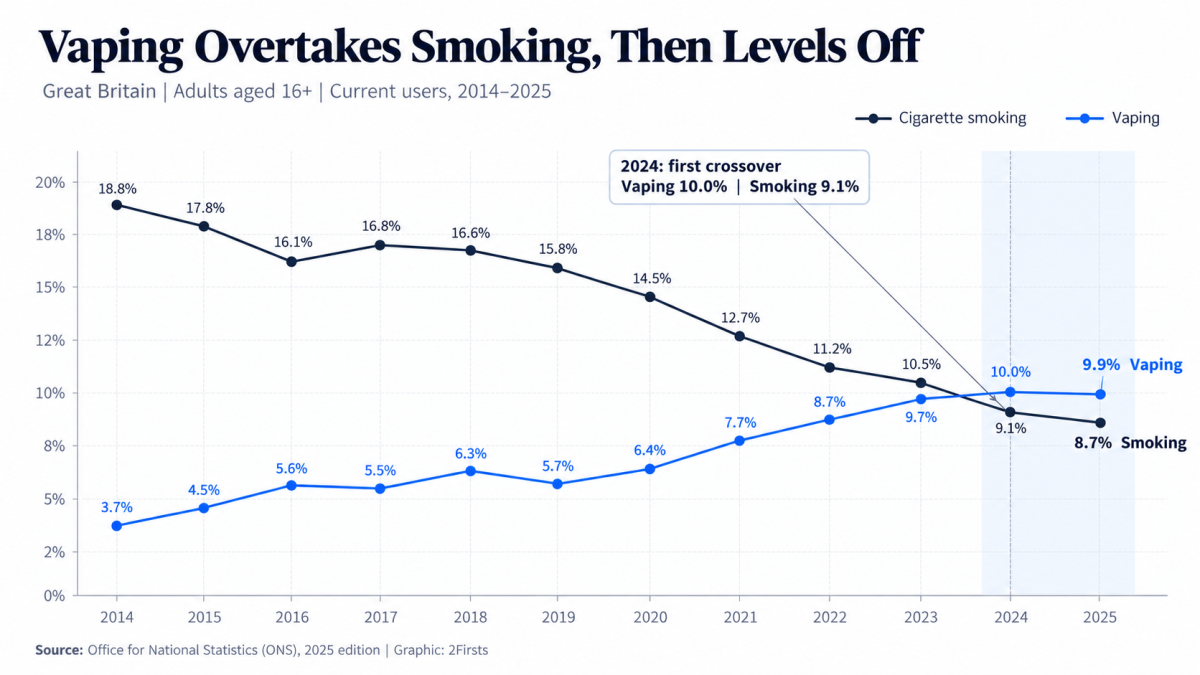
The Global State of Tobacco Harm Reduction, a project operated by Knowledge·Action·Change, estimates that about 200 million people worldwide use non-combustible nicotine products including vapes, heated tobacco, nicotine pouches and snus. Its 2026 report says use of these products rose alongside declining smoking rates in 28 countries it analyzed. The data do not establish that all 200 million users have quit smoking, nor do they prove a direct causal relationship. GSTHR also says regulatory restrictions on the products continue to expand in many markets.
Sep.10