Illinois Senate Passes Bills to Restrict Youth Vaping Activities

Regulations by 2FIRSTS.ai
Apr.10.2024
Illinois Senate Passes Bills to Restrict Youth Vaping Activities
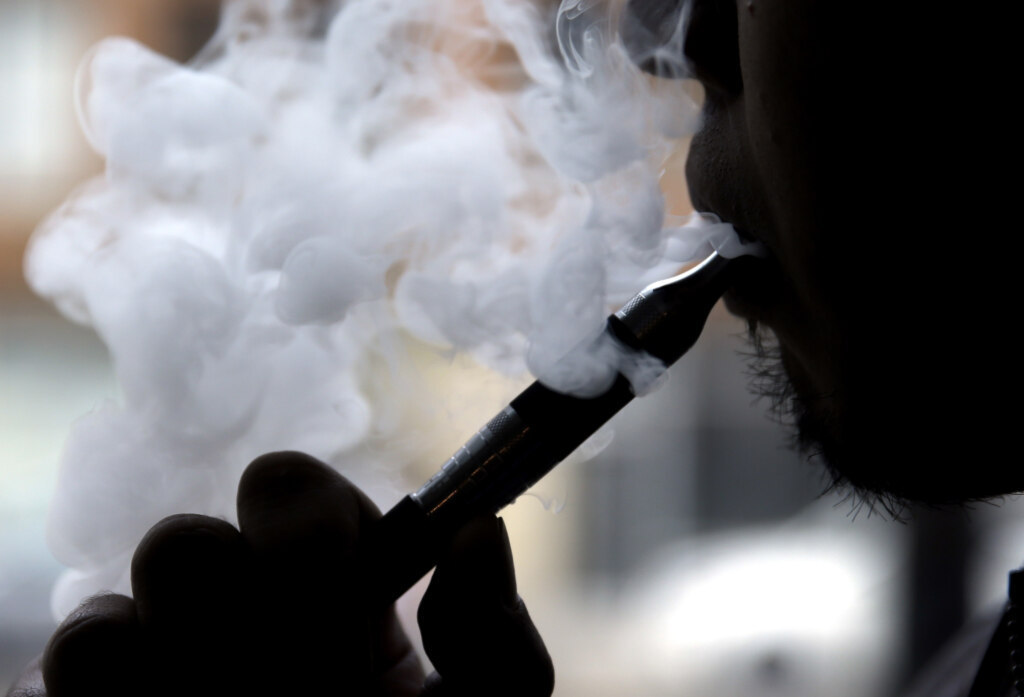
Illinois Senate passed two bills on April 9th to restrict youth vaping, targeting e-cigarettes disguised as household items.

According to WGEM on April 10, the Illinois State Senate passed two bills on Tuesday, April 9 aimed at limiting teenage smoking.


According to proposed legislation by Illinois State Senator Julie Morrison, one bill would ban companies from selling e-cigarette devices that resemble common household items. Another bill, introduced by State Senator Meg Loughran Cappel, would prohibit the delivery of e-cigarettes within the state of Illinois, with the exception of retailers and distributors.


Selling e-cigarettes to those under 21 years old in Illinois is illegal. However, teenagers can bypass this ban by having these products delivered to their homes.


Currently, both bills have been submitted to the state House of Representatives.


We welcome news tips, article submissions, interview requests, or comments on this piece.

Please contact us at info@2firsts.com, or reach out to Alan Zhao, CEO of 2Firsts, on LinkedIn


Notice

1.  This article is intended solely for professional research purposes related to industry, technology, and policy. Any references to brands or products are made purely for objective description and do not constitute any form of endorsement, recommendation, or promotion by 2Firsts.

2.  The use of nicotine-containing products — including, but not limited to, cigarettes, e-cigarettes, nicotine pouchand heated tobacco products — carries significant health risks. Users are responsible for complying with all applicable laws and regulations in their respective jurisdictions.

3.  This article is not intended to serve as the basis for any investment decisions or financial advice. 2Firsts assumes no direct or indirect liability for any inaccuracies or errors in the content.

4.  Access to this article is strictly prohibited for individuals below the legal age in their jurisdiction.


Copyright


This article is either an original work created by 2Firsts or a reproduction from third-party sources with proper attribution. All copyrights and usage rights belong to 2Firsts or the original content provider. Unauthorized reproduction, distribution, or any other form of unauthorized use by any individual or organization is strictly prohibited. Violators will be held legally accountable.

For copyright-related inquiries, please contact: info@2firsts.com


AI Assistance Disclaimer


This article may have been enhanced using AI tools to improve translation and editorial efficiency. However, due to technical limitations, inaccuracies may occur. Readers are encouraged to refer to the cited sources for the most accurate information.

We welcome any corrections or feedback. Please contact us at: info@2firsts.com

KDCA youth panel: health indicators worsen with grade level; liquid e-cigarette use tops cigarettes among 11th-grade students
Korea Disease Control and Prevention Agency’s Youth Health Panel Survey (2025) Final Results Report says key adolescent health indicators worsen as students move up grade levels. By 11th grade, lifetime tobacco experience rose to 9.59%. Among 11th-grade girls, current use of liquid e-cigarettes (1.54%) surpassed conventional cigarettes (1.33%) for the first time.
Feb.10 by 2FIRSTS.ai
Russian consumer group urges Kremlin administration to reject regional vape sales bans
A Russian consumer organization has urged the Presidential Administration to block proposals that would let regions ban ENDS and e-liquid sales, warning it would create fragmented regulation and turbocharge the illicit market. The group cites WHO statistics and overseas experiences to argue for a more targeted regulatory model.
Feb.06 by 2FIRSTS.ai
UK Guernsey's QuitVape program for youth e-cigarette cessation to end at the end of the month
QuitVape e-cigarette quitting service for teens in Guernsey to end this month, after six-month trial period.
Dec.29 by 2FIRSTS.ai
Juul Labs UK launches JUUL2 Peach flavour aimed at adult smokers
Juul Labs UK announced on January 1, 2026 the launch of a new JUUL2 Peach flavour, described as an adult-oriented addition that expands the JUUL2 flavour portfolio. The company said the flavour will roll out across the UK from January 1 through major retailers, wholesalers and convenience stores, offering adult smokers alternatives to transition away from cigarettes.
Jan.04 by 2FIRSTS.ai
Russia’s Volgograd Police Seize Illicit Nicotine Products Worth Over US$42.9K+
Police in Russia’s Volgograd region say they seized nicotine products lacking mandatory markings valued at more than RUB 3.3 million (about US$42,900+, using RUB 1 = US$0.013). A 43-year-old suspect allegedly stored and sold the products through two retail outlets in Volgograd’s Central and Dzerzhinsky districts. A criminal case has been opened under Article 171.1(6) of the Russian Criminal Code.
Jan.30 by 2FIRSTS.ai
FDA Details Carcinogenicity Tiering and ELCR Framework as Small Manufacturers Press for Predictability
During the “Toxicological Profile” session at FDA’s Feb 10 PMTA roundtable, officials outlined the carcinogenicity tiering system and Excess Lifetime Cancer Risk (ELCR) framework used in ENDS reviews under the APPH standard. Small manufacturers questioned database transparency, exposure assumptions, and the existence of clear compliance benchmarks. FDA reiterated toxicological risk is assessed case by case within a broader population-level determination.
Feb.11