Evanston City, Illinois, Implements Ban on Sale of Flavored Tobacco

Regulations by 2FIRSTS.ai
Mar.04.2024
Evanston City, Illinois, Implements Ban on Sale of Flavored Tobacco
Evanston, Illinois to prohibit sales of flavored tobacco products starting April 1 to protect public from predatory market tactics.

According to a report by the American media outlet Fox32Chicago yesterday, the city of Evanston in Illinois will implement a city-wide ban on the sale of flavored tobacco products starting on April 1st.


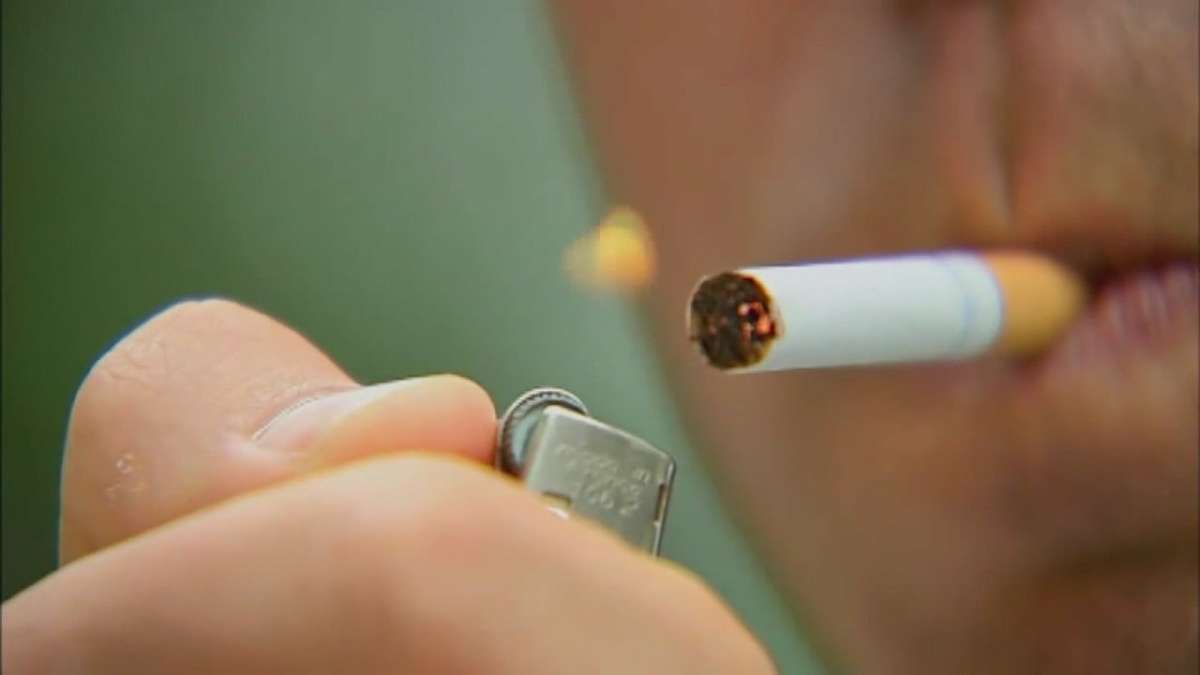
This move is seen by officials as a key step in protecting the public from the predatory market practices of the tobacco industry. All products containing tobacco flavors are included in this ban list, such as cigarettes, cigars, stick e-cigarettes, loose tobacco, rolling papers, and so on.


Individuals who violate the ban will be fined and may have their tobacco retail license revoked.


We welcome news tips, article submissions, interview requests, or comments on this piece.

Please contact us at info@2firsts.com, or reach out to Alan Zhao, CEO of 2Firsts, on LinkedIn


Notice

1.  This article is intended solely for professional research purposes related to industry, technology, and policy. Any references to brands or products are made purely for objective description and do not constitute any form of endorsement, recommendation, or promotion by 2Firsts.

2.  The use of nicotine-containing products — including, but not limited to, cigarettes, e-cigarettes, nicotine pouchand heated tobacco products — carries significant health risks. Users are responsible for complying with all applicable laws and regulations in their respective jurisdictions.

3.  This article is not intended to serve as the basis for any investment decisions or financial advice. 2Firsts assumes no direct or indirect liability for any inaccuracies or errors in the content.

4.  Access to this article is strictly prohibited for individuals below the legal age in their jurisdiction.


Copyright


This article is either an original work created by 2Firsts or a reproduction from third-party sources with proper attribution. All copyrights and usage rights belong to 2Firsts or the original content provider. Unauthorized reproduction, distribution, or any other form of unauthorized use by any individual or organization is strictly prohibited. Violators will be held legally accountable.

For copyright-related inquiries, please contact: info@2firsts.com


AI Assistance Disclaimer


This article may have been enhanced using AI tools to improve translation and editorial efficiency. However, due to technical limitations, inaccuracies may occur. Readers are encouraged to refer to the cited sources for the most accurate information.

We welcome any corrections or feedback. Please contact us at: info@2firsts.com

Exclusive | EU Confirms End of Tobacco Policy Expert Group, Explores New Cooperation Structures as TPD Revision Continues
2Firsts reporting shows that, as the European Union moves toward a future evaluation of its tobacco legislation, the Tobacco Policy Expert Group—long a key platform for coordination among Member States—formally concluded its mandate at the end of 2025. At the same time, the European Commission is exploring new cooperation structures to address the resulting institutional gap.
Jan.22
Rethinking Nicotine Harm Reduction: A Neuroscientist’s Perspective on Scientific Gaps and Future Directions — By Dr. Xin-an Liu
After France’s ANSES report on nicotine products and harm reduction, Dr. Xin-an Liu wrote to 2Firsts reassessing the field’s foundations. She argues the debate reveals gaps in evidence on long-term behavioral substitution, addiction pathways and neurobiological impacts, and calls for longitudinal research, integrated behavioral science and neuroimaging, clearer risk assessment and stronger transparency to ensure policy and next-generation product development rest on solid evidence.
Industry Insight
Feb.24
Russia’s St. Petersburg Sets Up Working Group to Consider Citywide Vape Sales Ban
Russia’s St. Petersburg legislature has formed a working group to explore tougher controls on vape trade and sales, including the option of a citywide sales ban. The group is set to convene on Jan. 26 with participation from lawmakers, civil society and law enforcement. The move comes as Russia’s federal authorities continue to debate legislation that could allow regions to impose their own restrictions on vapes.
Jan.26 by 2FIRSTS.ai
Philip Morris and BAT’s Nicoventures Win EPO Appeal to Revoke VMR Vape Patent
The EPO Technical Board of Appeal 3.2.02 (T 1319/24) revoked VMR Products LLC’s EP3613453 “VAPORIZER” patent after finding that a 2012 YouTube video of the Innokin iTaste VV (D3) disclosed the claimed electrical contact arrangement. Opponents Nicoventures Trading Ltd (BAT subsidiary) and Philip Morris Products S.A. prevailed.
BATPMI
Feb.17
TGA Sets 2026–2027 Compliance Principles, Flags Vaping Goods as a 2026 Priority
The Therapeutic Goods Administration (TGA) has released its Compliance Principles for 2026 and 2027.Among 12 therapeutic goods categories identified for priority compliance and enforcement activity, TGA includes vaping goods, and it plans a further review of these priorities in March 2026.
Jan.23 by 2FIRSTS.ai
Florida HB 389 seeks statewide ban on smoking and vaping in public places and indoor workplaces
Florida lawmakers have introduced HB 389, a proposal to expand smoke-free protections by banning smoking and vaping in public places and enclosed indoor workplaces across the state. The bill broadens statutory definitions and outlines limited exceptions and compliance rules, with an effective date of July 1, 2026 if enacted.
Feb.10 by 2FIRSTS.ai