Inclusion of E-cigarette Devices in 2024 Inflation Calculation

Regulations by 2FIRSTS.ai
Dec.13.2023
Inclusion of E-cigarette Devices in 2024 Inflation Calculation
Indonesia's Central Statistics Agency announces inclusion of e-cigarette devices in inflation calculation due to significant consumption.

According to an article published by the Indonesian media outlet REPUBLICA on December 12th, the Central Bureau of Statistics in Indonesia (BPS) announced that e-cigarette devices will be included in the inflation calculation for the year 2024. This decision has been made due to the significant proportion of the population that is consuming these products.


Pudji Ismartini, the Deputy Director of Distribution Statistics at the Indonesian Central Statistics Agency (BPS), said, "Changes in societal consumption patterns have resulted in the inclusion of new goods in the calculation of inflation.


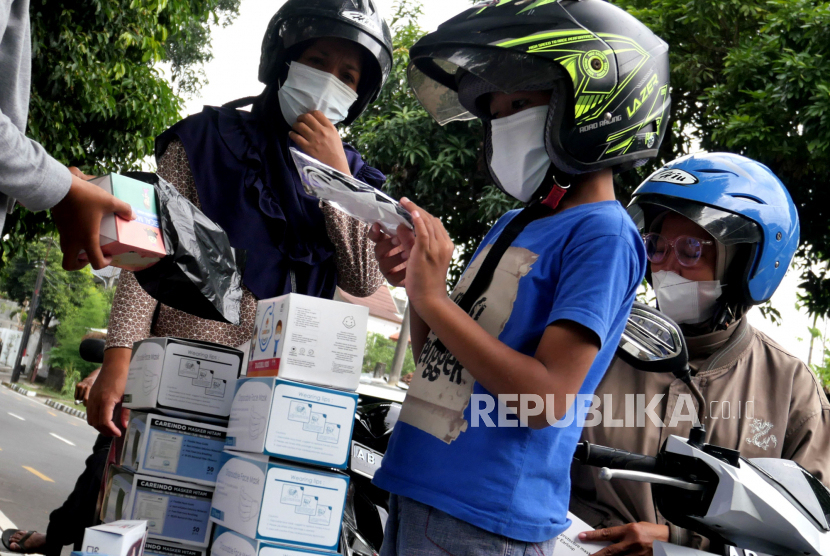
According to the baseline year set by the 2022 cost of living survey, the city of Ismatini has added a list of 89 new products, including masks, e-cigarette devices, and e-cigarette liquid.


We welcome news tips, article submissions, interview requests, or comments on this piece.

Please contact us at info@2firsts.com, or reach out to Alan Zhao, CEO of 2Firsts, on LinkedIn


Notice

1.  This article is intended solely for professional research purposes related to industry, technology, and policy. Any references to brands or products are made purely for objective description and do not constitute any form of endorsement, recommendation, or promotion by 2Firsts.

2.  The use of nicotine-containing products — including, but not limited to, cigarettes, e-cigarettes, nicotine pouchand heated tobacco products — carries significant health risks. Users are responsible for complying with all applicable laws and regulations in their respective jurisdictions.

3.  This article is not intended to serve as the basis for any investment decisions or financial advice. 2Firsts assumes no direct or indirect liability for any inaccuracies or errors in the content.

4.  Access to this article is strictly prohibited for individuals below the legal age in their jurisdiction.


Copyright


This article is either an original work created by 2Firsts or a reproduction from third-party sources with proper attribution. All copyrights and usage rights belong to 2Firsts or the original content provider. Unauthorized reproduction, distribution, or any other form of unauthorized use by any individual or organization is strictly prohibited. Violators will be held legally accountable.

For copyright-related inquiries, please contact: info@2firsts.com


AI Assistance Disclaimer


This article may have been enhanced using AI tools to improve translation and editorial efficiency. However, due to technical limitations, inaccuracies may occur. Readers are encouraged to refer to the cited sources for the most accurate information.

We welcome any corrections or feedback. Please contact us at: info@2firsts.com

Harm Reduction Experts Warn: FCTC COP11 Policies Risk Marginalizing the Global South
Two global tobacco harm reduction experts, in their submission to 2Firsts, argue that several COP11 policy proposals driven by high-income countries do not align with the capacities and conditions of low- and middle-income countries. They highlight research and funding gaps and call for a more equitable global support mechanism.
Nov.19
Bangladesh High Court Questions Legality of BEZA’s Approval for Philip Morris Nicotine Pouch Factory
The High Court in Bangladesh has asked government bodies to explain why the approval granted to Philip Morris to establish a nicotine pouch factory should not be deemed illegal. Petitioners argue the decision contradicts existing policies and a 2016 Appellate Division ruling that restricts new tobacco-related enterprises. Authorities have ten days to respond.
Nov.20 by 2FIRSTS.ai
Alan Zhao: What Altria’s on! PLUS Authorization Really Signals About FDA PMTA Enforcement
In this in-depth commentary for 2Firsts, Alan Zhao examines what Altria’s on! PLUS authorization really signals about FDA PMTA enforcement. Beyond the headline approval, FDA’s language, process design and product choices offer rare insight into how nicotine pouch regulation is taking shape—and what it means for industry compliance, in one of the earliest expert reads of the decision.
Regulations
Dec.20 by 2Firsts Perspectives
South Korea to Classify Synthetic Nicotine E-Cigarettes as Tobacco from April 2026
South Korea will implement amendments to its Tobacco Business Act on April 24, 2026, officially classifying synthetic nicotine liquid e-cigarettes as tobacco. This marks the first revision of the legal definition of tobacco since 1988. Once in effect, synthetic nicotine e-cigarettes will be subject to existing tobacco regulations, including health warnings, advertising restrictions, smoke-free area enforcement, and youth protection measures.
Dec.29 by 2FIRSTS.ai
Products | VAPORESSO Unveils Two New 10 mL Pod Devices for UK and US E-Commerce Channels
VAPORESSO has recently launched two new open-system vaping devices. The XROS 5 Nano is the first to roll out across UK and US online channels, featuring 30W output and a touch-screen design, while the ECO NANO Plus has gone live on the brand’s official website with a 10 mL high-capacity pod and a 1400 mAh battery.
Nov.26 by 2FIRSTS.ai
VCU Tests Nearly 1,300 School-Confiscated Vapes, Finding Mislabeling, Mixed Cannabinoids and Contamination
New research from Virginia Commonwealth University (VCU) found microbial contamination — including coliform, a bacteria indicating fecal exposure — in some vaping devices confiscated from U.S. schools. However, researchers stressed that newly purchased, unopened vapes showed no such contamination. The findings point to risks linked to unregulated products and improper storage conditions, reinforcing the importance of regulated supply chains and product authentication.
News
Dec.01