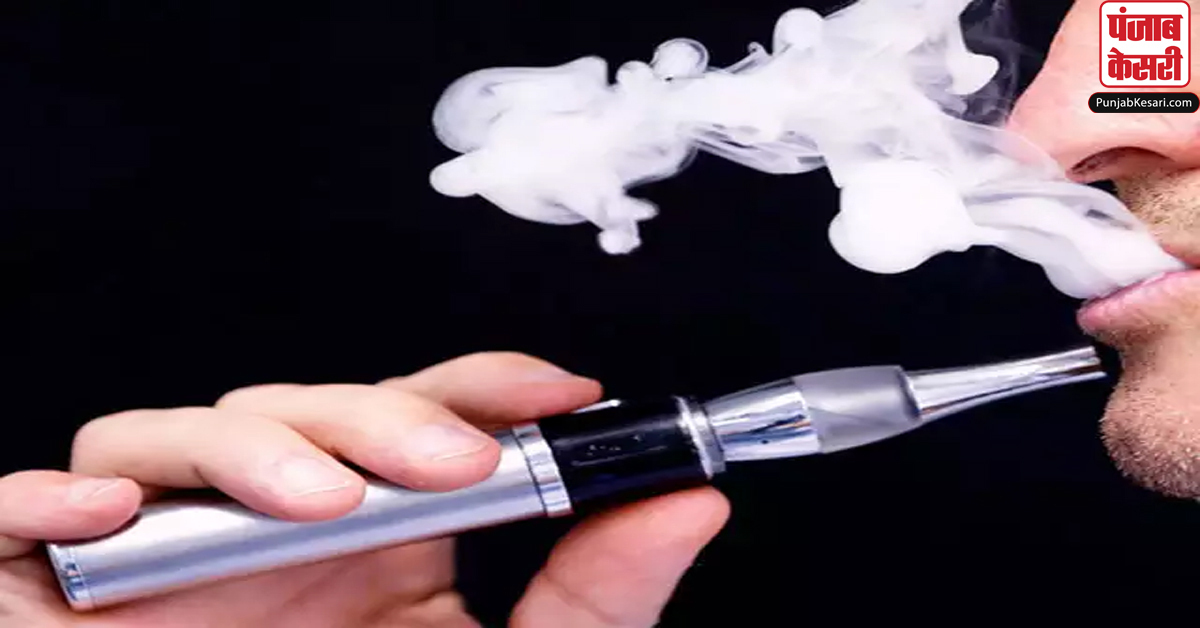
India Imposes Ban on E-cigarette in Educational Institutions for Public Health

Regulations by 2FIRSTS.ai
May.10.2024
India Imposes Ban on E-cigarette in Educational Institutions for Public Health
NBSE in India's Nagaland bans e-cigarettes in schools to protect public health, enforcing law and educating students and teachers.

According to a report from Eastern Mirror on May 9th, following the instructions of the Director of the Department of Health and Family Welfare, the Nagaland Board of School Education (NBSE) in India has banned e-cigarettes and similar devices in order to protect public health interests in accordance with the Prohibition of e-Cigarette (Production, Manufacturing, Import, Export, Transport, Sale, Distribution, Storage and Advertising) Act of 2019.


The committee stated in an official announcement that the entry of e-cigarettes or tobacco products into educational institutions is strictly prohibited. It called for education and awareness among students and teachers regarding the relevant laws.


The committee also recommended implementing special measures by conducting random checks on students to ensure the prohibition of using and selling e-cigarettes in schools.


We welcome news tips, article submissions, interview requests, or comments on this piece.

Please contact us at info@2firsts.com, or reach out to Alan Zhao, CEO of 2Firsts, on LinkedIn


Notice

1.  This article is intended solely for professional research purposes related to industry, technology, and policy. Any references to brands or products are made purely for objective description and do not constitute any form of endorsement, recommendation, or promotion by 2Firsts.

2.  The use of nicotine-containing products — including, but not limited to, cigarettes, e-cigarettes, nicotine pouchand heated tobacco products — carries significant health risks. Users are responsible for complying with all applicable laws and regulations in their respective jurisdictions.

3.  This article is not intended to serve as the basis for any investment decisions or financial advice. 2Firsts assumes no direct or indirect liability for any inaccuracies or errors in the content.

4.  Access to this article is strictly prohibited for individuals below the legal age in their jurisdiction.


Copyright


This article is either an original work created by 2Firsts or a reproduction from third-party sources with proper attribution. All copyrights and usage rights belong to 2Firsts or the original content provider. Unauthorized reproduction, distribution, or any other form of unauthorized use by any individual or organization is strictly prohibited. Violators will be held legally accountable.

For copyright-related inquiries, please contact: info@2firsts.com


AI Assistance Disclaimer


This article may have been enhanced using AI tools to improve translation and editorial efficiency. However, due to technical limitations, inaccuracies may occur. Readers are encouraged to refer to the cited sources for the most accurate information.

We welcome any corrections or feedback. Please contact us at: info@2firsts.com

Alabama House Health Committee advances SB9 to restrict vaping in public spaces under Clean Indoor Air Act
The Alabama House Health Committee passed Senate Bill 9 on Wednesday to restrict vaping in public areas under the state’s Clean Indoor Air Act. Introduced by Sen. Gerald Allen, SB9 would add vapes—defined as “electronic nicotine delivery systems”—to the forms of “smoking” currently prohibited in enclosed public places.
Feb.13 by 2FIRSTS.ai
Coalition pushes back on Hochul’s proposed 75% wholesale tax on alternative nicotine products
A coalition of business owners and former law enforcement officers protested Gov. Kathy Hochul’s proposed 75% wholesale tax on alternative nicotine products, saying it would fuel organized crime and burden low-income New Yorkers, while supporters said it would curb addiction and help fund hospitals.
Feb.28 by 2FIRSTS.ai
Ireland Vape Retailers’ Group RVI Calls for Tax Stamps to Strengthen Enforcement of Vape Products Tax
Responsible Vaping Ireland (RVI), an Irish vape retailers’ group, has released a policy paper urging Ireland to swiftly introduce Revenue-issued tax stamps on vaping products to strengthen enforcement of the E-Liquid Products Tax (EPT) and to tackle tax evasion and the illicit market. Provisional Department of Finance figures show €1.3 million collected in November and December 2025; at that pace, annualised receipts would be €7.8 million, below the government’s projected €17 million.
Feb.26 by 2FIRSTS.ai
ELFBAR Resolves Global Dispute Over "ELF" Trademark with VPR Brands LP
ELFBAR announces global settlement with VPR Brands LP over "ELF" trademark dispute, covering major markets like US, Canada, UK.
Apr.01 by 2FIRSTS.ai
Michigan Governor budget to seek major tax hikes on tobacco, vaping and gaming to address Medicaid gap
Governor Gretchen Whitmer’s proposed fiscal year 2027 budget includes significant tax hikes on tobacco and gaming to address a projected $1.8 billion shortfall in Michigan’s Medicaid funding, the report said. The plan calls for raising the per-pack cigarette tax from $2 to $3 and increasing the wholesale tax on other tobacco products from 32% to 57%.
Feb.12 by 2FIRSTS.ai
The Volume Illusion: Measuring the Future of Nicotine with the Tools of the Past
As next-generation nicotine products become economically central rather than marginal, traditional volume-based metrics are increasingly unable to explain consumption, risk, and value. Units designed for a cigarette-based economy struggle to describe systems defined by delivery speed, pharmacokinetics, and adaptive user behavior. Drawing on financial reporting, regulation, and nicotine science, a fundamental question: can the future of nicotine still be measured using the tools of its past?
Feb.09 by Alan Zhao | 2Firsts Perspectives