Indonesian Social Media Celebrity Suspected in Drug Case

Regulations by 2FIRSTS.ai
Apr.24.2024
Indonesian Social Media Celebrity Suspected in Drug Case
Indonesian influencer Chandrika Chika is a suspect in a drug case for using marijuana-flavored e-cigarettes, police investigate.

According to a report by the Indonesian Jakarta media Viva on April 23, Indonesian internet celebrity Chandrika Chika has officially become a suspect in a drug case for using an e-cigarette with a marijuana flavor, prompting an investigation by the police.


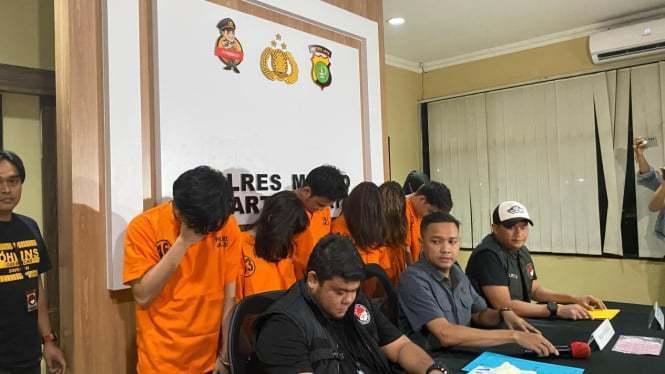
Deputy Chief of the Drug Unit of the South Jakarta Police Department Rezka Anugras revealed that the department has found evidence including e-cigarettes. Police officials stated that the e-cigarettes confiscated contained marijuana and THC substances. In a hotel located in the Setiabudi district of Kuningan, police successfully apprehended six suspects including Chandrika Chika.


Deputy Director of the Drug Unit at the South Jakarta Police Precinct, Rezka Anugras, stated, "The evidence we found on the scene was an e-cigarette or a container filled with e-liquid containing marijuana or THC substances." He went on to say, "Firstly, we have tested the evidence we seized and the e-liquid is being sent to the laboratory for analysis, which has shown it contains marijuana."


The public security department has officially listed Chandrika Chika and five others as suspects in a drug case. These suspects are between the ages of 22 and 27, including the internet celebrity Chandrika Chika. Rezka has listed the initials of the suspects involved in the drug case as AT (24), MJ (22), AMO (22), BB (25) and AJ (27). All six individuals are suspected of using marijuana e-cigarettes in a hotel. Currently, the e-cigarettes involved in the case have been sent to the laboratory for testing, and preliminary results show that they contain marijuana elements.


We welcome news tips, article submissions, interview requests, or comments on this piece.

Please contact us at info@2firsts.com, or reach out to Alan Zhao, CEO of 2Firsts, on LinkedIn


Notice

1.  This article is intended solely for professional research purposes related to industry, technology, and policy. Any references to brands or products are made purely for objective description and do not constitute any form of endorsement, recommendation, or promotion by 2Firsts.

2.  The use of nicotine-containing products — including, but not limited to, cigarettes, e-cigarettes, nicotine pouchand heated tobacco products — carries significant health risks. Users are responsible for complying with all applicable laws and regulations in their respective jurisdictions.

3.  This article is not intended to serve as the basis for any investment decisions or financial advice. 2Firsts assumes no direct or indirect liability for any inaccuracies or errors in the content.

4.  Access to this article is strictly prohibited for individuals below the legal age in their jurisdiction.


Copyright


This article is either an original work created by 2Firsts or a reproduction from third-party sources with proper attribution. All copyrights and usage rights belong to 2Firsts or the original content provider. Unauthorized reproduction, distribution, or any other form of unauthorized use by any individual or organization is strictly prohibited. Violators will be held legally accountable.

For copyright-related inquiries, please contact: info@2firsts.com


AI Assistance Disclaimer


This article may have been enhanced using AI tools to improve translation and editorial efficiency. However, due to technical limitations, inaccuracies may occur. Readers are encouraged to refer to the cited sources for the most accurate information.

We welcome any corrections or feedback. Please contact us at: info@2firsts.com

U.S. Customs Plan to Require Foreign Export Declarations Could Deal ‘Devastating’ Blow to China’s Vape Exports, Logistics gl Expert Says
A U.S. Customs and Border Protection proposal to collect foreign export declarations and other overseas customs documents could expose discrepancies in the value, classification and description of China-made vape shipments entering the United States. A veteran Chinese logistics professional told 2Firsts that the measure, if implemented, could undermine the all-inclusive shipping model used by some unauthorized vape exporters and push parts of the trade toward costlier underground channels. The risk extends beyond higher duties: accurately declared products may also be more readily identified as unauthorized e-cigarettes subject to FDA enforcement.
Special Report
Sep.07
FDA Grants PMTA Authorization to 11 ZYN ULTRA Nicotine Pouches, Bringing Total Authorized Pouches to 43
The U.S. Food and Drug Administration authorized 11 ZYN ULTRA nicotine pouch products made by Swedish Match USA through the premarket tobacco product application pathway on August 21, 2026. Ten of the authorized products have a labeled nicotine content of 9 mg, while ZYN ULTRA Smooth was authorized at 11 mg. The reviews were conducted through FDA’s nicotine pouch PMTA pilot program. FDA has now authorized 43 nicotine pouch products, including 23 through the pilot.
Aug.24
WIRED Investigation: Chinese-Made Vapes Turn to 6-Methyl-Nicotine and Other Analogs, Challenging U.S. Regulation
U.S. technology and investigative publication WIRED has examined how nicotine analogs are emerging as a new challenge for the country’s vape regulatory framework. The article argues that after the U.S. expanded federal oversight of nicotine products in 2022, some manufacturers began using nicotine-like compounds such as 6-methyl-nicotine that may fall outside existing definitions. Researchers cited by WIRED said some nicotine analogs could be more potent than traditional nicotine, although human health impacts remain unclear. U.S. policymakers are considering broader definitions of nicotine to bring these compounds under federal oversight.
Jul.27
China’s Shanghai Tobacco Group Launches CNY 10.98 Million (Approximately US$1.53 Million) Procurement for Heated Tobacco Production Utility Equipment
Shanghai Tobacco Group Co., Ltd., a tobacco manufacturing company under China National Tobacco Corporation (CNTC), has launched a public tender for heated tobacco products (HTPs) production utility equipment at its Shanghai Cigarette Factory. The project is valued at CNY 10.98 million and covers six combined air-conditioning units, electrical cabinets and control systems for production facilities. The procurement includes equipment design, supply, installation, commissioning and related training services.
Aug.07
UK PM Andy Burnham Reshapes Vape Retail Rules as Licensing Could Raise Barriers for New Shops
UK Prime Minister Andy Burnham is pushing a high street reform agenda that could give local authorities greater powers over commercial activity, including vape retail. The reforms could involve expanded planning powers and a potential vape retail licensing system, allowing councils to play a larger role in store locations and market access. The measures are part of the UK’s broader shift toward tighter vape regulation, although no nationwide vape retail restrictions have yet been implemented.
Aug.11
California Lawmakers Pass Disposable Nicotine Vape Ban, With Sales Prohibition Set for 2028
According to CBS Los Angeles on August 27, 2026, California lawmakers have passed Assembly Bill 762, which would phase out disposable, battery-embedded nicotine vapes in the state. If signed by Governor Gavin Newsom, manufacturing and importation of the covered products would be prohibited beginning January 1, 2027, followed by a sales ban on January 1, 2028. Driven primarily by concerns over electronic waste, lithium-battery fires and environmental pollution, the legislation would further shift California’s legal vape market toward rechargeable, refillable or replaceable-pod devices.
Aug.28