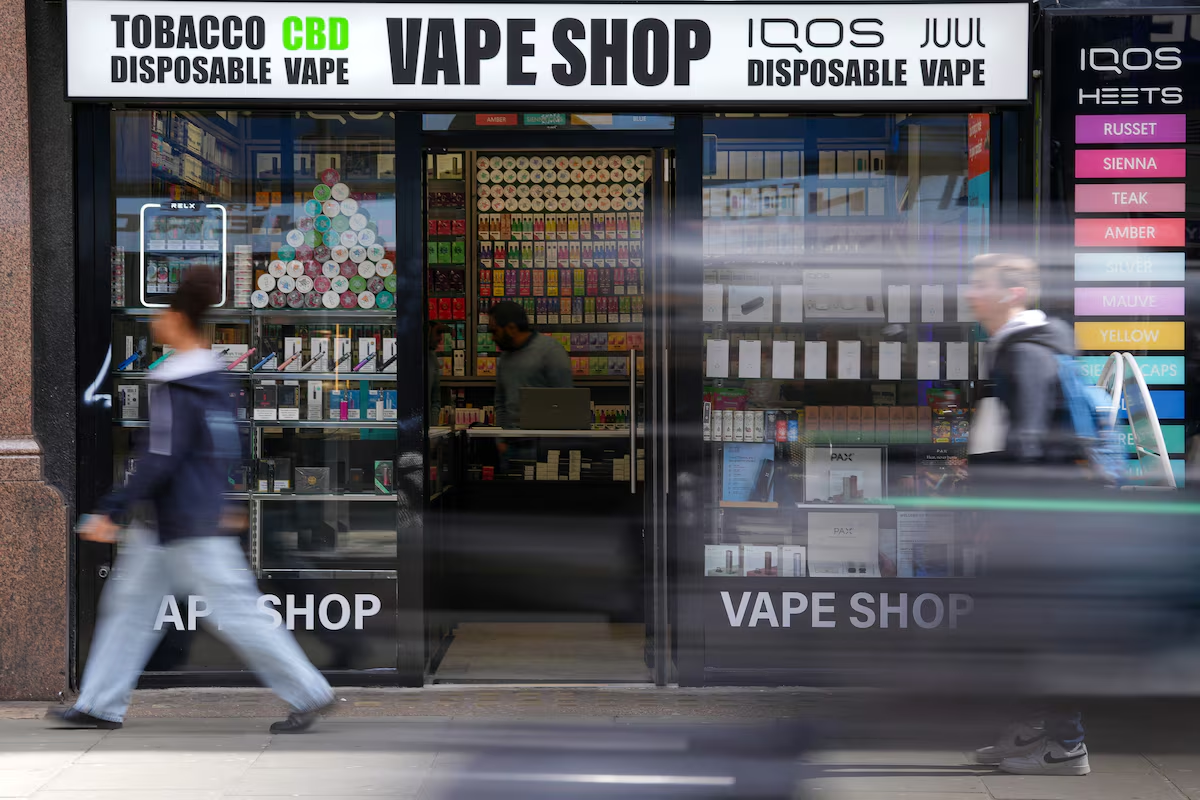
Article by Yuna Hou; edited by Ellesmere Zhu - On March 17th, UK media betterRetailing published a BAT (British American Tobacco) test report, stating that nearly all major disposable e-cigarette brands in the UK, including Elfbar, Lost Mary, Found Mary, IVG Bar, Klik Klak, SKE Crystal, Smok Mbar Pro, and Solo disposable vapes have overfilled e-liquids. BAT sent the test report to distributors, dealers, and regulators, urging them to ensure that non-compliant products are not distributed.
In response to the incident, 2FIRSTS interviewed Tang Shunliang, a lawyer at ZHONGLUN W&D Law Firm in Beijing.
Tang explained that large tobacco companies' current competitive strategy is to rapidly expand their market share in the next-generation product (NGP) market. When they can't secure the market through patents, the most effective method is to acquire small and medium-sized companies' distributors to reach the end-users. It's not rare for such companies to resort to unfriendly tactics to weaken potential acquisition targets and seize market share when acquisitions fail.
According to Tang, BAT's intent to acquire ELFBAR is mainly due to the market competition between BAT and PMI in the NGP sector.
PMI's heated tobacco products have captured most of the market using patents, and they've acquired Swedish Match at a high cost. Meanwhile, Altria is acquiring NJOY. Therefore, BAT also wants to expand its market share in the NGP sector, and acquiring ELFBAR, a leading competitor in disposable e-cigarettes, is a logical move.
Tang believes that if BAT's acquisition had succeeded, it would have gained access to a wide range of dealer resources and customers. ELFBAR might gradually be replaced with another name, such as a BAT brand. BAT likely sees ELFBAR's channel value in the UK and US markets, allowing them to compete with PMI in the vapor e-cigarette market and make up for the gap between heated tobacco products and ILUMA.
Tang emphasized that product safety indicators should be the key focus for ELFBAR and similar brands in the future.
He offered several suggestions for ELFBAR and other companies to clarify the situation.
Firstly, BAT cannot play the role of "law enforcement police" in the e-cigarette industry. As a competitor, purchasing competitors' products for testing and publicizing the results will inevitably raise suspicions about their motives and the independence of the tests.
For example, although BAT conducted commissioned tests, it is unclear how many ELFBAR products they purchased, the sample size in relation to millions, and the accuracy and applicable standards of the tests. It's hard to imagine that such test results would be accepted by law enforcement without third-party witness involvement from product purchase to operating test equipment. If a lawsuit were to occur, BAT's own test results would not serve as evidence.
Tang mentioned that BAT used "moral weapons" when suing PMI for invalidating heated tobacco product patents (CA-2021-000302) in the UK. Initially, they attacked PMI for applying for four patents to entrap more competitors, including Glo. The purpose of applying for patents was to accuse more competitors of infringement. This case was effective, and BAT eventually won.
Also raed:
BAT False Advertising Under Italian Regulator Investigation; Amazon No Related Products
*This article is an original article of 2FIRSTS Technology Co., Ltd. The copyright and license rights belong to the company. Any entity or individual shall make link and credit 2FIRSTS when taking actions to copy, reprint or distribute the original article. The company retains the right to pursue its legal responsibility.