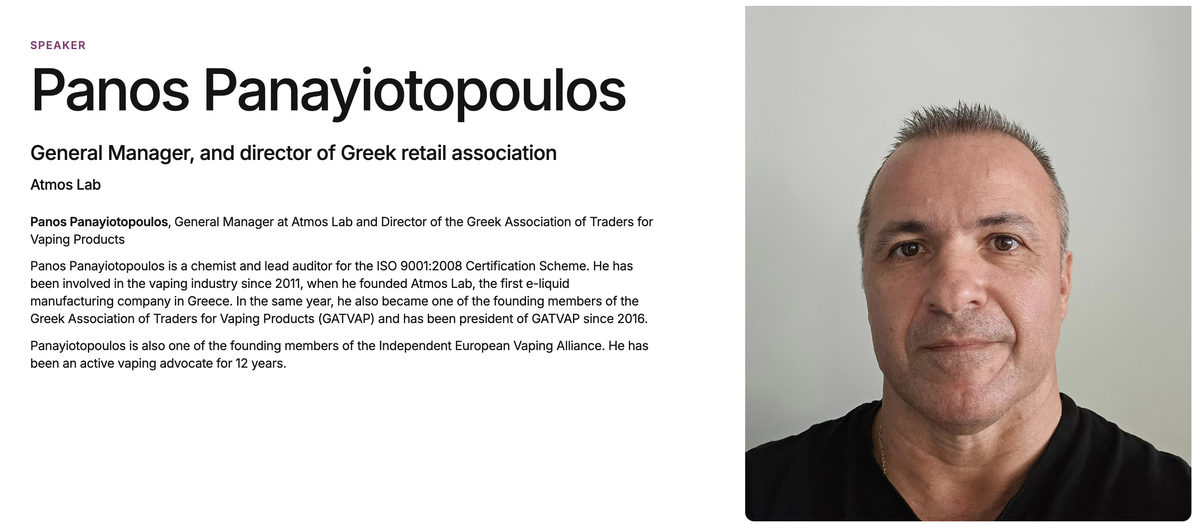
The 2024 Global Tobacco and Nicotine Forum (GTNF) was held in Athens, Greece from September 24th to 26th. During this edition of GTNF, 2Firsts engaged in discussions with industry professionals from the e-cigarette sector in Greece. Panos Panayiotopoulos, Chairman of the Greek Association of Traders for Vaping Products (GATVAP), shared insights with 2Firsts about the recent market trends in Greece, noting that the e-cigarette industry is experiencing rapid growth and increased regulation.
More than 80% of market dominated by open-systems, Chinese brands the most popular
Greece is one of the few European countries that does not tax tobacco products without nicotine. As a member of the EU, Greece's e-cigarette regulations align with the EU's Tobacco Products Directive (TPD). In November 2023, the Greek Ministry of Economy and Finance adjusted taxes on non-tobacco products containing nicotine, including "non-combustible electronic products" and "nicotine pouches".
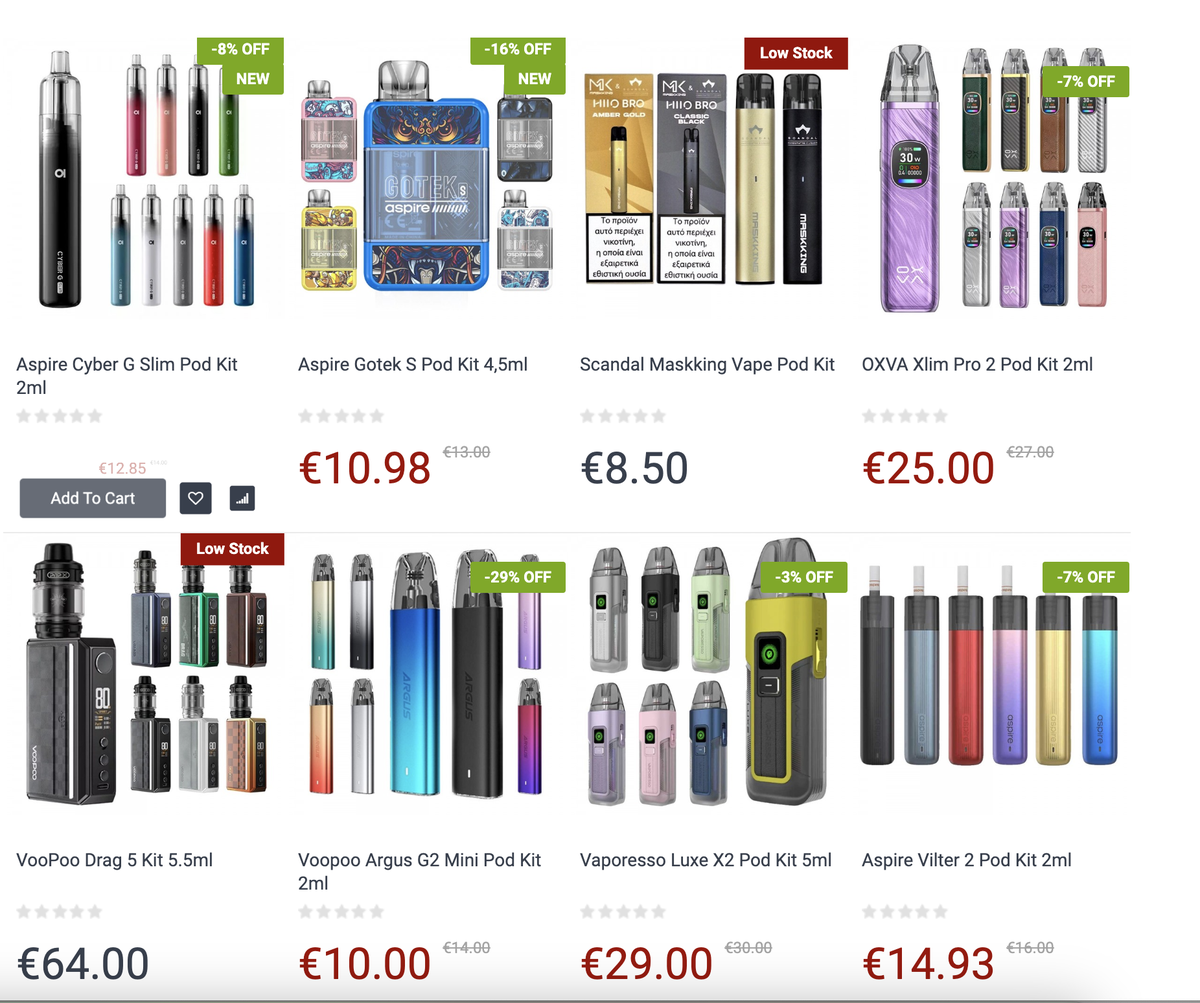
Panos told 2Firsts that over 80% of the e-cigarettes in the Greek market are open system, as Greek consumers tend to prefer the freedom to choose flavors and open systems are more cost-effective. The economy is a significant influencing factor, with Greece's GDP per capita estimated to be around 23966 euros in 2023. In terms of GDP per capita, Greece is below the EU average and ranks in the lower half among EU countries.
When asked about which brands of e-cigarettes are most popular, Panos stated that the most popular brands on the market are mainly Chinese brands such as Innokin and Aspire.
In addition, he also mentioned that Greek importers tend to purchase e-cigarette products from within EU member countries rather than importing them from non-EU countries like the UK or the US, in order to streamline the process of getting the products into the Greek market.
The market access fee for e-cigarette products has been set at 50 euros per SKU
According to Panos, e-liquids entering Greece must be registered with the European Poison Control Center. It is required that "each e-liquid formula must be unique" and have a 16-digit code to enter the database.
According to a search on the EU official website, the European Union advocates for the establishment of poison control centers in various countries in Europe. These institutions are responsible for providing emergency assistance, diagnosis, and treatment advice related to poisoning incidents. They typically receive inquiries from the public and medical professionals, especially in cases involving exposure to toxins, chemicals, drug overdoses, and animal or plant toxins.
Greece requires e-cigarette products to be registered and pay a disposable fee of 50 euros per SKU, also known as a "market access fee," before being sold on the market.
TPD is a disaster, but Greece has a huge demand for tobacco alternatives.
Panos stated that Greece, despite being a relatively small country, has 3.5 million smokers, leading to a significant demand in the market for cost-effective and efficient alternatives to traditional cigarettes, such as heated tobacco products and e-cigarettes.
In recent years, several international tobacco companies have entered the local market. Philip Morris International (PMI) previously stated that their investment plan in the Aspropyrgos factory in Greece since 2017 has significantly increased the production of IQOS products.
In November 2023, Japan Tobacco International (JTI) announced plans to invest approximately 3 billion euros (around 32 billion US dollars) in Greece over the next three years to expand their investment in heated tobacco products.
Panos believes that despite facing obstacles from the government, the market for aerosol tobacco products will continue to grow. They have witnessed the birth of TPD-2 and anticipate the arrival of TPD-3. Despite considering TPD to be a "disaster," the association believes that the market will continue to expand because millions of smokers need a safer alternative.
Meanwhile, Panos suggests that companies or brands interested in entering the e-cigarette market in Greece should familiarize themselves with local regulatory policies, adhere to market rules, and offer high-quality products.
Finally, Panos stated that GATVA's main goal is to serve as an official representative to advocate for the rights of vaping products to government agencies, the EU, and regulatory bodies. Its mission is to ensure that the Greek people have unhindered access to vaping products in order to facilitate the transition from traditional tobacco to alternative products.
We welcome news tips, article submissions, interview requests, or comments on this piece.
Please contact us at info@2firsts.com, or reach out to Alan Zhao, CEO of 2Firsts, on LinkedIn
Notice
1. This article is intended solely for professional research purposes related to industry, technology, and policy. Any references to brands or products are made purely for objective description and do not constitute any form of endorsement, recommendation, or promotion by 2Firsts.
2. The use of nicotine-containing products — including, but not limited to, cigarettes, e-cigarettes, nicotine pouchand heated tobacco products — carries significant health risks. Users are responsible for complying with all applicable laws and regulations in their respective jurisdictions.
3. This article is not intended to serve as the basis for any investment decisions or financial advice. 2Firsts assumes no direct or indirect liability for any inaccuracies or errors in the content.
4. Access to this article is strictly prohibited for individuals below the legal age in their jurisdiction.
Copyright
This article is either an original work created by 2Firsts or a reproduction from third-party sources with proper attribution. All copyrights and usage rights belong to 2Firsts or the original content provider. Unauthorized reproduction, distribution, or any other form of unauthorized use by any individual or organization is strictly prohibited. Violators will be held legally accountable.
For copyright-related inquiries, please contact: info@2firsts.com
AI Assistance Disclaimer
This article may have been enhanced using AI tools to improve translation and editorial efficiency. However, due to technical limitations, inaccuracies may occur. Readers are encouraged to refer to the cited sources for the most accurate information.
We welcome any corrections or feedback. Please contact us at: info@2firsts.com