A heated tobacco device invention patent from China Tobacco Hunan IC has been granted authorization.

Nov.05.2024
A heated tobacco device invention patent from China Tobacco Hunan IC has been granted authorization.
Recently, the invention patent titled "A Low-Temperature Roasting Smoking Device Heating Component and Low-Temperature Roasting Smoking Device" (Patent No. ZL 202110284686.1), filed by China Tobacco Hunan IC was granted authorization. This patent addresses the limitations of traditional heated tobacco devices by using an insulating bracket to separate each heating element independently, preventing heat conduction.

On October 18, 2024, a patent for an invention titled "Heating component for low-temperature baking tobacco products and low-temperature baking tobacco products" applied by China Tobacco Hunan IC was granted authorization (patent number ZL202110284686.1).
 

A heated tobacco device invention patent from China Tobacco Hunan IC has been granted authorization.
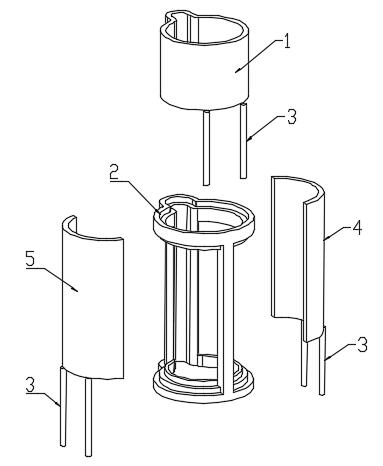
Heating component structure diagram | Image source: Hunan Zhongyan


The heating components of heated tobacco devices have a significant impact on the sensory quality of smoking. Common devices on the market typically use an integrated heating element with multiple heating zones. However, heat is conducted between these zones, resulting in minimal temperature differences across regions. This often leads to an uneven release of nicotine and flavor, which can start strong and taper off, affecting the consistency and quality of the smoking experience.


This invention discloses a low-temperature roasting heating component and device. In this design, each heating element is separated by an insulating bracket, preventing contact and heat conduction between elements. This ensures the independence of each heating element in roasting the tobacco stick, promoting a more uniform release of nicotine and flavor throughout the smoking process and significantly enhancing the overall experience.


This article was submitted to 2Firsts by CHINA TOBACCO HUNAN INDUSTRIAL CO., LTD.


2Firsts welcomes submissions from companies, research institutions, associations, and professionals worldwide.Submission email: info@2firsts.com.


We welcome news tips, article submissions, interview requests, or comments on this piece.

Please contact us at info@2firsts.com, or reach out to Alan Zhao, CEO of 2Firsts, on LinkedIn


Notice

1.  This article is intended solely for professional research purposes related to industry, technology, and policy. Any references to brands or products are made purely for objective description and do not constitute any form of endorsement, recommendation, or promotion by 2Firsts.

2.  The use of nicotine-containing products — including, but not limited to, cigarettes, e-cigarettes, nicotine pouchand heated tobacco products — carries significant health risks. Users are responsible for complying with all applicable laws and regulations in their respective jurisdictions.

3.  This article is not intended to serve as the basis for any investment decisions or financial advice. 2Firsts assumes no direct or indirect liability for any inaccuracies or errors in the content.

4.  Access to this article is strictly prohibited for individuals below the legal age in their jurisdiction.


Copyright


This article is either an original work created by 2Firsts or a reproduction from third-party sources with proper attribution. All copyrights and usage rights belong to 2Firsts or the original content provider. Unauthorized reproduction, distribution, or any other form of unauthorized use by any individual or organization is strictly prohibited. Violators will be held legally accountable.

For copyright-related inquiries, please contact: info@2firsts.com


AI Assistance Disclaimer


This article may have been enhanced using AI tools to improve translation and editorial efficiency. However, due to technical limitations, inaccuracies may occur. Readers are encouraged to refer to the cited sources for the most accurate information.

We welcome any corrections or feedback. Please contact us at: info@2firsts.com

Brad Rodu Says Declining Cigarette Smoking Is Key to Tobacco Harm Reduction | 2Firsts Interview
After more than 30 years researching tobacco harm reduction, University of Louisville professor Brad Rodu says opposition to smoke-free alternatives still surprises him. In an exclusive 2Firsts interview in Manila, he argued that declining smoking rates represent progress even if nicotine use rises, discussed nicotine and cancer, and examined Sweden's snus experience and youth vaping. Rodu welcomed recent FDA decisions but criticized slow reviews and poor risk communication. He called a change in the WHO's stance potentially significant, while doubting it would happen soon.
Nov.20
South Korea's Tobacco Plan Excludes 6-Methyl Nicotine as Customs Tightens Import Controls and Analog Liquid Imports Fall 83%
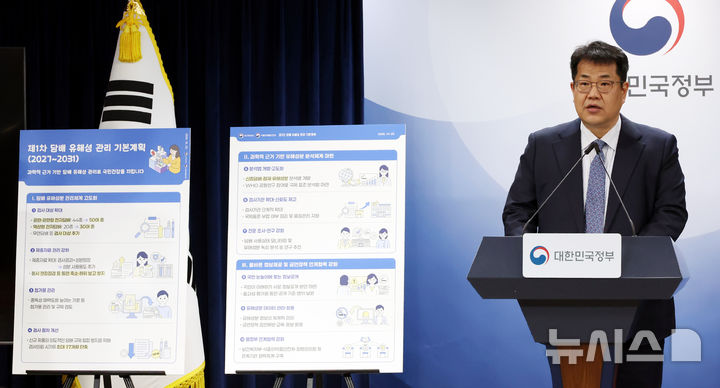
South Korea's government unveiled its first Tobacco Harm Management Basic Plan for 2027–2031 on October 29, 2026, proposing broader testing of vaping and heated tobacco products while excluding nicotine analogs such as 6-methyl nicotine. Synthetic nicotine came under tobacco regulation on April 24, and a June investigation found 6-methyl nicotine in 12 liquid inhalation products marketed as nicotine-free. Customs data released in September showed that imports of nicotine analog solutions fell 83.3%, from 12 metric tons in January–April to 2 metric tons in May–August. By September 20, imports had reached approximately 15 metric tons for the year, with 99.99% originating from China. Customs authorities have tightened pre-clearance testing and supply-chain documentation requirements, while the MFDS expects to complete its assessment of nicotine analog hazards by the end of 2026.
Regulations
Nov.04
Malaysia's Poisons Board Backs New Vape Nicotine Exemption After Unanimously Opposing 2023 Proposal
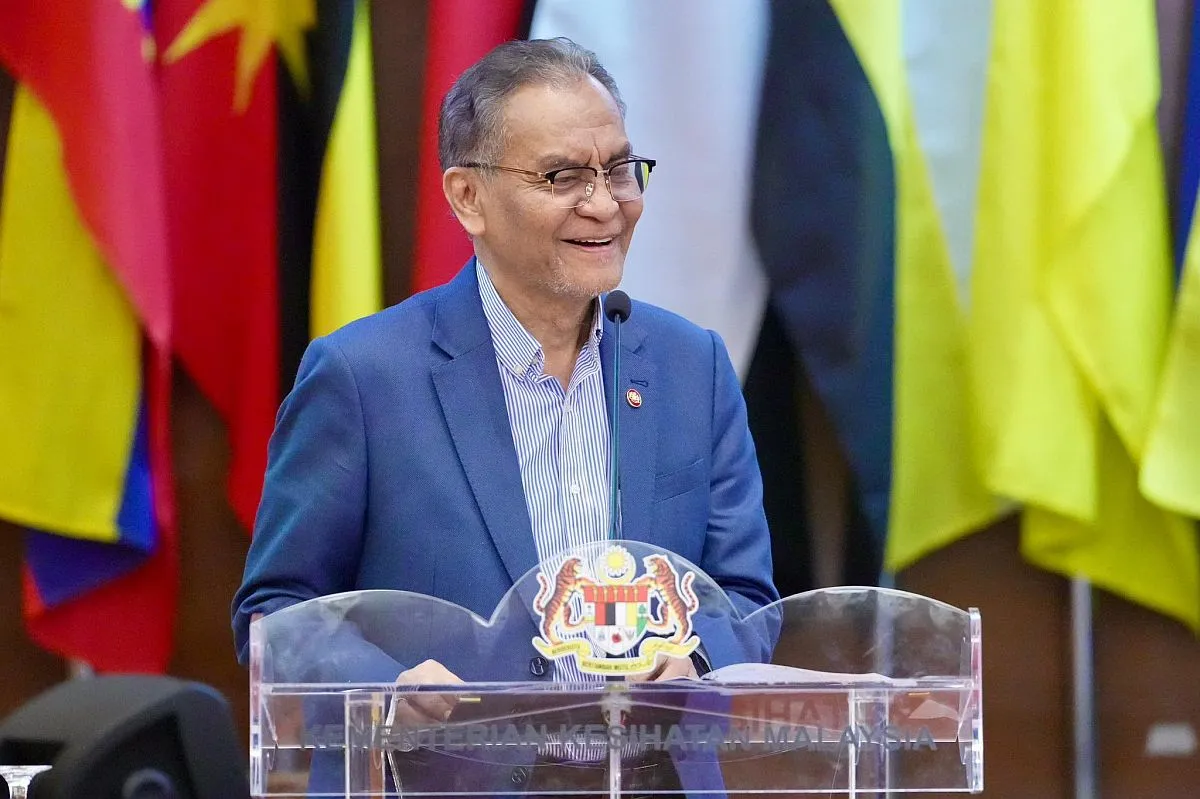
Malaysia's Poisons Board has endorsed Health Minister Dzulkefly Ahmad's proposal to exempt liquid nicotine used in vaping products from the Poisons List, according to a November 2, 2026, report by CodeBlue. The Board unanimously opposed a similar proposal in 2023, but the government proceeded with the exemption. The Kuala Lumpur High Court invalidated the 2023 decision in May 2026, and the government withdrew its appeal in August. No new ministerial order has been published. The development raises questions about the interaction between Malaysia's two regulatory frameworks and the treatment of RM354.51 million in excise duties collected on e-cigarette and vape products between May 2023 and June 11, 2026.
Regulations
Nov.03
Italy Plans Overhaul of €1.8 Billion Vape Market With Tighter Distribution, Online Sales and Pricing Rules, Alongside Nicotine Pouch Reforms; BAT Calls for Cigarette-Style Controls
British American Tobacco's Italian subsidiary has called for cigarette-style tax warehouses, distribution controls and nationwide uniform retail pricing to be extended to next-generation products. Italy's proposed 2027 budget would overhaul the distribution of e-liquids, nicotine pouches and non-tobacco solid inhalation products. The measures include requiring foreign suppliers to operate through authorized domestic warehouses, abolishing certain fiscal representative arrangements, introducing official e-liquid retail prices, and restricting exclusive sales agreements, tied sales and volume-based incentives. A BAT-backed study presented on November 18 found that 34.2% of monitored online vape retailers offered e-liquids exceeding nicotine concentration limits, while 37.8% of monitored nicotine pouch retailers offered products exceeding the study's reference limits. The budget bill would also bring forward certain tax increases on cigarettes, heated tobacco and e-liquids to July 2027.
Regulations
Nov.25
Philippines Mandates Safety Certification for Nicotine Pouches, Gives Industry 12 Months to Comply
The Philippines Department of Trade and Industry has placed nicotine pouches under mandatory product certification through Department Administrative Order No. 26-07, Series of 2026. Nicotine pouches must obtain a Philippine Standard, or PS, license before they can be manufactured, imported, packed, distributed or sold in the country. The regime requires testing for nicotine content, pH and water activity, while packaging must disclose nicotine strength, ingredients, allergens, batch information, the PS certification mark and prescribed health warnings. Existing market participants have a 12-month transition period to comply.
Regulations
Oct.12
Australia Adds 6-Methylnicotine to Schedule 9 Prohibited Substances, Effective October 1
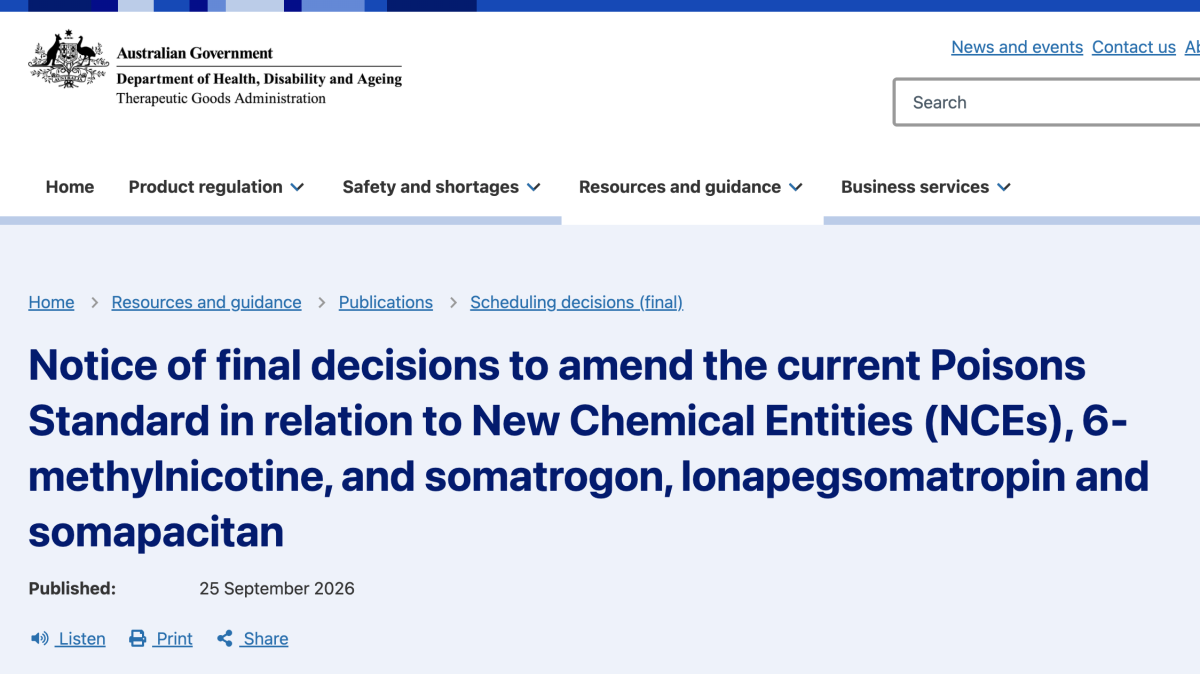
Australia's Therapeutic Goods Administration published a final decision on September 25 to classify 6-methylnicotine as a Schedule 9 prohibited substance under the Poisons Standard, effective October 1, 2026. TGA said the chemical has been reported in e-cigarette liquids sold in Australia and marketed as nicotine-free or nicotine alternatives, while evidence also indicates its use in preparations such as oral pouches. The government originally proposed a Schedule 7 classification but ultimately adopted the stricter Schedule 9 designation, citing acute toxicity, dependence risk, use in unapproved consumer products and misleading marketing.
News
Sep.29 by 2Firsts Perspectives