Key points:
1.The Jakarta provincial government in Indonesia is currently in the process of advancing the draft regulation on smoke-free areas (Raperda KTR) with the Jakarta Provincial Parliament (DPRD DKI), with plans to pass it by 2025.
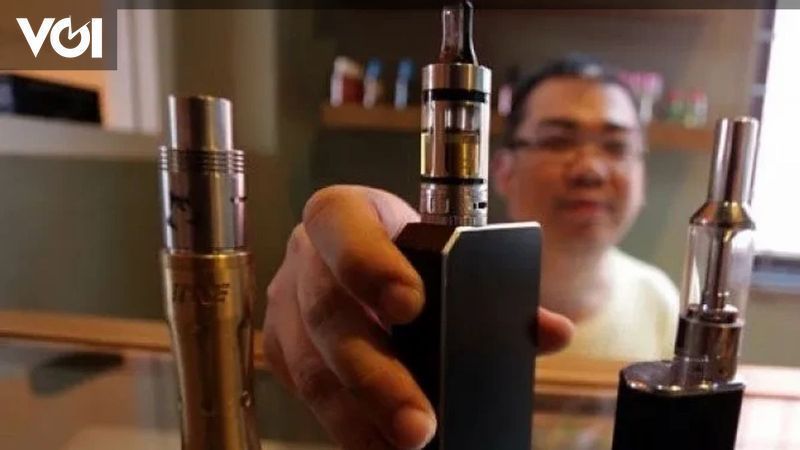
2.The draft proposal will for the first time include restrictions on the use of e-cigarettes and heated tobacco products in public places, proposed to be subject to the same standards as traditional cigarettes.
3.The existing regulations only prohibit the use of conventional cigarettes in public places, but do not specifically regulate e-cigarettes. The proposal points out that the current regulations are facing "regulatory discrimination" and suggest that unified management should be implemented through local regulations.
4.The draft also suggests introducing fines and even criminal liability as punishment mechanisms for violations.
5.The Provincial Governor's Regulation No. 40 of 2020 lists six categories of smoke-free public areas, including education, medical, transportation, religious, and children's activity spaces.
According to Voi.id's report on May 7th, the Jakarta provincial government in Indonesia is planning to pass the "Smoke-Free Area Local Regulation Draft" (Raperda KTR) by 2025 to comprehensively update and integrate the current legal framework for smoke-free areas. The draft is currently being reviewed by a special committee established by the Regional Representative Council (DPRD).
DPRD special committee member Ali Lubis stated that the draft not only continues to regulate the use of cigarettes in public areas, but also includes restrictions on e-cigarettes and related products.
"During the discussion at the Tobacco-Free Committee, it was explicitly stated that similar usage restrictions to traditional cigarettes should be implemented for e-cigarettes and heated tobacco products."
According to the current Governor Regulation No. 40/2020, public areas where smoking is prohibited include:
·Open public spaces like parks, squares, and streets;
·Office and commercial spaces;
·Educational institutions including schools, universities, and training centers;
·Medical service facilities including hospitals, clinics, and community health centers;
·Children's activity spaces such as playgrounds, children's pools, and related entertainment facilities;
·Religious places such as mosques, churches, temples, etc.
Ali pointed out that the regulation currently only covers cigarettes, with no restrictions on e-cigarettes, which are becoming increasingly common in Jakarta. This creates a regulatory imbalance, with selective restrictions on cigarette users, constituting a de facto form of discrimination.
Therefore, the draft suggests "clearly including e-cigarettes in local regulations" and granting local enforcement agencies the power to impose penalties. Ali added that fines or even criminal liability should be established for violators to enhance the effectiveness of the regulations.
We welcome news tips, article submissions, interview requests, or comments on this piece.
Please contact us at info@2firsts.com, or reach out to Alan Zhao, CEO of 2Firsts, on LinkedIn
Notice
1. This article is intended solely for professional research purposes related to industry, technology, and policy. Any references to brands or products are made purely for objective description and do not constitute any form of endorsement, recommendation, or promotion by 2Firsts.
2. The use of nicotine-containing products — including, but not limited to, cigarettes, e-cigarettes, nicotine pouchand heated tobacco products — carries significant health risks. Users are responsible for complying with all applicable laws and regulations in their respective jurisdictions.
3. This article is not intended to serve as the basis for any investment decisions or financial advice. 2Firsts assumes no direct or indirect liability for any inaccuracies or errors in the content.
4. Access to this article is strictly prohibited for individuals below the legal age in their jurisdiction.
Copyright
This article is either an original work created by 2Firsts or a reproduction from third-party sources with proper attribution. All copyrights and usage rights belong to 2Firsts or the original content provider. Unauthorized reproduction, distribution, or any other form of unauthorized use by any individual or organization is strictly prohibited. Violators will be held legally accountable.
For copyright-related inquiries, please contact: info@2firsts.com
AI Assistance Disclaimer
This article may have been enhanced using AI tools to improve translation and editorial efficiency. However, due to technical limitations, inaccuracies may occur. Readers are encouraged to refer to the cited sources for the most accurate information.
We welcome any corrections or feedback. Please contact us at: info@2firsts.com