Japan Tobacco Reports Strong Financial Results for 2022

Nov.02.2022
Japan Tobacco Reports Strong Financial Results for 2022
Japan Tobacco reports strong growth in revenue, profits driven by solid pricing in tobacco business and success of Ploom X.

Tobacco Company "Riyan" has reported that its revenue for the first nine months of 2022 was 2 trillion Japanese yen ($13.5 billion USD), which represents a year-over-year growth of 13.7% compared to 2021.


The core income, calculated at fixed exchange rates, grew by 4.1% to reach 1.77 trillion yen. Operating profit adjusted for fixed exchange rates increased by 6.5% to reach 78.4 billion yen. Annual report data showed that adjusted operating profit increased by 17.5% to reach 6.378 trillion yen. Operating profit increased by 20.5% to reach 5.793 trillion yen, while profit rose by 19.2% to reach 4.038 trillion yen.


In a statement, President and CEO of Japan Tobacco Group, Masamichi Terabatake, stated that the company has demonstrated strong performance over nine months, primarily driven by stable pricing in its tobacco business. He also expressed encouragement towards the sales of Ploom X and its performance on the stock market in Japan. The company has launched Ploom X in London, and plans to accelerate its international release from 2023.


Terabatake expressed high expectations for the recently announced collaboration with Altria Group to market and commercialize heated tobacco products in the United States. He stated, "I firmly believe that this collaboration will increase the likelihood of harm reduction for adult consumers and drive value for both JT and Altria.


Terabatake stated, "Due to positive commercial momentum and a favorable currency trend for the Japanese yen, we have revised our full-year 2022 forecast upwards. According to the revised guidelines, we are pleased to announce our plan to increase our annual dividend guidance from 38 Japanese yen to 188 Japanese yen.


Statement:


This article is compiled from third-party information and is intended for industry communication and learning purposes only.


This article does not represent the views of 2FIRSTS and 2FIRSTS cannot confirm the authenticity and accuracy of the article's content. The translation of this article is intended solely for industry-related research and communication purposes.


Due to limitations in the level of translation proficiency, the translated article may not fully express the original text. Please refer to the original article for accuracy.


2FIRSTS holds the same views and positions as the Chinese government on all matters related to domestic affairs, as well as those that involve Hong Kong, Macau, Taiwan, and foreign countries.


The ownership of the compilation of information belongs to the original media and author. If there is any copyright infringement, please contact us for deletion.


Disclaimer

This article is provided solely for professional research, industry discussion, and informational purposes. Any references to brands, companies, products, technologies, or policies are made for factual reporting and analytical purposes only, and do not constitute endorsement, recommendation, promotion, or advertising by 2Firsts.

Nicotine-containing products, including but not limited to cigarettes, e-cigarettes, heated tobacco products, and nicotine pouches, carry significant health risks. Readers are responsible for complying with all applicable laws and regulations in their respective jurisdictions, including age restrictions and access limitations.

The information contained in this article should not be regarded as investment, legal, medical, regulatory, or commercial advice. While 2Firsts strives to ensure the accuracy and reliability of its content, it does not assume liability for any direct or indirect loss arising from errors, omissions, inaccuracies, or reliance on the information contained herein.

This article is not intended for individuals below the legal age for accessing tobacco or nicotine-related information in their jurisdiction.


Copyright Notice

This article is either original content produced by 2Firsts or content reproduced, translated, summarized, or adapted from third-party sources with attribution where applicable. The intellectual property rights of the original content remain with 2Firsts or the respective original rights holders.

No individual or organization may copy, reproduce, distribute, republish, modify, translate, or otherwise use this content without prior authorization. Any unauthorized use may result in legal action.

For copyright-related inquiries, corrections, or removal requests, please contact: info@2firsts.com.


AI-Assisted Translation and Editing Notice

Portions of this article may have been translated, edited, or reviewed with the assistance of artificial intelligence tools to improve efficiency and readability. Due to the limitations of AI-assisted translation and editing, discrepancies, omissions, or inaccuracies may exist when compared with the original source.

Where applicable, readers are advised to refer to the original source for the most complete and accurate information. If you identify any errors or believe that any content infringes upon your rights, please contact us at info@2firsts.com, and we will review and address the matter promptly.

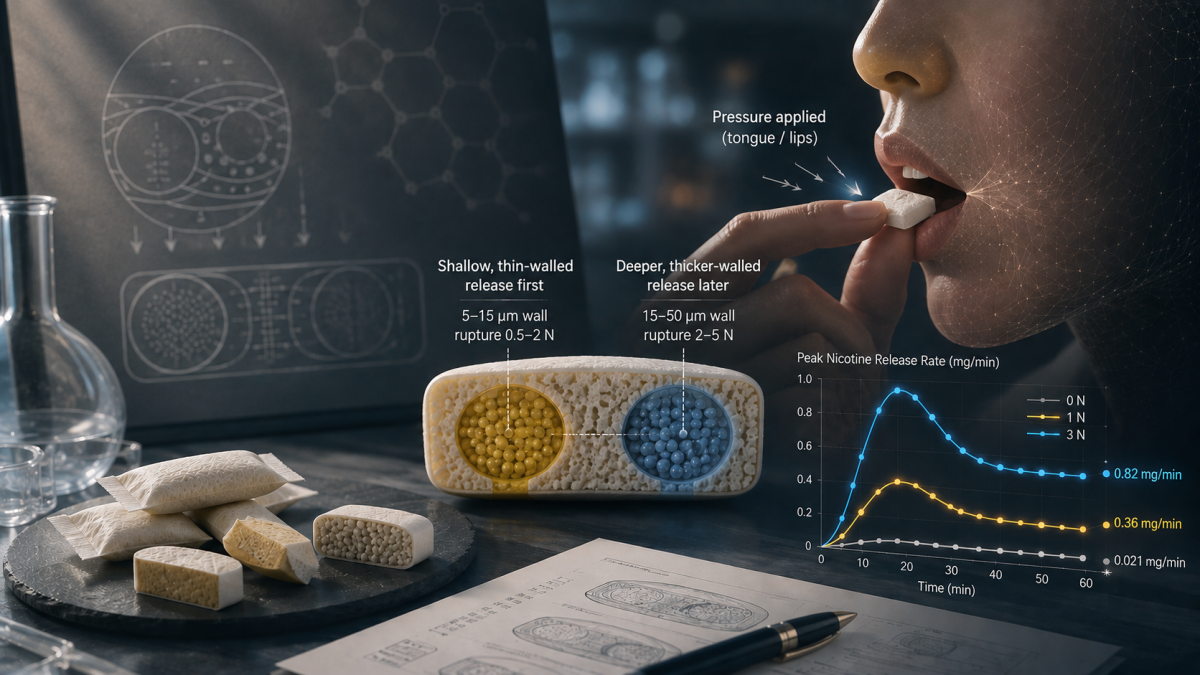
China Tobacco Zhejiang files patent for pressure-triggered, on-demand oral nicotine release
China Tobacco Zhejiang Industrial Co., Ltd. has filed a patent application for an oral nicotine delivery product designed to let users actively adjust nicotine release. The product embeds two types of nicotine reservoirs with different wall thicknesses and positions inside a deformable matrix. Pressure applied with the tongue or lips can rupture the reservoirs and accelerate nicotine release. In simulated oral tests, several patent examples showed sharply higher peak nicotine release rates as applied force increased from 0 N to 1 N and 3 N. The filing explores a shift from preset release profiles toward user-triggered nicotine delivery.
Sep.01
German Tobacco Tax Revenue Falls 10.8% Through August as Tax-Paid Cigarette Volume Drops 12.6%
Germany collected €9.789 billion in total tobacco tax revenue from January through August 2026, down 10.8% from a year earlier, according to the Federal Ministry of Finance. Germany's tobacco tax base covers not only cigarettes and fine-cut tobacco but also heated tobacco and vaping liquids taxed as tobacco substitutes. The German Association of the Tobacco Industry and Novel Products, or BVTE, citing federal statistical data, said tax-paid cigarette volume fell 12.6% to 40.6 billion sticks. BVTE is using the latest figures to argue against further tax increases planned from 2027 through 2030, while Germany's parliament is scheduled to hold a first reading of the bill on September 24.
Sep.23
Exclusive Analysis | Smoore H1 Revenue Rises 19.9% Amid Growth Concentration, Profit Pressure and Slowing Momentum
Smoore’s first-half 2026 revenue rose 19.9%, but the results revealed growing structural risks beneath the headline growth. Heat-not-burn contributed about 61% of incremental revenue and remains driven largely by one core customer, while traditional vaping markets diverged, own-brand growth slowed and China enterprise revenue declined further. Gross profit and adjusted profit lagged revenue growth, while second-quarter revenue growth slowed to about 1.9%, putting greater focus on the quality, concentration and sustainability of Smoore’s expansion.
Capital Markets
Aug.20
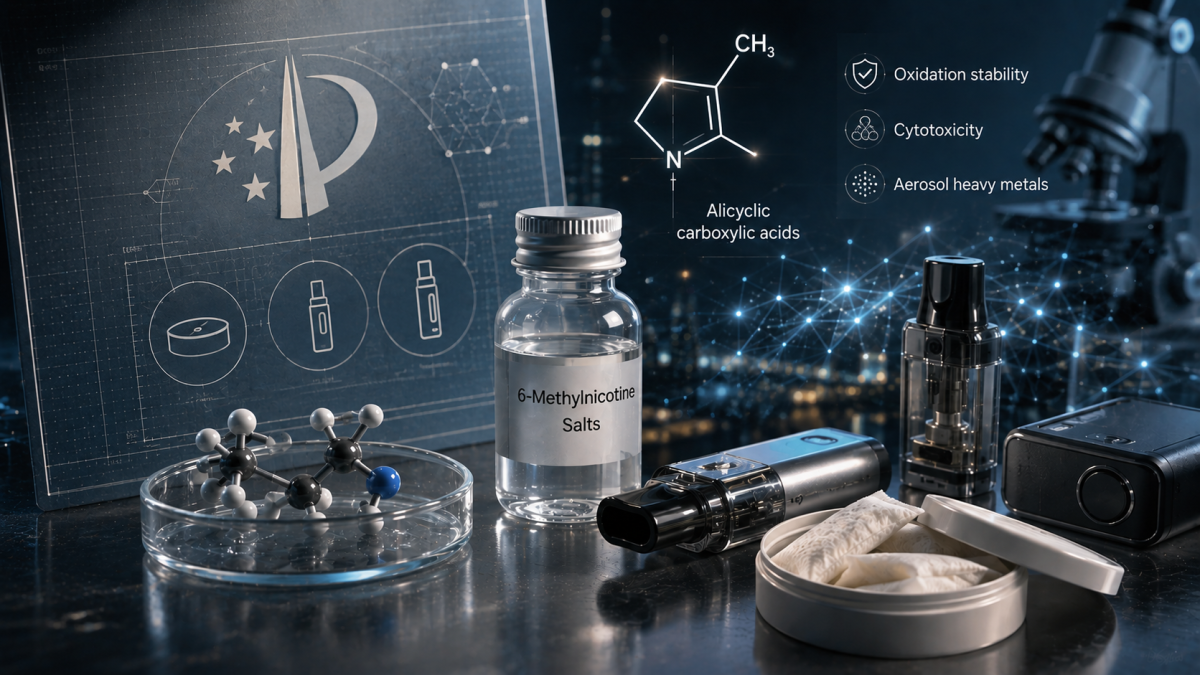
HG Innovation, linked to IMiracle and ELFBAR, wins China patent for 6-methylnicotine salts covering vaping and oral products
HG Innovation Limited has been granted a Chinese invention patent covering 6-methylnicotine salt formulations and their use in oral and vaping products. The technology forms salts between 6-methylnicotine and alicyclic carboxylic acids, with granted claims extending to oral products, atomization substrates and electronic atomization devices. Applicant-generated tests reported differences in oxidation stability, in-vitro cytotoxicity and aerosol heavy-metal performance compared with selected benzoate or lactate controls. HG Innovation is directly linked to the broader IMiracle and ELFBAR business network.
Sep.04
Kantar Study Finds More Than 93% of Vape Products in Ukraine Fail Regulatory Requirements
According to Interfax-Ukraine, a study conducted by market research firm Kantar Ukraine at the request of major tobacco companies found that more than 93% of vape products in Ukraine did not fully comply with regulatory requirements. The research examined product categories, brand distribution and consumer purchasing channels, showing that pod systems and disposable vapes represent major segments of the market, while offline retail remains the dominant purchasing channel. The findings highlight ongoing compliance challenges in Ukraine’s vape market.
Aug.26
Major U.S.  Vape Distributor Demand Vape Pays at Least $300,000 for White House Lobbying Amid Enforcement Pressure
Major U.S. Vape Distributor Demand Vape Pays at Least $300,000 for White House Lobbying Amid Enforcement Pressure
New York vape distributor Ecto World, which operates as Demand Vape, hired political consultant Roger Stone to lobby the Executive Office of the President on regulation of vaping and related products while facing state enforcement and multiple lawsuits. Public lobbying disclosures show that Ecto World paid at least $300,000 for the work through June 30, 2026. Separately, New York State announced in March that more than 28,500 pounds of vaping products tied to the company had been seized, while New York City and the state have pursued legal or enforcement actions. Public records do not show that the lobbying directly changed any specific regulatory or enforcement outcome.
Sep.08