Johor Health Department Cracks Down on Illegal E-cigarette Products.

Dec.23.2024
Johor Health Department Cracks Down on Illegal E-cigarette Products.
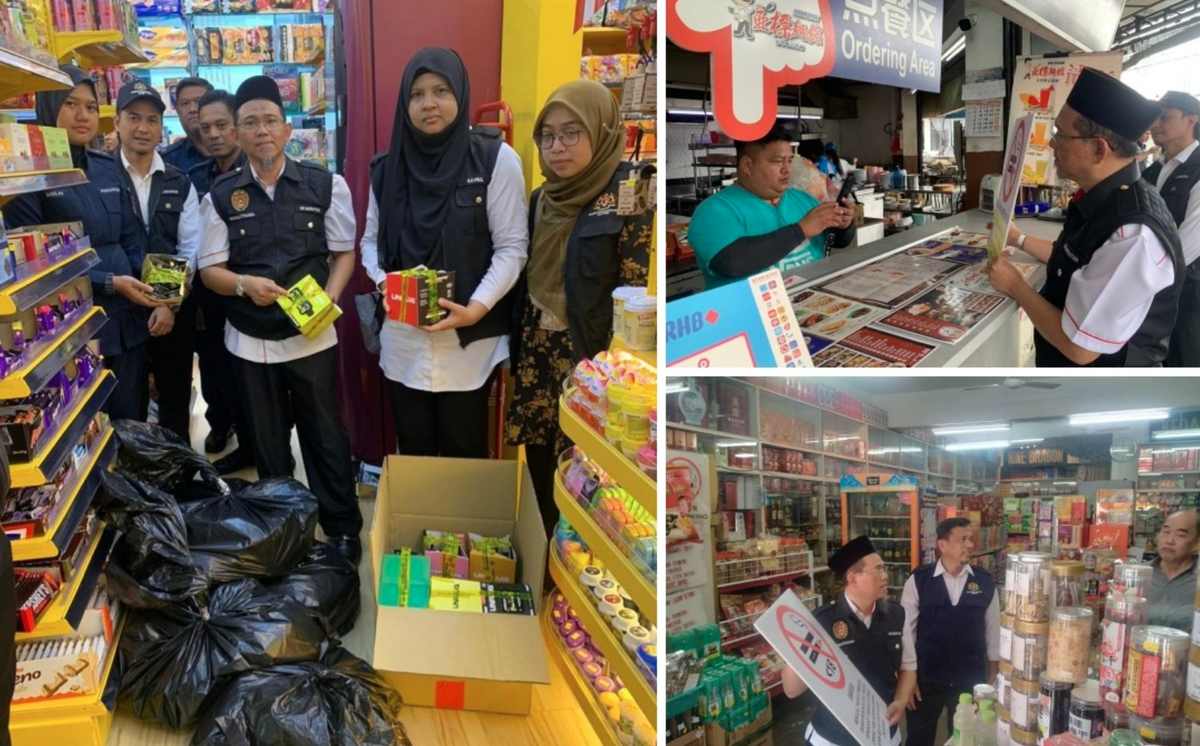
Johor Health Department seizes 989 e-cigarette products worth RM34,158, warns against selling disguised as games or food.

According to a report by Bernama on December 21, the Johor Health Department in Malaysia conducted a special operation on Wednesday (18th) and Thursday (19th), seizing 989 e-cigarette products worth 34,158 ringgit (approximately $7,600 USD). Some of these products were disguised as games and food items.


Johor Health Department Director, Dr. Mohtar Pungut, stated that a total of 11 violation notices were issued in this operation, in accordance with Section 47 of the Control of Tobacco Product Regulations (Regulation 852) under the Public Health Act.


Selling e-cigarette products at any business premises within the jurisdiction of local authorities (PBT) in the state of Johor is in violation of the Licensing, Commercial Trade, and Industrial Enactment Act. Therefore, any violation of this regulation will be considered illegal.


JKNJ strongly advises venue owners and business operators not to sell e-cigarette products in Johor state, especially those disguised as games or food.


This operation aims to ensure compliance with the ban on the promotion, advertising, packaging, and labeling of disposable pod-type vaping products designed to resemble games and food.


The director stated that as of now, authorities have inspected 6,097 locations and issued 1,021 violation notices for various illegal activities.


We welcome news tips, article submissions, interview requests, or comments on this piece.

Please contact us at info@2firsts.com, or reach out to Alan Zhao, CEO of 2Firsts, on LinkedIn


Notice

1.  This article is intended solely for professional research purposes related to industry, technology, and policy. Any references to brands or products are made purely for objective description and do not constitute any form of endorsement, recommendation, or promotion by 2Firsts.

2.  The use of nicotine-containing products — including, but not limited to, cigarettes, e-cigarettes, nicotine pouchand heated tobacco products — carries significant health risks. Users are responsible for complying with all applicable laws and regulations in their respective jurisdictions.

3.  This article is not intended to serve as the basis for any investment decisions or financial advice. 2Firsts assumes no direct or indirect liability for any inaccuracies or errors in the content.

4.  Access to this article is strictly prohibited for individuals below the legal age in their jurisdiction.


Copyright


This article is either an original work created by 2Firsts or a reproduction from third-party sources with proper attribution. All copyrights and usage rights belong to 2Firsts or the original content provider. Unauthorized reproduction, distribution, or any other form of unauthorized use by any individual or organization is strictly prohibited. Violators will be held legally accountable.

For copyright-related inquiries, please contact: info@2firsts.com


AI Assistance Disclaimer


This article may have been enhanced using AI tools to improve translation and editorial efficiency. However, due to technical limitations, inaccuracies may occur. Readers are encouraged to refer to the cited sources for the most accurate information.

We welcome any corrections or feedback. Please contact us at: info@2firsts.com

Reuters: Big Tobacco Emerges as Winner After FDA Regulatory Shift
According to Reuters, major tobacco companies may emerge as key beneficiaries after the U.S. FDA loosened regulations on vaping and nicotine pouch products, a shift that has sparked debate over public health risks.
Industry Insight
May.26
Special Report| War continues to shape the Ukrainian tobacco market
Four years into the war, Ukraine’s tobacco market is being reshaped by stress-driven consumption, tax pressure, youth e-cigarette use and a growing illicit segment. Surveys point to rising tobacco and nicotine product use, while higher excise duties and shadow trade are adding new complexity to the market.
Apr.17
Special Report | Russian Vape Compromise Faces First Hurdles
Russia’s regional vape-ban model is facing early legal and political tests, as Perm Krai moves ahead before federal legislation is fully adopted. The case highlights uncertainty over regional authority, concerns from business groups about market fragmentation, and the risk that pressure against regional bans could revive calls for a stricter nationwide prohibition.
Industry Insight
May.28
South Korea Expands Tobacco Harmful Components Testing System to Cover Synthetic Nicotine Liquid Vapes
South Korea’s Ministry of Food and Drug Safety said on April 17 that it has additionally designated the International Characterization Research Institute as a tobacco harmful components testing body under the Act on the Management of Tobacco Harmfulness. The institute has research experience in analyzing harmful components in liquid e-cigarettes and has obtained recognition for tobacco-sector ISO 17025 requirements.
Apr.17 by 2FIRSTS.ai
AP Questions FDA Rationale as Glas Fruit-Flavored Vapes Won Authorization Without Added Cessation Benefit
The U.S. Food and Drug Administration (FDA) recently authorized two fruit-flavored vaping products from Glas, but a newly released agency memo shows the products did not demonstrate greater smoking-cessation benefits than tobacco-flavored e-cigarettes. The Associated Press said the findings are likely to raise further questions about the FDA’s regulatory rationale and standards for flavored vaping products.
Jun.12
Canada Faces Growing Debate as Youth Nicotine Pouch Use Reaches 34.8%
New Canadian research shows that 34.8% of people aged 17 to 27 have tried nicotine pouches, up more than fourfold from 7.6% in 2022. The findings come as Conservative politicians, Alberta’s government and the tobacco industry push Ottawa to relax current restrictions on pouch sales.
Jun.12