KT&G Donates Funds to Welfare Institution for Visually Impaired

Business by 2FIRSTS.ai
Dec.08.2023
KT&G Donates Funds to Welfare Institution for Visually Impaired
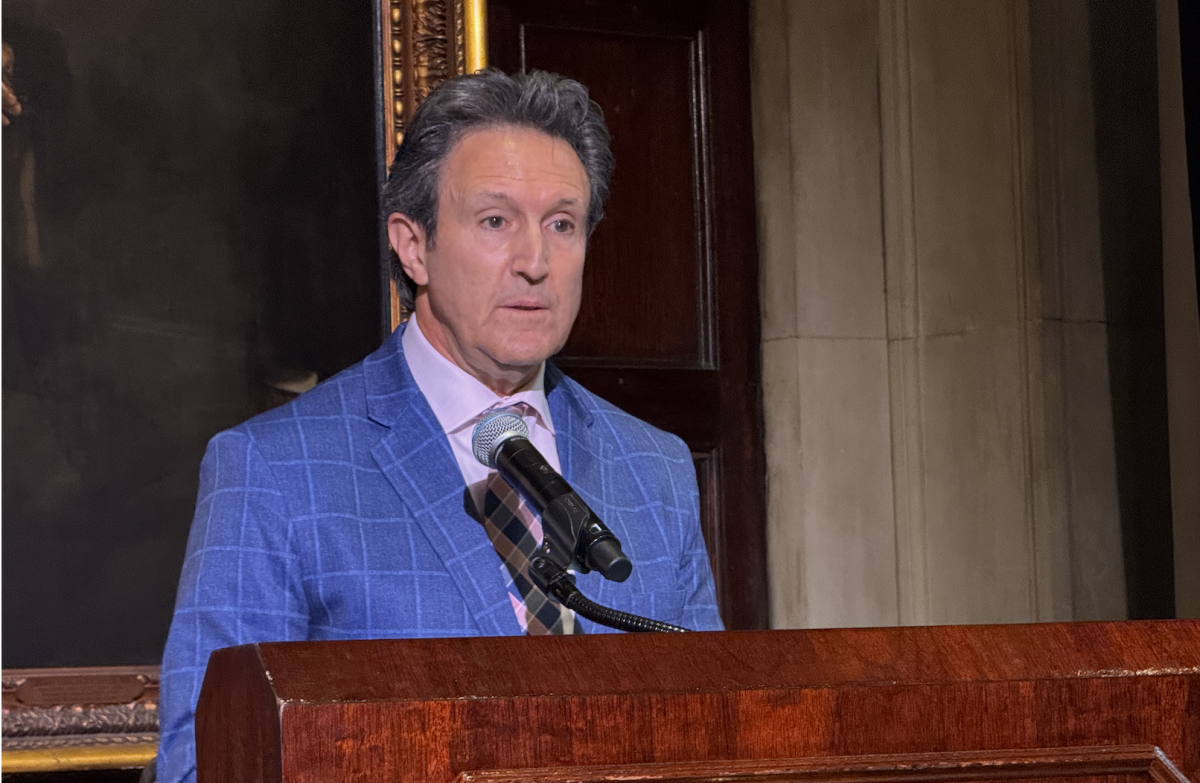
KT&G South Jeolla Province headquarters donates 5 million KRW to welfare institution through its own charity organization, Imagination Fund, to support visually impaired people.

According to a report from Wikitree on December 4th, KT&G South Korea's headquarter in Jeollanam-do has donated 5 million Korean won to a welfare institution through its own charity organization called "Imagination Fund". This funding aims to support visually impaired individuals.


The "Imagination Fund" is a distinctive social welfare fund initiated by KT&G in 2011. It involves voluntary monthly contributions from company employees, and the company then matches these donations to better serve the community and help neighbors in need.


Additionally, KT&G's headquarters in Jeollanam-do is involved in various charitable donations that include providing scholarships for talent development, improving living conditions for disadvantaged groups, offering heating fuel support, and sharing kimchi during the year-end.


We welcome news tips, article submissions, interview requests, or comments on this piece.

Please contact us at info@2firsts.com, or reach out to Alan Zhao, CEO of 2Firsts, on LinkedIn


Notice

1.  This article is intended solely for professional research purposes related to industry, technology, and policy. Any references to brands or products are made purely for objective description and do not constitute any form of endorsement, recommendation, or promotion by 2Firsts.

2.  The use of nicotine-containing products — including, but not limited to, cigarettes, e-cigarettes, nicotine pouchand heated tobacco products — carries significant health risks. Users are responsible for complying with all applicable laws and regulations in their respective jurisdictions.

3.  This article is not intended to serve as the basis for any investment decisions or financial advice. 2Firsts assumes no direct or indirect liability for any inaccuracies or errors in the content.

4.  Access to this article is strictly prohibited for individuals below the legal age in their jurisdiction.


Copyright


This article is either an original work created by 2Firsts or a reproduction from third-party sources with proper attribution. All copyrights and usage rights belong to 2Firsts or the original content provider. Unauthorized reproduction, distribution, or any other form of unauthorized use by any individual or organization is strictly prohibited. Violators will be held legally accountable.

For copyright-related inquiries, please contact: info@2firsts.com


AI Assistance Disclaimer


This article may have been enhanced using AI tools to improve translation and editorial efficiency. However, due to technical limitations, inaccuracies may occur. Readers are encouraged to refer to the cited sources for the most accurate information.

We welcome any corrections or feedback. Please contact us at: info@2firsts.com

Russia Proposes Mandatory Labelling of E-cigarettes from April 1, 2026
Russia’s Ministry of Industry and Trade has proposed introducing mandatory labelling for electronic cigarettes and other electronic devices used to consume nicotine, starting April 1, 2026. The draft resolution has been published on the regulatory portal. Under the proposal, market participants would be required to register with the national monitoring system and label products accordingly, as part of efforts to enhance state oversight of production and circulation.
Dec.19 by 2FIRSTS.ai
Indiana SB 185 Advances: Foreign-Made Vapes Would Be Barred, With Focus on China
Indiana State Sen. Ron Alting is backing Senate Bill 185, which would ban vape shops in Indiana from selling any foreign-made vaping products and restrict retail shelves to U.S.-made items. Alting has framed the proposal as a consumer-safety measure and has singled out China, citing industry reporting that China produces more than 90% of the world’s vape hardware.
Jan.27 by 2FIRSTS.ai
Russia’s Duma Deputy Speaker Davankov calls for a total vape ban, citing drug sales disguised as vapes
Vladislav Davankov, deputy speaker of Russia’s State Duma, urged a nationwide ban on vapes, arguing it would help prevent drugs being sold under the cover of vaping products, including near schools. The remarks come as Russia prepares to enforce a separate ban on vape sales at public transport stops starting Sept. 1, 2026.
Feb.09 by 2FIRSTS.ai
Virginia HB 308 would overhaul tobacco and nicotine rules, and creating a vape “white list”
Virginia’s HB 308 (Substitute) proposes a sweeping rewrite of how tobacco, nicotine and certain smokable hemp products are regulated, consolidating enforcement under ABC, requiring retailer permits, creating a vape product directory and escalating penalties for violations.
Feb.06 by 2FIRSTS.ai
Virginia asks Fourth Circuit to stay order blocking parts of its unauthorized-vape sales law
Virginia has asked the U.S. Court of Appeals for the Fourth Circuit to stay a district court order that blocks enforcement of certain provisions of a state law restricting the sale of unauthorized vaping products. The district court held the law was preempted to the extent it enforced federal requirements under the FDCA and the Tobacco Control Act.
Jan.21 by 2FIRSTS.ai
Thai Health Authorities: Nicotine Pouches Classified as Tobacco; Sales Must Comply with 2017 Act
Thailand’s Disease Control Department has warned that nicotine pouches (“Snus”) are classified as tobacco products and must comply with the Tobacco Products Control Act B.E. 2560 (2017). Officials said they have received complaints about sales and promotional activities, and stressed that these products must not be displayed or promoted at points of sale.
Feb.02 by 2FIRSTS.ai