Man Hospitalized for Severe Hemoptysis Possibly Caused by E-cigarette

Regulations by 2FIRSTS.ai
Dec.14.2023
Man Hospitalized for Severe Hemoptysis Possibly Caused by E-cigarette
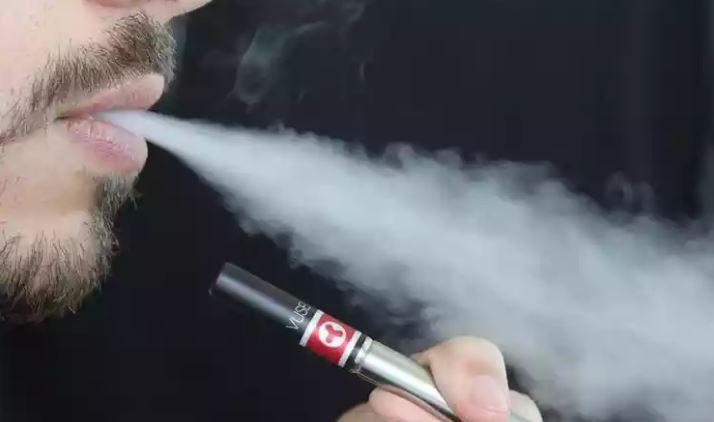
A man in Brasília has been hospitalized for a month due to severe coughing up blood symptoms believed to be caused by long-term e-cigarette use.

According to a report by Brazilian media outlet DM, a man has been hospitalized for a month in Brasília due to severe symptoms of hemoptysis, which is the presence of blood in coughed-up mucus. Doctors suspect that this condition may be a result of long-term use of e-cigarettes.


The man had been using e-cigarettes for the past three months, which is prohibited for sale in Brazil. However, a month ago, he started coughing up blood, making him realize the need for medical attention. In an interview with TV Globo, he stated, "Every day my symptoms were getting worse. I visited a private pulmonary doctor who conducted numerous tests but found no problems.


As a result, the doctor advised him to go home. However, his symptoms did not disappear, so he went to the emergency room at the North Wing Regional Hospital. He reported that one day he coughed up 600 milliliters of blood.


Since 2009, Brazil has implemented a regulation that prohibits the sale, import, and promotion of electronic vaping devices, including accessories and pods. The Brazilian National Health Surveillance Agency (Agência Nacional de Vigilância Sanitária) has launched a public consultation on December 12th to decide whether to lift the ban on e-cigarettes. The consultation will last until February 9th, providing 60 days for public participation.


We welcome news tips, article submissions, interview requests, or comments on this piece.

Please contact us at info@2firsts.com, or reach out to Alan Zhao, CEO of 2Firsts, on LinkedIn


Notice

1.  This article is intended solely for professional research purposes related to industry, technology, and policy. Any references to brands or products are made purely for objective description and do not constitute any form of endorsement, recommendation, or promotion by 2Firsts.

2.  The use of nicotine-containing products — including, but not limited to, cigarettes, e-cigarettes, nicotine pouchand heated tobacco products — carries significant health risks. Users are responsible for complying with all applicable laws and regulations in their respective jurisdictions.

3.  This article is not intended to serve as the basis for any investment decisions or financial advice. 2Firsts assumes no direct or indirect liability for any inaccuracies or errors in the content.

4.  Access to this article is strictly prohibited for individuals below the legal age in their jurisdiction.


Copyright


This article is either an original work created by 2Firsts or a reproduction from third-party sources with proper attribution. All copyrights and usage rights belong to 2Firsts or the original content provider. Unauthorized reproduction, distribution, or any other form of unauthorized use by any individual or organization is strictly prohibited. Violators will be held legally accountable.

For copyright-related inquiries, please contact: info@2firsts.com


AI Assistance Disclaimer


This article may have been enhanced using AI tools to improve translation and editorial efficiency. However, due to technical limitations, inaccuracies may occur. Readers are encouraged to refer to the cited sources for the most accurate information.

We welcome any corrections or feedback. Please contact us at: info@2firsts.com

FDA Highlights Product Characterization as a Foundational Requirement in ENDS PMTA Reviews
During its ongoing PMTA roundtable, FDA emphasized that product characterization is a foundational element in the review of electronic nicotine delivery systems (ENDS). The agency underscored the need for complete product identifying information, validation and verification of test methods on the specific product type, and the appropriate use of tobacco product master files (TPMFs) to support complex or proprietary ingredients in PMTA submissions.
Feb.10
Fourth Circuit weighs federal preemption challenge to North Carolina’s vape sales restrictions
Vape manufacturers and sellers urged the U.S. Court of Appeals for the Fourth Circuit to find that the federal Food, Drug, and Cosmetic Act (FDCA) preempts North Carolina’s new law restricting the sale of certain e-cigarette/ENDS products.
Feb.03 by 2FIRSTS.ai
After Export Tax Rebates Go to Zero: How China’s E-Cigarette Supply Chain Is Being Reshaped, According to 2Firsts Research
China’s e-cigarette industry is adjusting to a major policy shift. From April 1, 2026, China will scrap the 13% export VAT rebate on e-cigarette products, a move affecting manufacturers centered in Shenzhen. Industry participants told 2Firsts the change is forcing a reassessment of pricing and capacity, with competition shifting toward cash flow resilience, regulatory compliance, and multi-location strategies.
Industry Insight
Jan.16
PMI Flags 2026 Headwinds from Japan Taxes, Sees Smoke-Free Growth Re-Accelerating Beyond in Earnings Call
PMI said on its latest earnings call that Japan’s tax cycle will weigh on 2026 performance, while smoke-free growth is expected to re-accelerate thereafter. The discussion also covered U.S. regulation, ZYN strategy and AI-driven efficiency.
Feb.07
Louisiana lawmaker pushes bill to ban vape product sales within 300 feet of schools
A Louisiana lawmaker has introduced HB 302, which would prohibit businesses from selling vapor products within 300 feet of schools. The bill would measure the distance by a person walking on the sidewalk from the nearest point on school property to the nearest point of the business. It would also give the commissioner authority to modify how the distance is calculated, while maintaining the 300-foot limit.
Feb.26 by 2FIRSTS.ai
U.S. Fifth Circuit judges question FDA’s claim it has no de facto ban on flavored refillable e-cigarettes
Law360 reports that a Fifth Circuit panel expressed skepticism about the FDA’s claim that it has no de facto ban on flavored refillable e-cigarette products, noting that only six applications had been approved out of hundreds of thousands and that near-100% denials look like a ban.
Jan.07 by 2FIRSTS.ai